Fresh connections for Hungary’s food industry
By Hendrik Durst I 4 minute read
10/07/2026
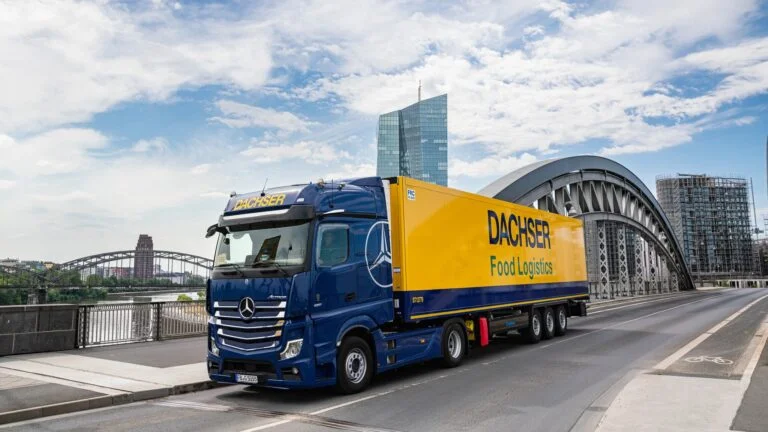
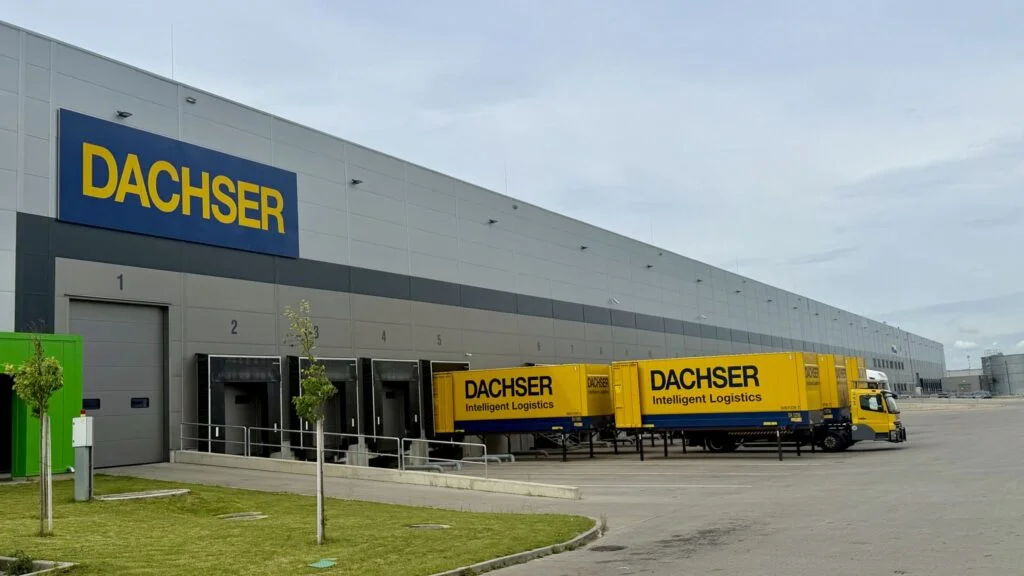
With a new location for temperature-controlled food in Kecskemét, DACHSER Food Logistics is continuing to expand its network in Hungary. The investment not only strengthens the local branch and the economically important south of the country, but also creates additional capacity for cross-border food transport in Europe.

Whether wheat, processed fruit and vegetables, meat products, or honey, Hungary is one of Central Europe’s key agricultural and food-producing locations. At the same time, European supply chains are more closely interconnected than ever before, including in food logistics. With that, requirements are rising: food products need to be transported across borders faster, more transparently, and without interruption. For export-oriented producers and retail companies in particular, high-performance logistics networks are becoming a decisive factor.
Against this backdrop, DACHSER has put a transit terminal for temperature-controlled food into operation at its Kecskemét location. Daily connections link the site to the existing facility for chilled and non-chilled food at the Budapest branch. Thanks to its convenient location directly on the M5 motorway, Kecskemét also serves as an important hub for national and international transport.
Local roots, Europe-wide standards
The new Kecskemét facility is expected to handle 40 to 50 metric tons of goods per day in a temperature range of 2 to 7 degrees Celsius. The transit terminal meets the requirements of International Featured Standards Higher Level (IFS) and ISO 9001:2015, making it a seamless addition to the high process standards of DACHSER Food Logistics’ existing infrastructure. DACHSER Food Logistics in Hungary already transports around 140,000 metric tons of food each year in just under 65,000 shipments.
“With the new location, we want to further optimize our network for food transports in Hungary,” says Gábor Bozó, Branch Manager in Kecskemét. “The Bács-Kiskun district is one of Hungary’s most important agricultural regions. Around ten percent of the country’s agricultural land is located here, and the food processing industry also plays a significant role. From Kecskemét, we can serve producers and retail companies in the southern region even more efficiently via our groupage network. This also gives smaller companies in the food industry access to cost-effective transport solutions—not only within Hungary and Europe, but, thanks to the DACHSER Air & Sea Logistics network, worldwide as well.”
140.000
metric tons of food are currently handled by DACHSER Food Logistics in Hungary per year.
With the new location, we want to further optimize our network for food transports in Hungary.
Hungary as a key hub for Food Logistics
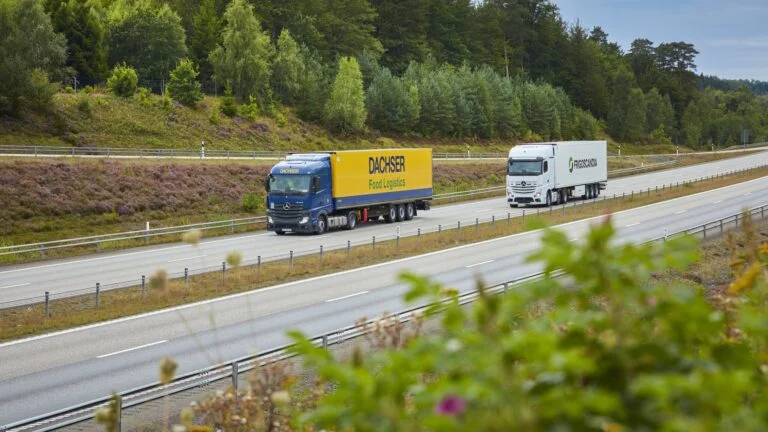
DACHSER has been active in Food Logistics in Hungary since 2008. Its geographic location in the heart of Europe, an export-oriented food industry, and close trade relations within the European Union make Hungary an important location for European food transport. Customers benefit not only from the local setup in Hungary, but also from the country’s integration into the European Food Network. Founded in 2013 under DACHSER’s system leadership, the network now connects the markets of 34 European countries and enables uniform quality standards as well as coordinated transport processes.
The European Food Network offers consistent quality and streamlined processes for food transportation throughout Europe.
On a growth path in Europe
Food logistics is currently one of DACHSER’s most dynamic growth areas. Following the acquisition of Müller Fresh Food Logistics in the Netherlands (now DACHSER Netherlands Food Logistics) in 2023, and of Frigoscandia in Scandinavia and Brummer in Germany and Austria in 2024, DACHSER was able to increase its food logistics revenue by 10.1 percent in 2025 to more than EUR 1.8 billion.
The expansion in Kecskemét shows that the logistics provider is continuing to strengthen its European food logistics network not only through acquisitions, but also through targeted investments at strategically important locations within the existing network. This creates high-performance connections between regional production centers and international sales markets—and ultimately the conditions for food products to move reliably, safely, and with consistently high quality across Europe.