Groupage market in Europe: Resilience arises from the network
By Alexander Tonn I 7 minute read
18/06/2026
In recent months, the headlines relating to the groupage market have been painting a clear picture: While volumes are in decline, price and cost pressures are on the rise. At the same time, industry and retail are calling more urgently than ever for reliable logistics partnerships. This means European groupage logistics is at a turning point. The key question is no longer how to mitigate short-term fluctuations, but how to make the system fundamentally more resilient.

“Sharply declining volumes,” “Waiting for the upturn,” “Industry and retail demand reliable logistics partnerships”—the headlines in the logistics trade press speak for themselves. The European groupage market is undergoing a profound transformation.
Groupage networks are heavily driven by fixed costs. Cargo handling, IT systems, personnel, and infrastructure must be maintained—whether or not capacity is fully utilized. That means declining volumes don’t automatically lead to lower costs. On the contrary, they increase relative cost pressure.
Declining volumes coupled with a significant drop in profitability since 2023 have led many logistics providers to reduce their capacity. The problem is that once structures have been scaled back, it’s difficult to rebuild them when demand picks up again.
Against this backdrop, capacity is becoming a strategic factor in the groupage market. It’s also clear that prices will have to rise in the long term, because only through investments in infrastructure, digitalization, and sustainability can we ensure that supply chains and logistics networks will remain efficient and resilient.
To learn more about the state of the groupage market, particularly during seasonal peaks such as the Christmas shopping season, read the interview “The Battle for Scarce Capacity.”
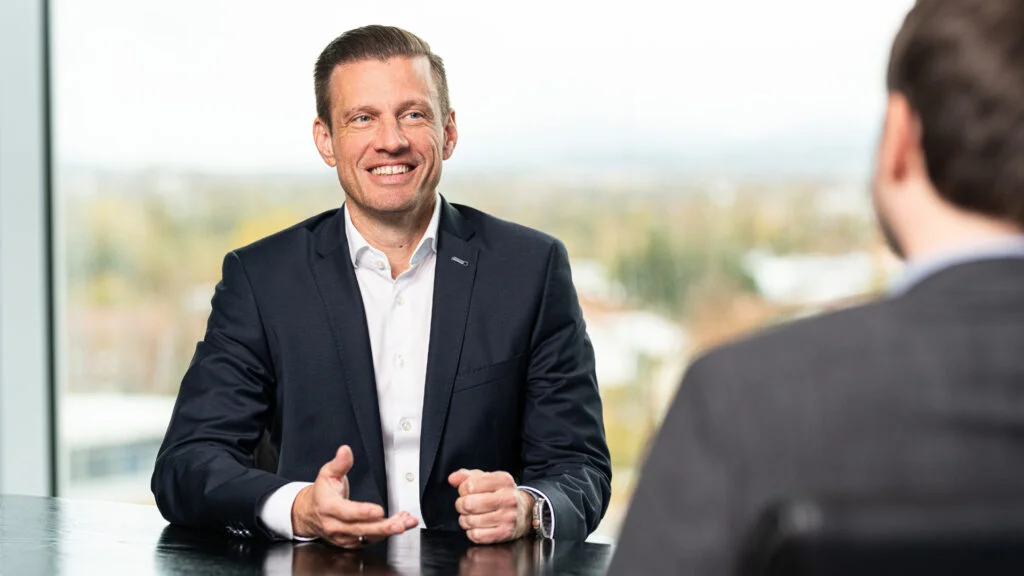
Volatility in the groupage market is becoming the new normal
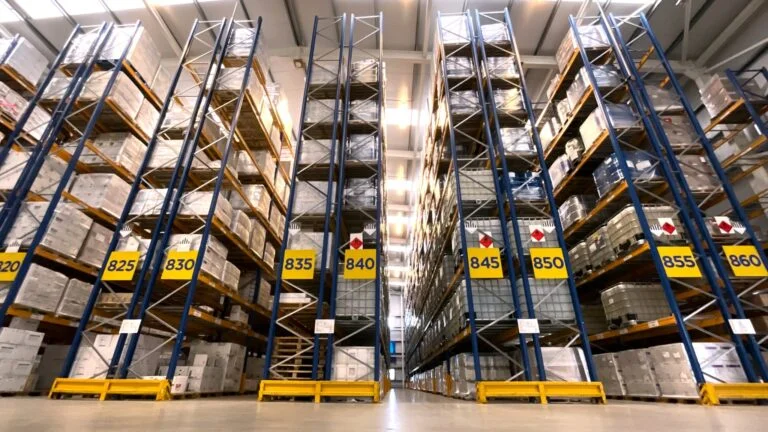
What does that mean for the groupage market? Now more than ever, fluctuating shipment volumes, seasonal peaks, and sudden changes in demand call for flexible network structures and a high degree of responsiveness. At the same time, forward planning is becoming ever more important. Logistics companies that are quick to get a handle on how volumes are developing will be in a position to manage their capacity more effectively and avoid bottlenecks. But it’s not just costs that are developing; the structure of demand is also changing. Today’s customers increasingly expect integrated end-to-end logistics solutions for groupage transport and services. It’s no longer enough for physical supply chains and transport chains to simply function. Today, those chains have to be seamless and efficiently integrate transport, warehousing, and value-added services.
This integration is growing in importance, particularly in an international context; for example, in the flow of goods from Asia to Europe. No longer is the performance of individual segments—such as the transfer of containers from point A to point B—the sole determining factor. Rather, the quality of the overall system, like the seamless integration of Air & Sea Logistics and Road Logistics, is becoming a prerequisite for competitiveness.
Capacity is becoming a strategic factor in the groupage market.
Service partners as the backbone of effective groupage networks
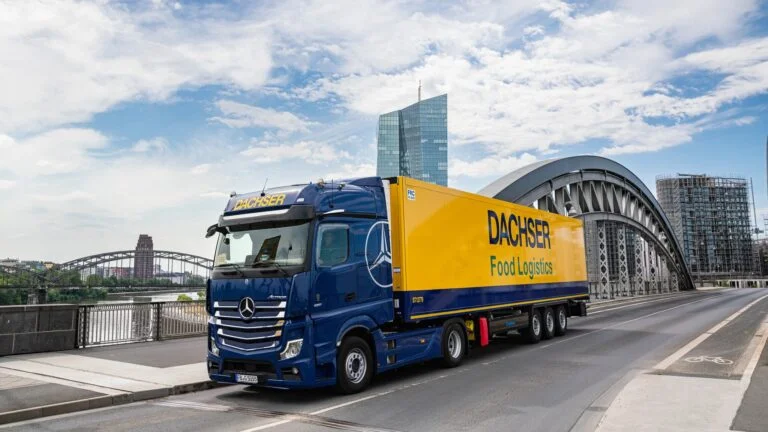
A key factor in the success of DACHSER’s network—which is Europe’s largest groupage network—is its service partners, especially the independent transportation companies that operate the majority of the services within DACHSER’s overland transport network.
In times of crisis and during economic downturns, small and medium-sized transportation companies in particular face considerable pressure. Rising fuel prices, such as those seen recently in the wake of the military strikes in the Middle East, are something they feel firsthand at the filling station. In its “middleman” position, DACHSER supports its transport partners in this situation by ensuring fair and prompt payment. In most cases, we’ve agreed on a fuel cost “floater” with them. This allows additional charges to be passed on directly to customers under the appropriate contractual provisions.
Building trust through fair conditions
DACHSER values long-term, reliable relationships with its service partners, with the goal of working together as equals to tackle the challenges that arise in a changing market. Approaches such as the DACHSER Service Partner Initiative serve as a prime example of how fair operating conditions and improved working conditions for drivers help build mutual trust. This also includes dealing constructively with acute structural bottlenecks, which is indispensable for supply chain resilience. According to the German Federal Association of Road Haulage, Logistics, and Disposal (BGL), Germany is already short of more than 70,000 drivers—and that number is rising. Since the situation is similar in other European countries, it makes little sense to expect that drivers abroad will ease this problem. Fully 73 percent of all road transportation companies report a shortage of drivers. Some 35–40 percent of all drivers are over the age of 55, while only 3–5 percent of all professional drivers are under 25. Capacity in the groupage market is thus increasingly becoming a matter of workforce availability.
DACHSER was one of the first logistics companies to take up this challenge: Back in 2014, it launched its own qualification offensive by founding DACHSER Driver and Truck Fleet Services GmbH (DTS GmbH). The aim is to attract young people to the driving profession, inspire them, train them, and secure them for the market over the long term—perhaps with them later becoming independent transport subcontractors themselves.
The driver shortage is one of the industry’s biggest challenges. Read a feature story from the Bremen branch to learn how DACHSER aims to inspire young people to pursue a career as a driver.
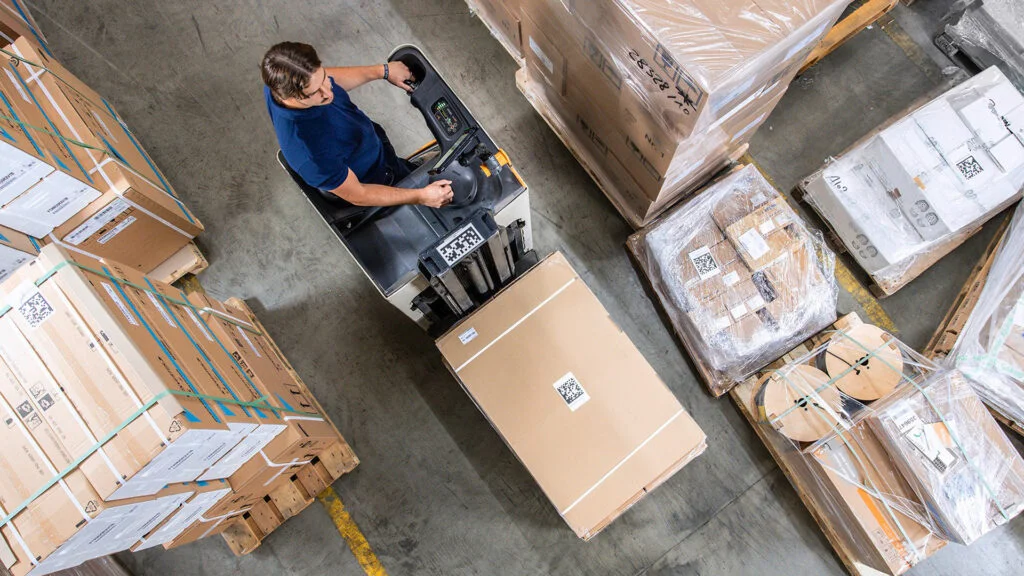
Efficiency in groupage logistics is key to competitiveness
In addition to staff availability, a look at the cost structure reveals where there is still major room for improvement: About 85 percent of the costs in groupage logistics are incurred in core operational processes. The greatest potential for improving efficiency lies in the “industrialization of processing,” which aims to achieve standardized processes, high utilization of existing capacity, and the targeted use of technology.
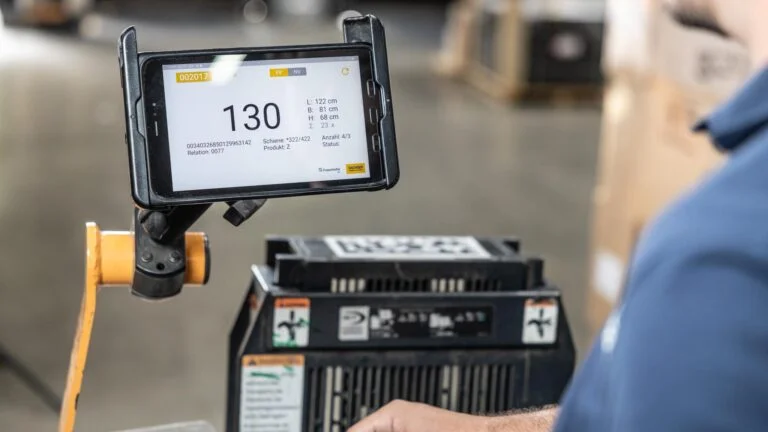
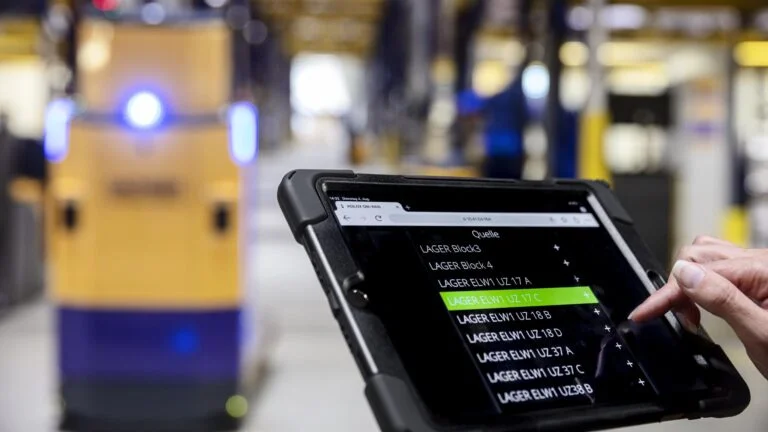
Digital solutions in logistics, such as AI-powered forecasting systems and cargo handling processes, now make it possible to plan goods flows more accurately and allocate resources more efficiently. At DACHSER, forecasting tools such as PAnDa One provide reliable forecasts for shipment volumes and support operational planning even in highly volatile environments. In the DACHSER @ILO terminal, which has won multiple awards, packages are identified, localized, measured, and recorded in the transport management system fully automatically when they enter and leave the transit terminal, as well as during their stay. This eliminates manual barcode scanning and the additional labeling of the packages. In addition to cutting process time, this helps make cargo handling workflows more efficient.
Sustainability is changing the business model
Successful supply chain management in integrated groupage networks also involves meeting increasingly stringent requirements in the areas of climate action and sustainability. The framework is defined by internationally agreed climate targets and the associated regulations, as well as by customers’ and logistics providers’ own climate action expectations and commitments. In practice, that means avoiding empty runs, optimizing capacity utilization, and deploying resources strategically. Moreover, investments in alternative powertrain systems, energy efficiency, and low-emission transport solutions are called for. These, in turn, have a direct impact on the cost structure.
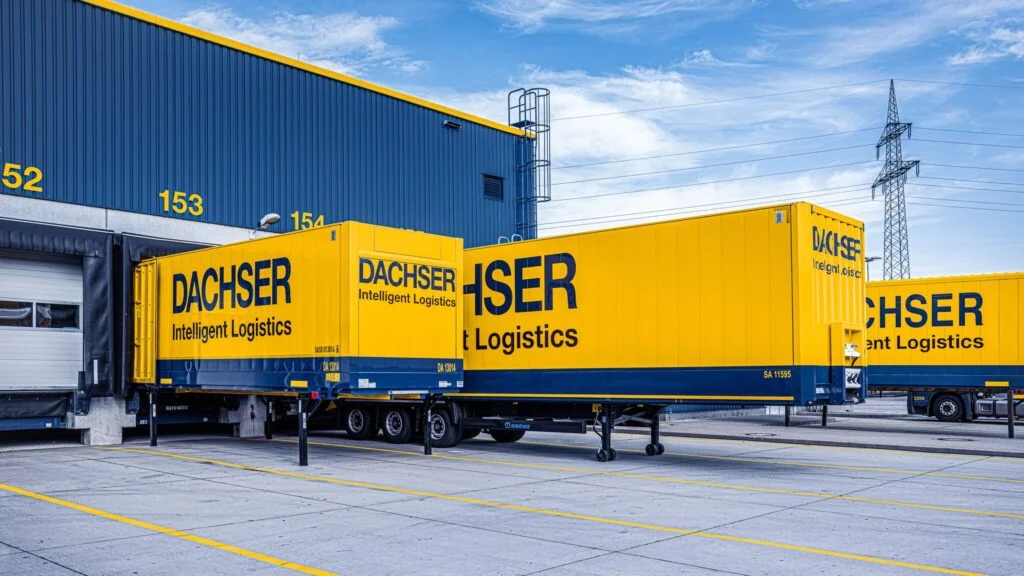
Supply chain resilience in groupage logistics isn’t a question of individual effort—it’s the result of a well-functioning system and effective partnerships built on mutual respect.
Network quality is becoming a key differentiator
In summary, it’s fair to say that resources such as warehouses, drivers, and equipment, together with the required (network) quality, don’t just happen by chance; they need long-term planning, and the costs of maintaining them must be shouldered together by all participants in the supply chain. It’s critical to have standards for equipment and infrastructure, transparent IT and billing systems, a high degree of coordination among network partners, and increased capacity utilization and productivity along the entire supply chain. Quality doesn’t appear here and there, but rather emerges from the entirety of logistics processes. One thing’s for sure: Only networks that make long-term investments in infrastructure and IT will be able to successfully meet the market challenges in groupage logistics and safeguard their performance over the long term.
The answer lies in a holistic approach: in the integration of end-to-end logistics solutions, in the consistent improvement of efficiency in core processes, and in strong, collaborative networks. Or, to put it another way, supply chain resilience in groupage logistics isn’t a question of individual effort—it’s the result of a well-functioning system and effective partnerships built on mutual respect.
Tune in: In the seventh episode of the DACHSER podcast Network Talk, we speak with Alexander Tonn about the current and future growth of the European road logistics network and the role that post-merger integration projects play in the company’s long-term development.