Hand in hand: How AI supports logistics
By Christian Weber I 9 minute read
02/09/2026
These days, artificial intelligence is on the rise in all areas of life and work, but it’s been around in the logistics industry for a long time now. When it comes to this technology, DACHSER is proceeding responsibly and with care. It aims for more than efficiency gains; the focus is also on improvements in service and performance for customers.

When it comes to artificial intelligence, there are various perspectives to consider. For some, AI opens up a whole new world of possibilities; for others, it’s like opening Pandora’s box. “Public perceptions of AI range from seeing it as a useful tool to viewing it as a threat, spanning the entire spectrum from optimistic to downright dystopian,” Sayandeb Banerjee, co-founder & CEO of The Math Company, a global enterprise AI and analytics firm, recently told Forbes Magazine. “Even though things are far less dramatic in real life, we would do well to ask ourselves a question about AI on a regular basis—a question we should ask ourselves about all human innovations: How can it make our lives easier and improve them in a sustainable way?”
The hallmark of a good AI solution is its ability to respond to changing user needs. “A genuine integration of analytics into users’ lives,” Banerjee continues, “makes technology more human and more human-centered in the long run.”
Unlike the debate over whether AI, as encountered in everyday life through ChatGPT, Gemini, Copilot, or Grok, is mostly useful or ultimately simply very dangerous, the assessment of its role in DACHSER’s day-to-day logistics operations is clearer and more positive: “Given certain conditions, AI is already an important tool today in digital data processing and the design of complex, secure supply chains,” says Lars Relitz, Head of Corporate Digital Innovation and Development (CDID) at DACHSER. “Since 2018, we at DACHSER have been working on various projects involving artificial intelligence, machine learning, and the associated large language models, or LLMs, and we’ve steadily expanded our capabilities in the use of AI in the areas of innovation development and prototyping.”
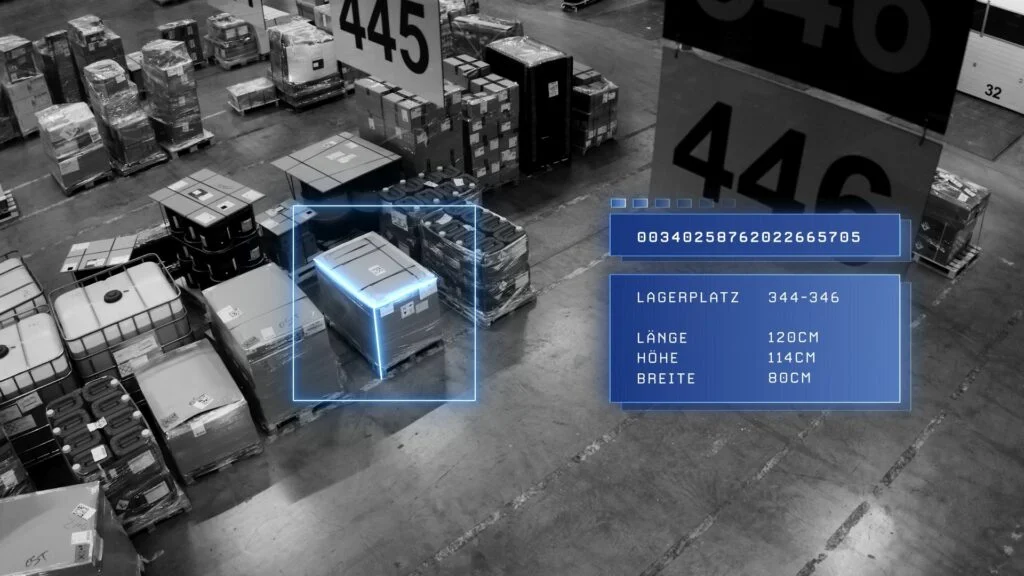
For example, DACHSER launched its first AI projects more than eight years ago at the DACHSER Enterprise Lab in collaboration with the Fraunhofer IML Institute in Dortmund. These included predictive forecasting models (PandaOne) and groundbreaking AI-based image recognition methods for package identification and process optimization in the transit terminal. The award-winning @ILO Future Terminal is now being rolled out step by step across DACHSER’s European network and is widely regarded as a game changer in the logistics industry.
Partly based on the experience gained with such projects, the DACHSER Enterprise Lab further expanded its partnership with the scientific and research communities last year. The Fraunhofer Institute for Intelligent Analysis and Information Systems IAIS is now also on board. This research facility, based in Sankt Augustin near Bonn, is one of the leading institutions in Germany and Europe for applied research in the areas of artificial intelligence, machine learning, and generative AI.
Artificial intelligence is also used in the award-winning digital twin @ILO.
Dachser’s AI strategy
“For DACHSER, the integration of artificial intelligence isn’t just about staying at the forefront of future trends, but also about making these technologies as widely available as possible within the organization,” says Stefan Hohm, Chief Development Officer (CDO) at DACHSER. To this end, the company has developed a framework to optimally leverage various approaches to the use of artificial intelligence within the company.
For DACHSER, the integration of artificial intelligence isn’t just about staying at the forefront of future trends, but also about making these technologies as widely available as possible within the organization.
Approach I: AI in day-to-day work
This approach covers typical AI applications in DACHSER’s day-to-day logistics operations. Microsoft’s Copilot plays a key role here, as a tool that enables the use of various LLMs within a secure data room. In general, any DACHSER employee with access to the Microsoft Edge browser can use Copilot to search for information online and have it processed by AI. The secure data room ensures that the data doesn’t get stored by the AI.
Microsoft Copilot is also an accessible AI tool that helps employees organize, structure, write, and summarize content. An expanded Microsoft 365 license provides selected employees throughout the DACHSER network with more advanced AI capabilities. Here, Copilot can also access and analyze internal company data, such as on SharePoint or Outlook.
All DACHSER employees can gain hands-on experience with AI in their day-to-day work using the DACHSER chatbot on the intranet. Since October of last year, this digital assistant has been tapping into the company’s vast pool of in-house knowledge and providing support on questions and internal research. Many employees already can’t imagine doing without the chatbot, which was developed by DACHSER’s Competence Center Data Science & Machine Learning.
Approach II: Citizen development
“Citizen development” is a concept in which employees from various departments, without any conventional IT training or programming skills, use something called no-code platforms to independently create business applications and automations, such as small, highly functional apps. DACHSER’s citizen developers have used smapOne’s no-code platform to develop hundreds of these small, customized applications themselves as part of pilot projects. For example, employees have already been able to independently improve various routine logistical processes, such as creating truck checklists and warehouse logs. Such apps have turned media discontinuities, long transmission times, and errors due to manual data entry into a thing of the past.
DACHSER plans to use this no-code approach in the future for AI applications within the Copilot and automation ecosystem as well. Using the right prompting techniques, employees can develop their own small, smart assistants and share them with others to help them in their daily work. For example, when dangerous goods data sheets containing a great deal of highly technical detail need to be compared and reviewed for any updates. Or when sales employees who aren’t native speakers use AI to help them draft e-mails using the correct DACHSER terminology in German or English. Such everyday applications aren’t just perceived as practical aids by employees, but they also help increase understanding and acceptance of AI and its potential uses.
New technologies are transforming logistics—but it’s the people who use them that make the difference. Learn why a digital mindset is the foundation for successful transformation.
Approach III: Development of Dachser’s core systems and product groups
DACHSER’s physical and digital worlds converge in its core systems of Domino, Mikado, and Othello, as well as in the EDI Center and on DACHSER platform. “DACHSER is still in the early stages of AI integration here. Systems that keep the network running require special care and security measures,” Relitz says. For this reason, the question of where AI use is appropriate in these essential areas—and where particular caution is warranted—is taken very seriously. “Here, knowledge and collaboration with the respective product owners are key to deciding on how to best integrate AI.”

Approach IV: Big bets
What are the major topics related to the future of logistics? Where are the best opportunities to improve efficiency in administrative and operational processes? And how can AI applications improve services and customer service, efficiently support repetitive processes, and enrich them with context to unlock new growth potential for DACHSER?
In the interests of improving process quality and optimizing customer service, “humanized AI” places people at the center of AI deployment. To ensure that employees can focus on their core tasks, are as well-informed as possible, and can make responsible decisions, AI relieves them of routine tasks such as the documentation and analysis of countless small event notifications that arise throughout the day. It’s considerably faster and much more effective to have AI fully capture and interpret these notifications for their recipients. This greatly reduces the burden on people while keeping them fully up to date, and it improves the quality of life, work, and processes alike.
The key to this is agentic AI, an advanced form of artificial intelligence that goes beyond simply generating content. Instead, specially configured agents are capable of autonomously defining tasks as they arise, making decisions, and carrying them out to achieve certain objectives. “Unlike passive AI models, these systems operate autonomously, use tools, and adapt to dynamic environments, often with minimal human oversight,” explains Andre Kranke, Head of Corporate Research & Development. He says that this is also one of the major issues for DACHSER this year.
Conclusion: Recognizing the opportunities of AI and using it responsibly
What impact do all these developments have on the way AI makes itself increasingly felt in real life and work in the logistics industry? One thing is already clear: AI is opening up entirely new horizons of possibility in logistics. In Europe, the EU AI Act sets the legal framework for this. The world’s first AI law stipulates that AI applications must not be misused and that the protection of fundamental rights must be ensured. Legal certainty in the use of AI is particularly important for companies. The same applies to the resulting classification of different types of AI, from harmless to prohibited. Kranke says that from DACHSER’s perspective, it’s important to have a legal framework that’s not overly bureaucratic, which could slow down or even prevent further developments and innovations.
Along the way, DACHSER is striving to keep its employees on board at all times. For example, AI development and integration were central parts of the innovation framework of the Idea2net strategic focus program. And that’s for one simple reason: Only those who truly understand AI can put this technology to effective use.