IT transformation at DACHSER: Data in the service of people
By Christian Weber I 10 minute read
08/10/2026
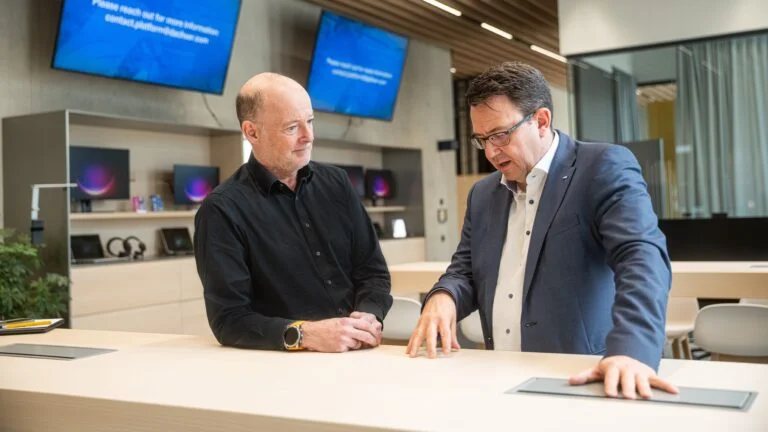
It’s a goal that DACHSER’s target picture clearly articulates: The company aims to be the “most digitalized logistics provider” by 2030. Stefan Hohm, Chief Development Officer (CDO) at DACHSER, and Ralf Morawietz, Corporate Director Corporate IT (CIO), discuss DACHSER’s journey into an IT era that will make it much easier for people to work and collaborate.
Quick Read


DACHSER’s mission includes the statements “We create the world’s most intelligent combination and integration of logistical network services” and “We optimize the logistics balance sheet of our customers.” The company’s target picture 2030 articulates these ideas as the goal of becoming the “most digitalized logistics provider.” Where is DACHSER coming from on this, and where does the company stand today?
Stefan Hohm: The term “digitalized logistics provider” describes a capability that we’ve had at DACHSER since the 1990s. The company recognized very early on that data flows are closely intertwined with physical processes, and that both together are essential for high-performance networks. That’s why DACHSER can rightly be described as a “digital native.” It’s also why we truly understand that the difference between an average, dispensable logistics company and one that’s excellent, indispensable, and potentially high-growth is the degree of digitalization.
Ralf Morawietz: That also sums up DACHSER’s approach, which is to build IT infrastructure in-house that’s closely aligned with our processes and then to continuously refine our technologies over the years. That is the essence of DACHSER’s IT strategy.
How exactly does DACHSER go about this?
S. Hohm: From the very beginning, we’ve invested in building solid foundations. Now it’s time to focus on the business benefits. IT should serve people and support a company’s development. That’s why we have a clear roadmap for IT transformation. These guidelines transparently establish priorities, with a particular focus on resources that are geared toward applications that add the greatest possible value. To this end, we use state-of-the-art technologies and programming languages, and we’re constantly updating our employees’ training and skills to match. Our IT staff regularly visit the branches to ensure that their work is connected to practical realities and keeps the actual use case in mind.
R. Morawietz: “Wait and see” is not an option here. The IT landscape has changed dramatically in recent years, and at breakneck speed. There’s just no comparing today’s software developments with those of 15 or 20 years ago. That’s why, at DACHSER, we no longer rely exclusively on software we’ve developed in-house; for some time now, we’ve also been exploring the market to see which software solutions best suit our needs and what cost-benefit ratio they offer. It’s always worth bearing in mind, however, that solutions purchased off the shelf usually also require a great deal of customization.
At DACHSER, people are and will always be indispensable, even in the age of artificial intelligence.
Digitalization and the rise of artificial intelligence are changing people’s view of services and processes in the DACHSER world. Many see this as progress, while others are concerned. What role is there for humans in all this—today and in the future?
S. Hohm: At DACHSER, people are and will always be indispensable, even in the age of artificial intelligence. We want to use AI both to empower people across the company to make better-informed decisions and to support them in their work, especially when it comes to tasks that are repetitive, tedious, and add little value. In other words, we want to—and must—always be able to do two things: First, stay closely attuned to the needs of our customers and employees; and second, provide machine interfaces and operate them in a way that adds value for both the customer and for us as a logistics provider.
Digitalization doesn’t start with technology—it starts with people.
The article “Digital mindset: Transformation begins in the mind” in DACHSER magazine shows how digital openness, a willingness to learn, and new forms of collaboration support this transformation.
What computing resources does DACHSER need to have in place to ensure high-performance IT?
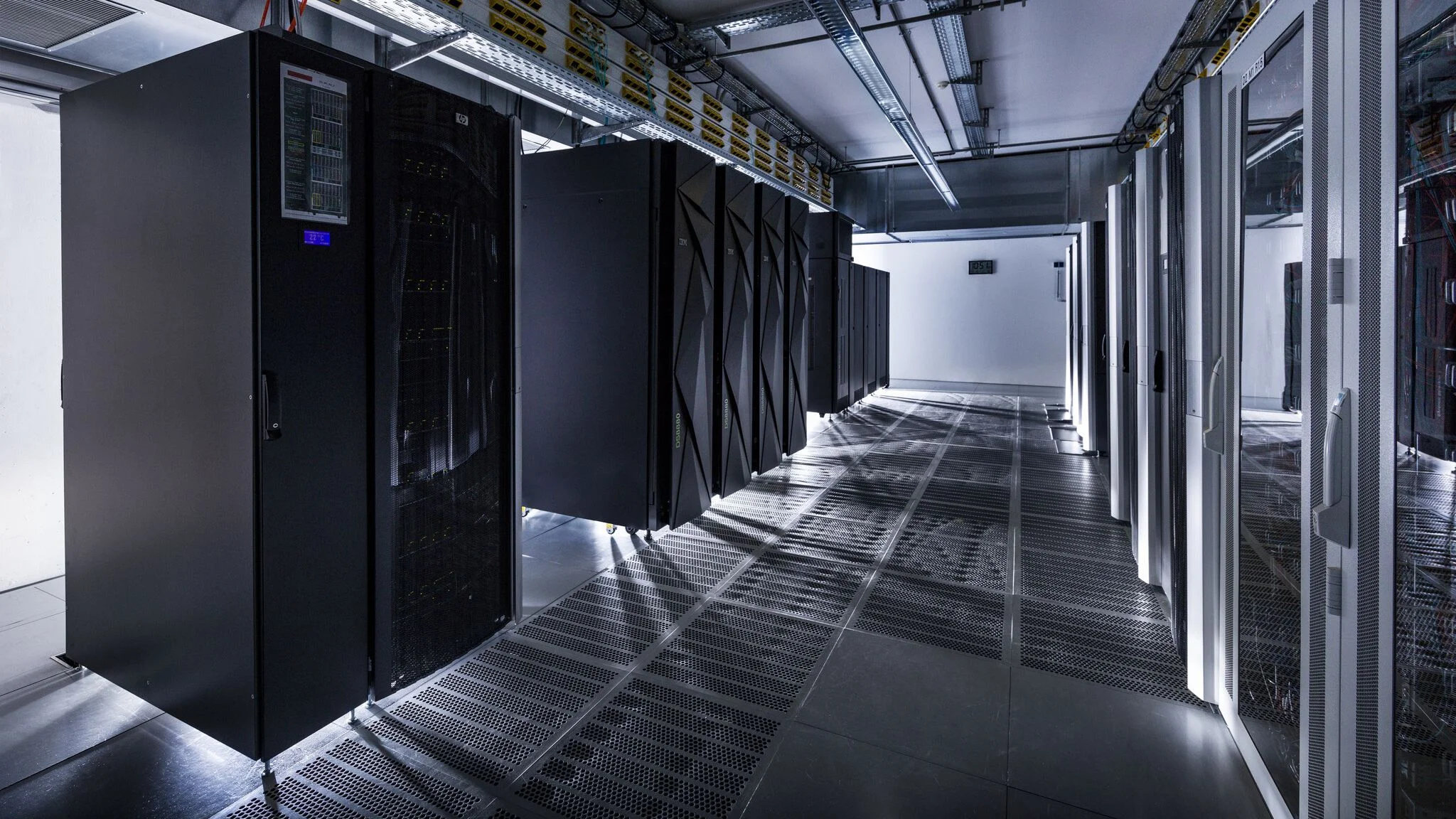
R. Morawietz: The data centers we currently have in-house have made us exceptionally well-positioned in terms of capacity and structure to handle the tasks of today and tomorrow. According to Moore’s Law, processing power roughly doubles with each successive development step. As a result, we’ll need less and less space to maintain a given level of capacity. And that means we’ll have no problems continuing to grow at our Kempten location into the future. We’ve made provisions for this in our IT budget for the next few years. This already takes into account the fact that, in an ideal scenario, IT costs don’t rise in lockstep with business growth; rather, synergies will result in lower unit costs.
They’re all connected and communicating with one another.
What does all this really mean for the staffing structure of Corporate IT?
R. Morawietz: DACHSER currently employs a total of about 820 people in IT. To attract the best talent worldwide for our teams, we’re going where the people are; that’s why we’ve set up Corporate IT hubs in La Verrie, in Porto, near Madrid, and here in Kempten. These hubs aren’t service centers, they’re integral parts of the network. That means employees in, say, Porto have the same knowledge and responsibilities within Corporate IT as their colleagues in Kempten. And they’re all connected and communicating with one another. This lets us scale as needed, and it ultimately means we gradually acquire all the knowledge we didn’t have before.
How important is a digital mindset to the success of the IT transformation—both for DACHSER employees and for customers?
S. Hohm: Many applications that DACHSER employees have used in their work for years or even decades are currently being retired and replaced with something new. And not gradually, either, but overnight. However, technological change is only half of the equation. We must also empower people to cope with this change. Even more than that, we need people to have just as positive an attitude to change in a professional setting as they do in their personal lives.
This rapid pace of change is also the result of an evolving job market, where it’s getting harder and harder to find trained logistics professionals. That’s why we need systems that are easy to use and supported by automation.
4
Corporate IT hubs in La Verrie, Porto, near Madrid, and in Kempten form the backbone of DACHSER’s international expansion of its IT capabilities.
We must also empower people to cope with this change.
What do these rapid developments mean for managers? Do they always have to stay one step ahead so they’re in a position to credibly communicate the digital transformation to their employees?
S. Hohm: Managers have daily routines that they go through and established roles that they perform, just like everybody else. At DACHSER, they’re expected to demonstrate a willingness to embrace technological change. It’s their job to empower their teams—including by providing them with digital support—so that at the end of the day, those teams can consistently deliver the performance that customers expect from us and that sets us apart from the competition. That doesn’t mean managers have to become IT specialists, but they do need to be open to digital solutions. And once they’re convinced of the value of those solutions, they need to inspire others to embrace them as well. AI won’t replace managers, but let’s be honest: Managers who use AI will ultimately replace those who don’t.
R. Morawietz: We’ve put programs in place to help managers adopt AI. One of those is reverse mentoring, where managers sit down with younger colleagues or people with strong digital skills, listen to them, and get up to speed on the latest developments. This has been working really well and is a win-win for everyone involved.
Learning in both directions:
In reverse mentoring, experienced leaders and digitally savvy employees exchange perspectives and knowledge. This brings digital transformation to life in everyday work.
Our customers will be able to say that DACHSER offers the best digital experience for the service they want and is a global leader in terms of data.
To conclude, let’s imagine what 2030, the target picture year, will look like: How will employees and customers be able to tell that DACHSER is the “most digitalized logistics provider”?
R. Morawietz: Our customers will be able to say that DACHSER offers the best digital experience for the service they want and is a global leader in terms of data. We’ll have created workspaces for our employees that are tailored to their jobs and provide them with the best possible support. This will let them focus entirely on what creates value both for customers and for DACHSER—which will make their work enjoyable.
S. Hohm: In 2030, our customers, employees, and stakeholders should be able to say that all along, DACHSER had a plan—and the resources—to always offer future-proof logistics as the most digitalized logistics provider. Right now, we’re halfway to our goal. What we need to do next is deliver the relevant business applications and further prepare the organization to successfully embed the upcoming change processes into day-to-day operations. If we do that, I’m sure that we will reach our goal.