Hazardous materials storage in Ireland
By Marcus Schick I 8 minute read
10/09/2026
In Dublin, DACHSER combines state-of-the-art hazardous materials storage in accordance with COMAH safety standards, its ADR network, and additional services tailored specifically to customer needs. The facility and its innovative concept demonstrate how today’s specialized logistics solutions extend far beyond transport and storage, reaching deep into customers’ value chains.

The truck has reached its destination, a brewery. But unloading the pallets is just the first step. The driver also brings an intermediate bulk container (IBC) filled with cleaning chemicals to the designated location, connects it to the customer’s pumping system, checks the connections, and starts the pumping process. His job isn’t finished until the cleaning process is complete and the equipment used has been properly dismantled and secured.
What sounds more like a technical service than transport logistics is part of everyday life at DACHSER Ireland. As the brewery example shows, the drivers do more than simply transport the product. For some customers, drivers’ responsibilities extend beyond the loading bay and into the operational processes of the facilities they drive to.
This unique combination of transport, warehousing, and specialized services defines DACHSER’s facility in Rathcoole, just outside Dublin. Spanning an area of approximately two hectares, the site features eight warehouse buildings, each tailored to specific warehousing functions, particularly for customers in the chemical industry. In total, there are approximately 10,500 m2 of warehouse space and about 20,000 pallet spaces available. The site is subject to the requirements of COMAH Upper Tier regulations. COMAH stands for “Control of Major Accident Hazards” and corresponds in substance to the European Seveso III Directive. “Upper Tier” refers to the higher level of responsibility in which certain hazardous materials reach or exceed specified quantity thresholds and require the strictest safety rules for storage.
20.000
pallet spaces are available at the Rathcoole site near Dublin, in a warehouse that meets COMAH Upper Tier standards

Comprehensive logistics for chemical products
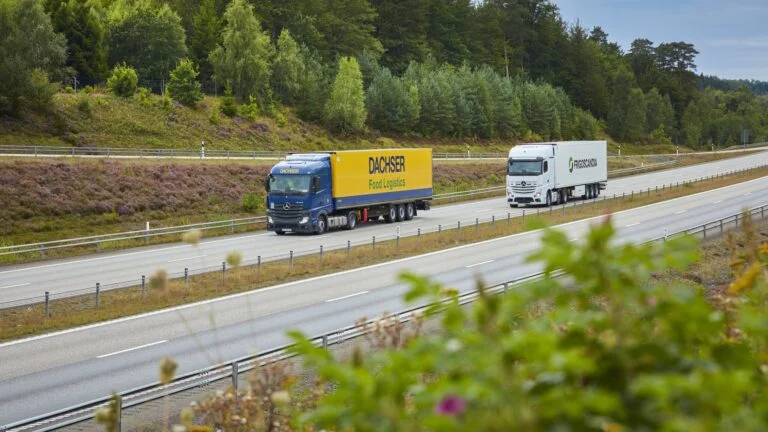
There are also hazardous materials warehouses, including those with high COMAH safety requirements, in other locations throughout Ireland, mostly on the premises of the manufacturers themselves. DACHSER clearly stands out in the market, however, thanks to its unique combination of warehousing services, a transport network that’s fully ADR-compliant, and contract logistics. “With its fully compliant, nationwide ADR network and facilities in Dublin, Cork, and Limerick, DACHSER Ireland is the only logistics provider in the country that offers specialized services with a focus on chemical and life sciences sectors,” says John van den Berg, Managing Director Ireland at DACHSER. “All processes related to storage, transport, safety, and additional services for chemical products work together seamlessly.” In this way, the Dublin location provides key building blocks for the DACHSER Chem Logistics industry solution—tailored to the specific needs of customers in Ireland.
When logistics becomes a competitive advantage: Modern chemical logistics creates added value that goes far beyond transport. A study shows how innovative supply chain solutions can help companies stand out from the competition.
Safety in hazardous materials storage
For a hazardous materials warehouse at the highest COMAH level, fire alarms and marked storage areas aren’t enough. Requirements include containment systems for spilled liquids and fire water, gas detection and ventilation systems, fire alarm and suppression systems, access restrictions, as well as emergency equipment and burglar alarm systems. In addition, there are risk analyses, detailed scenarios for accidents, internal and external emergency plans, and safety reports that must be updated regularly.
Not every chemical stored at the facility automatically falls into the highest hazardous materials category under the COMAH standard based on the relevant quantities and hazard potential. Nevertheless, “providing state-of-the-art infrastructure creates a controlled environment in which we can store chemicals, pick orders, transport them accordingly, and prepare them for customer-specific applications,” explains Max Kurov, Operations Manager at DACHSER Ireland.
With its fully compliant, nationwide ADR network and facilities in Dublin, Cork, and Limerick, DACHSER Ireland is the only logistics provider in the country that offers specialized services for the chemical and life sciences sectors.
More than just transport: Services for chemical industry customers
One illustration of the scope of DACHSER’s logistics services is how the company supplies pesticides to farms. In such cases, timing is often crucial: Farmers must take advantage of brief dry spells in Ireland’s rainy climate to apply the chemicals. That’s why drivers sometimes coordinate directly with farmers by phone to determine when and where the goods should be dropped off at the farm. Sometimes the recipient is already out in the field with the machinery. Delivery then resembles less an anonymous industrial process and much more a personalized B2C service, in which the drivers are thoroughly familiar with the local conditions at the end user’s location.
Inventory management can also be part of the service. With DACHSER’s vendor-managed inventory, company employees monitor the inventory of certain products directly at a customer’s location. If the stock level of a particular product drops, they arrange for it to be replenished from the warehouse in Dublin. In this way, DACHSER works closely with its customers to take on part of operational supply chain management.
DACHSER also puts together product assortment packages for specific customers, known as “assorted packs.” Especially when it comes to pesticides, various chemical products are constantly being recombined, repackaged, and relabeled. “Because manufacturers regularly adapt their applications to new requirements or changing conditions in the agricultural sector, DACHSER faces new challenges every year in terms of warehousing, picking, and packaging,” Max Kurov explains. “This calls for contract logistics that are as integrated as possible—with adaptability and flexibility. It’s crucial that every single step be mastered and that everyone involved know what responsibilities they’re taking on.”
One area that’s less visible but essential to the logistics of chemical products is the handling of hazardous waste. This includes, for example, chemicals that have leaked, are damaged, or are no longer usable and can’t simply be disposed of. DACHSER assists its customers with the safe temporary storage and sorting of such substances, working in collaboration with specialized waste management companies.
Technology, certifications, and emergency plans form the foundation for customer-focused chemical logistics services. However, consistent quality comes from experience, attention to detail, and the ability to act responsibly even when faced with challenging tasks.

Logistics for chemical products requires qualified employees
In addition to suitable warehouse space, well-coordinated processes, and comprehensive safety measures, specially trained employees are crucial to logistics profitability. In Ireland, 140 employees were trained in chemical safety, with 28 learning how to handle chemical spills. The company has also trained first responders and fire safety officers and provided employees with defibrillator training.
In addition to their ADR certification, drivers need additional knowledge for services such as pumping, inventory management, or deliveries to farms. They are the face of DACHSER to customers, serving as their points of contact, problem-solvers, and hazardous materials experts. They assess situations on-site and must reliably carry out the processes as agreed even under changing conditions.
“Technology, certifications, and emergency plans form the foundation for customer-focused chemical logistics services. However, consistent quality comes from experience, attention to detail, and the ability to act responsibly even when faced with challenging tasks,” Max Kurov says.
The central dangerous goods management team supports branches throughout Europe with matters relating to the road transport and storage of dangerous goods and hazardous substances. Its responsibilities include developing uniform standards and guidelines, advising on warehouse and construction projects, providing training, and supporting compliance with legal requirements. By working closely with the branches and specialist departments, DACHSER ensures a high level of safety, compliance, and quality throughout the entire transport and storage chain.

Ireland as an EU logistics hub
“In recent years, Ireland has become even more important as a logistics hub,” John van den Berg explains. He says that following Brexit, some UK-based companies operating internationally shifted inventory to Ireland to avoid additional customs procedures, longer transit times, and potential supply risks. As a result, Dublin is increasingly becoming a storage and supply hub within the European Union for certain industries.
This development, John van den Berg says, is taking place in an Irish economy with strong chemical, pharmaceutical, and technology industries. “For the companies in these sectors, it’s not just the available warehouse space that matters. The key factor is how quickly and reliably products can be distributed throughout the country and, when necessary, integrated into European supply chains. Here, DACHSER Ireland—with AEO status, ISO certification, SQAS accreditation, and COMAH Upper Tier status for warehousing, transport, and value-added services, as well as connections to the European DACHSER network—offers a one-stop solution for chemical logistics.”
The day-to-day of deeply integrated chemical logistics
Having left the brewery’s depot, the driver makes his way to the next customer with a load of cleaning supplies. There, too, he does more than just deliver a product; he also plays an active role in ensuring that a process continues to run smoothly for the customer. State-of-the-art, deeply integrated chemical logistics doesn’t begin with transport, nor does it end with delivery. And that’s just how the driver likes it: “Being part of something bigger, something that customers appreciate and that helps everyone, feels good and right.”