20 years of new beginnings – and a look ahead
By Marcus Schick I 9 minute read
27/10/2026
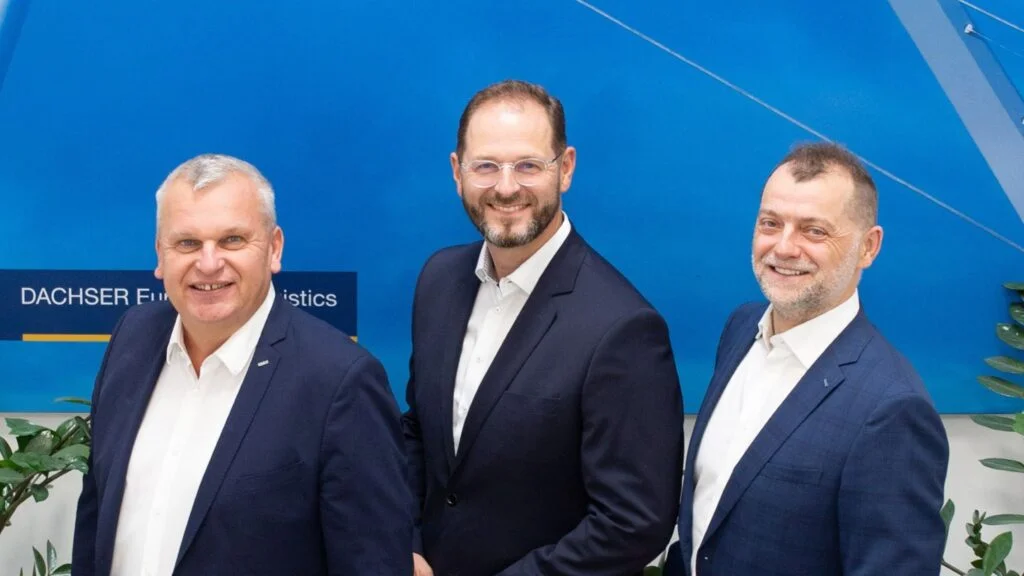
About 20 years ago, DACHSER opened its first branches in Poland, the Czech Republic, and Slovakia – three investments in a region that would soon play a central role in European supply chains. Jarosław Witkowski, Managing Director DACHSER Poland, Jan Pihar, Managing Director DACHSER Czech Republic, and Roman Stoličný, Managing Director Road Logistics South East Europe, share insights and perspectives on a development that has made logistics history.

An anniversary is both a reason to celebrate and an opportunity to take stock. Looking at your country and its role in the European DACHSER network today, what has changed most over the past 20 years?
Roman Stoličný: Step by step, we learned what it means to work as an active part of the network and take responsibility. That was crucial to our development as a country organization. Slovakia’s accession to the EU made many things easier – but potential only becomes a real advantage when processes, systems, and people come together. That is exactly the path we have taken.
Jan Pihar: For the Czech Republic, joining the DACHSER network meant gradually building trust, processes, and quality. Today, we benefit from our organization being fully integrated into the European groupage network. Our customers do not care where a national border lies; what matters to them is that their shipment reaches its destination reliably, transparently, and on schedule.
Jarosław Witkowski: This tremendous pace of change was evident in Poland from the very beginning as well. I think I can speak for all of us here: systematically building structures in each country benefited not only the individual countries, but also the entire DACHSER network – despite all the difficulties and economic challenges we had to overcome along the way.
Our customers do not care where a national border lies; what matters to them is that their shipment reaches its destination reliably, transparently, and on schedule.
What do your customers expect from logistics providers today? And how have those expectations changed over the years?
R. Stoličný: Then as now, customers expect reliable logistics services with maximum transparency and process reliability. That is why the real added value did not come from DACHSER entering the market alone, but from consistently integrating the countries into a unified network. Key steps included introducing standardized IT systems such as DOMINO and MIKADO, integrating the countries into the entargo product family, establishing uniform performance standards, and developing scheduled cross-border services. The establishment of the Bratislava Eurohub in 2007 as a central hub for transport in the region significantly improved transit times and network quality. Today, this foundation allows advances in areas such as digitalization, process optimization, and sustainability to make a real impact.
J. Pihar: Logistics is about doing more than simply responding to change; it means actively helping shape it. As our customers place ever greater demands on their own processes, we as a logistics provider must adapt accordingly and provide the technologies and process improvements that enable them to respond quickly and effectively to fluctuating demand. Today, we are seeing significantly greater market volatility, with daily, monthly, or annual fluctuations in the double-digit range. We want to actively support our customers in meeting these challenges.
R. Stoličný: It is fortunate that DACHSER is already well advanced in the digital transformation of logistics – and continues to move forward. Digitalization, automation, and artificial intelligence are now key topics that continuously shape how we work and think at DACHSER.
J. Witkowski: Transformation and change are part of our own history. That is why we do not view transformation primarily as a risk, but as an opportunity to keep developing. After all, we come from a period shaped like few others by economic transformation, market liberalization, and long-term investment. By building high-performance structures and integrating new technologies, we as DACHSER country organizations have succeeded in convincing customers of the capabilities of our logistics offering.
What does all of this mean for your countries’ role in the DACHSER network?
J. Pihar: We do not see ourselves or our country organization as an isolated national entity, but as a building block in a pan-European network. Today, 100 daily export connections from the Czech Republic give our domestic manufacturers access to markets across Europe and beyond – making them a key driver of further growth. Once again, this shows how national structures have evolved into a shared network.
R. Stoličný: At DACHSER, network integration and customer focus have always gone hand in hand. One point we hear again and again in many conversations is that service quality is one of our greatest strengths and one of the key values that sets DACHSER apart from the competition. Today, customers expect consistent, reliable, high-quality service across the entire supply chain – regardless of whether they operate in Slovakia or Romania, Switzerland, Scandinavia, or Southern Europe. The level of service has to be the same everywhere. Customers also expect proactive communication and fast solutions when problems arise.
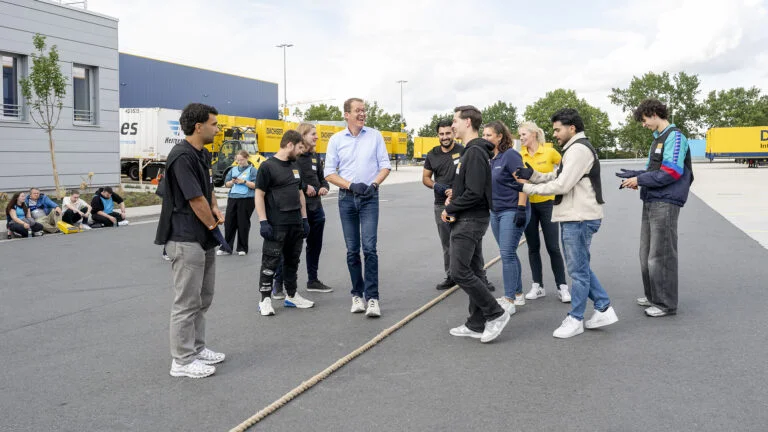
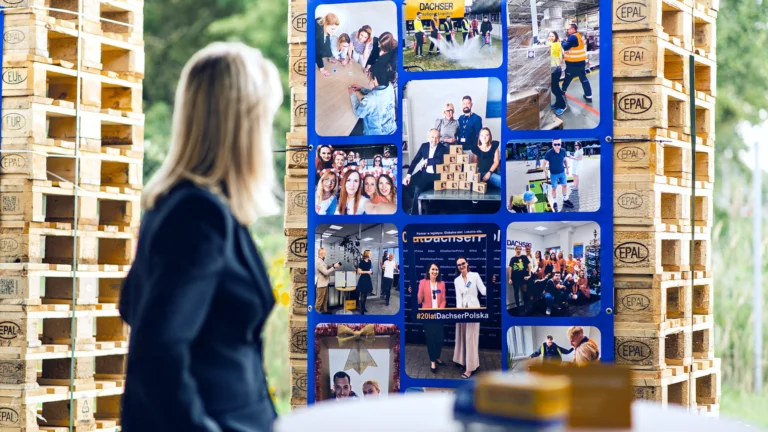
J. Witkowski: Incidentally, that is also one reason why we took our anniversary celebrations to our customers in Poland – not the other way around. A large majority of our customers have been with us for many years. A roadshow took us across the country, where we met with more than 400 existing and prospective customers at our “Business Breakfasts”. We talked about what we have built together over 20 years: an increasingly dense DACHSER network that connects Polish companies with all of Europe. This gives customers shorter transit times and scheduled services with a partner that understands both the local and the European market. One clear message we took away from these conversations is that what customers value most is stability – and the confidence that they can plan their growth with us for years to come.
Explore how our integrated logistics network links markets across Europe and creates efficient, reliable supply chains.
What customers value most is stability – and the confidence that they can plan their growth with us for years to come.
At DACHSER, we say that logistics is a people business. What role do employees play in the success of your country organizations?
R. Stoličný: An absolutely crucial one. The 20-year history of DACHSER Slovakia cannot be measured primarily in buildings, achievements, and growth. There are people behind every milestone. They are what makes DACHSER still feel like a family-owned company, even at this scale. Mutual respect and trust have made possible the service quality and innovative strength that we celebrated at DACHSER Slovakia’s 20th anniversary – and continue to celebrate.
J. Pihar: Our employees are the carriers of DACHSER expertise, and they actively help implement processes directly in newly established and acquired branches – both here in the Czech Republic and as part of PMI projects at DACHSER throughout Europe.
J. Witkowski: I agree completely: there are real people behind every milestone. During our anniversary celebrations in Poland, we recognized 16 employees for 20 years of service. We also welcomed DACHSER colleagues from various countries, which confirms that together we form an international community. I am convinced that experience, reliability, and the determination to keep evolving will continue to define DACHSER.
There are real people behind every milestone
Looking ahead to that future: Poland, the Czech Republic, and Slovakia are among Europe’s most dynamic economic regions today. At the same time, the world is changing dramatically and at an unprecedented pace. What opportunities do you currently see for DACHSER in your market?
J. Witkowski: Today, Poland ranks among the largest economies in the European Union. It is one of Europe’s key locations for growing production and an important logistics hub for goods from around the world. In my view, this holds considerable potential and offers a sustainable growth outlook – for customers and for the entire DACHSER network.
J. Pihar: I would say the same for the Czech Republic. Another particular strength I see at DACHSER is the consistent path the company is taking toward innovation and digitalization. We are also firmly focused on DACHSER’s goal of becoming the most digitalized logistics provider by 2030 – for our customers, our employees, and the entire DACHSER network.
R. Stoličný: We are seeing companies reassess their supply chains. It is no longer only about producing as cost-effectively as possible, but about safeguarding supply capability and proximity to sales markets. This creates additional opportunities for Central and Eastern Europe – as a production region, a logistics hub, and a link between European and global flows of goods.