Optimization: A new take on supply chains for powder coatings
By Marcus Schick I 8 minute read I Photos: IGP
24/02/2026
Volatile markets, high product diversity, increasing customer demands: With help from DACHSER, the Swiss company IGP Pulvertechnik AG is strategically reviewing its supply chain. How analysis, trust, and partnership deliver a flexible logistics model for the future.

Switzerland’s mountain panorama is overwhelming, as a stunning crimson cloud colors the flanks of the Alps—when Stefanie Strub dials in for our video call, it’s this motif from an IGP Pulvertechnik AG marketing campaign that we see as her background. “The view is as impressive as our company,” she says, getting straight to the point: “Our range of powder coatings stretches to over 17,500 different items, including 1,600 shades of white alone.” For Strub, these figures present a major challenge. She is Head of EU Logistic at powder coating manufacturer IGP, which has its headquarters in Wil in the Swiss canton of St. Gallen. When a huge range of product variants meets exacting service requirements and increasing customer demands in terms of availability and delivery reliability, what’s needed is supply chain management of the highest caliber—especially in a market environment that is currently changing ever faster and often in surprising ways.
The competition never sleeps. That means that for us, it always comes down to quality, time, and reliability—for every single order and every single shipment.
Stable supply chains – no ifs, ands, or buts
In 2024, IGP produced around 15,000 metric tons of powder coating. The company’s powder coatings can be found on façades, furniture, industrial plants, and in vehicle construction. No two products are the same, and two orders are hardly ever alike. And yet supply chains must always function in the same way: reliably, efficiently, and as quickly as possible. “Our aim is always to be there for our customers—regardless of whether they order batches of 20 kilograms or 200. The goods must be delivered across the EU in 24 to 48 hours maximum. No ifs, ands, or buts,” Strub says. “The competition never sleeps. That means that for us, it always comes down to quality, time, and reliability—for every single order and every single shipment.”
15.000
IGP produced 15,000 tons of powder coating in 2024.
Putting the logistics solution to the test
But how can these requirements be combined with stable, future-proof processes without losing flexibility and cost effectiveness? In 2021, IGP put its European logistics solution to the test. Together with the Fraunhofer Institute, it first performed a network analysis with a focus on cost savings and improving internal processes. The project aimed for more transparency, a uniform ERP data platform for all IGP companies, and process standardization. Was this the direct route to operational optimization? Not exactly. “We didn’t want to go with the traditional consulting process,” Strub says. “We wanted someone who understands our business and who would develop new solutions together with us—from everyday practice for everyday practice.”
The Swiss company turned to DACHSER, since its Steißlingen branch, close to the border on the German side of Lake Constance, already had more than a decade of experience in warehousing, transport, and customs solutions for IGP. “Optimizing the supply chain was the next step for us. Not purely from an efficiency perspective, but as an open-ended strategic project,” Strub says. She adds that mutual trust was fundamental to this. “We felt that DACHSER understood us well at all times and never pigeonholed us. It helps us enormously that we can always reach the experts, especially our project manager on the DACHSER team.”
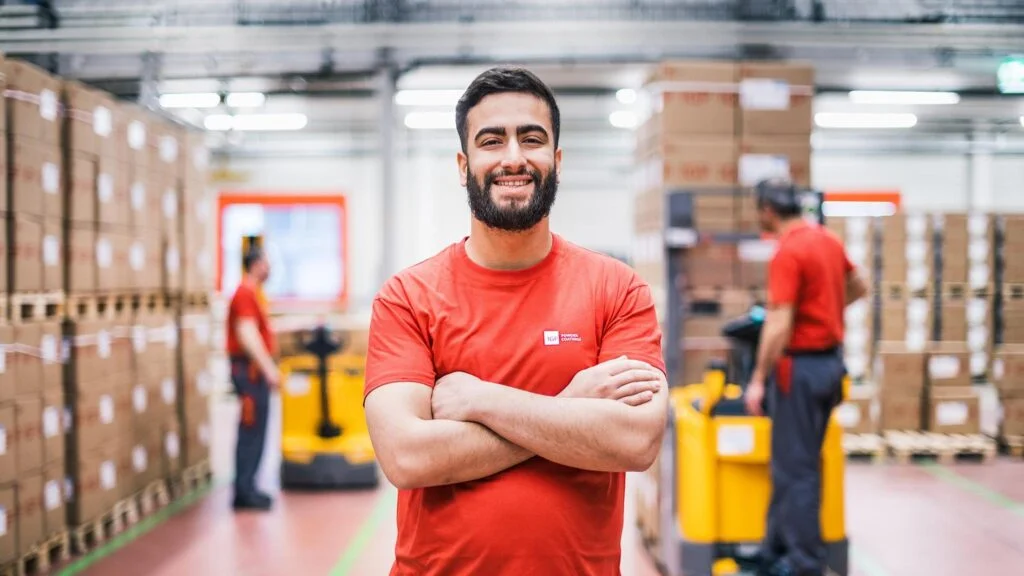
Supply chain optimization: Getting better together
The planners faced quite a complex starting point: There were six warehouse locations in Europe, some of them highly specialized, and many with their own IT processes. This was further complicated by different responsibilities, variable transport routes, and complex customs considerations. “We knew that it all works,” Strub says, “but we didn’t know how good we really are, what potential our supply chain holds, or whether we might even be slowing ourselves down.”
This critical self-reflection and willingness to open up laid the foundation for a comprehensive project with the Supply Chain Optimization team at DACHSER’s Head Office in Kempten. A project initiated at the operational level, but with a clear strategic perspective. “We asked: What can we achieve together, what can we do better together?” recalls Tobias Rasch, Department Head Supply Chain Transformation at DACHSER.
Given the extraordinary complexity of the product range, the high proportion of exports, and the accelerating market dynamics, the planners were faced with another question: How can warehousing, production supply, and distribution be coordinated more efficiently—without compromising on availability, delivery speed, and quality?
When this family-owned company was founded in 1968, it was one of the pioneers of the emerging powder coating industry. IGP has been developing, producing, and distributing powder coating solutions for surface applications in architecture, industry, and transportation and for coating wood ever since. Today, IGP is headquartered in Wil, Switzerland, has a global presence with 21 subsidiaries and sales partners, and employs around 600 people.
Our aim wasn’t to change everything in the shortest possible time, but to work together to create a structure that would be sustainable in the long term—even under changing market conditions.
Not an off-the-shelf solution
“We realized that we need to fundamentally and holistically rethink our supply chain,” Strub reports. “For us, it was important not just to move a single lever, but to take a strategic look at the entire flow of materials and information together with our logistics partner.” This was the starting point for an intensive co-creation process with DACHSER. “Supply chain optimization isn’t a ready-made, off-the-shelf solution. It’s the result of thinking things through together, analyzing them, and understanding the real requirements—and, most importantly, it comes from mutual trust,” Rasch says.
IGP had signaled early on that it was open to a data-based, systemic optimization approach. This was about more than purely operational improvements; it was about long-term strategic cooperation. “Together, we carried out a comprehensive analysis of the current processes along the entire supply chain—from warehouse locations to safety stocks and transport control,” Rasch explains.
Supply chain optimization isn’t a ready-made, off-the-shelf solution. It’s the result of thinking things through together, analyzing them, and understanding the real requirements—and, most importantly, it comes from mutual trust.
Thinking in terms of scenarios
Based on the analysis and with the help of a special software tool, the project team worked up various scenarios and ran through them. “Each model had to take into account how both the transit times and the costs change,” Rasch explains. “Merging all European distribution into one central location was a no-go for IGP. Although this would have leveraged synergies, it would also have resulted in transit times of up to three or four days. And that just wouldn’t work. At the same time, we realized that certain redundancies gave us the illusion of flexibility, but actually made processes more complicated,” Rasch says. To get to the bottom of the matter, the DACHSER experts first worked with IGP to “recreate” the current setup. They then analyzed this copy using an in-house algorithm to go through the calculations: Which locations are even worth considering if you have to take not only costs but also transit times into account?
IGP found the advantages of the resulting location solution compelling. “By consolidating, we not only optimize warehousing and transport costs, but also simplify control,” Strub says. The same applies to optimizing customs processes. As a Swiss company with a high proportion of exports, IGP relies on smooth customs processes. The aim is to minimize interface losses and maximize process transparency while avoiding unnecessary time losses at the border.
Now we can finally orchestrate functions along our entire supply and value chain
Orchestrating locations
The newly positioned locations will take on clearly assigned functions within the IGP supply chain: production supply, Central European cargo handling, and specialized customer delivery. “This represents a real change of perspective for us in logistics,” Strub says. “Suddenly we weren’t just managing locations anymore—now we can finally orchestrate functions along our entire supply and value chain.”
What’s particularly important for the logistics experts is the fact that each implementation step is realized during ongoing operations: Rather than a disruptive reset, it’s a controlled transition to a new model. “Our aim wasn’t to change everything in the shortest possible time, but to work together to create a structure that would be sustainable in the long term—even under changing market conditions,” Rasch points out. For Strub, the optimization process has already brought tangible benefits: “In the future, instead of isolated data islands, we’ll have comprehensive information: on stocks, transit times, customs processes, and capacities. That means we can adjust our plans more quickly, identify bottlenecks sooner, and keep customers better informed. As a result, our supply chain is not only more efficient but also more responsive and flexible.”
That’s why Rasch sees this joint project as the “prototype for modern, partnership-driven supply chain optimization” with a steep learning curve for everyone involved. “It was never just about processes. Rather, it was about thinking things through together, learning from each other, and combining operational reality with strategic development. There’s a future in that. Especially in challenging times.”