On the road to sustainable logistics: three questions to Stefan Hohm
By Hendrik Durst I 3 minute read
12/02/2026
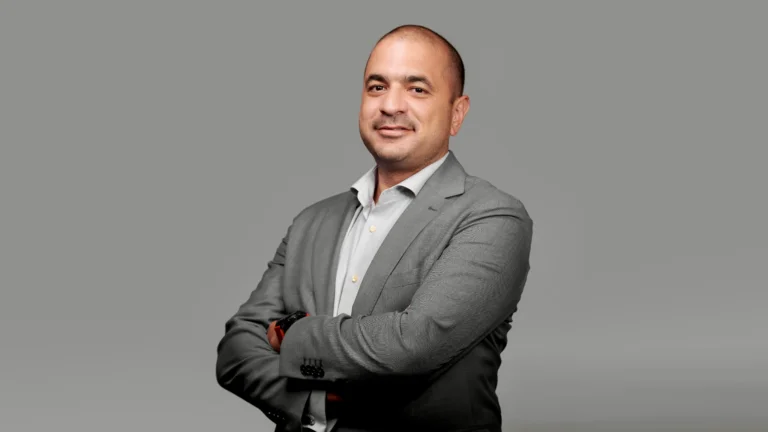
In the latest episode of the DACHSER podcast “Network Talk”, CDO Stefan Hohm talks about integrating electromobility into DACHSER’s logistics network and why sustainability is a core part of the company’s corporate responsibility. We asked him three key questions.

What are the main elements of DACHSER’s climate protection strategy, and what sets it apart in the logistics industry?
As early as 2015, we began exploring the use of battery-electric vehicles for cargo deliveries, focusing especially on how to make urban deliveries more sustainable in practice. These experiences shaped our sustainability strategy, which is built on process efficiency, energy efficiency, research and innovation, and Corporate Citizen+. The latter goes beyond our core business – DACHSER is committed to environmental education, social responsibility, and sustainable development through partnerships, local projects, sustainable structures, donations, and voluntary initiatives. Our aim is to help mitigate the impact of climate change on affected people.
We continuously evolve based on these pillars, always evaluating what works and what doesn’t. In Germany, we have established three so-called e-mobility sites to jointly implement and operate various electromobility technologies in real-world conditions, especially for long-distance transport. The goal is to reduce emissions through a combination of measures – and it’s working. But we never make promises without considering financial, technological, and regulatory feasibility. This has required significant investments, which will remain essential for a reliable roadmap to an emission-free future. Our customers will also need to play their part.
We share our insights and, for example, explain that operating multiple battery-electric vehicles at a site requires much more than just sufficient charging infrastructure.
You often describe DACHSER as an impulse generator for sustainability in logistics. Can you share specific examples of innovations or pilot projects that support this claim?
By “impulse generator”, we don’t mean having the largest number of battery-electric vehicles or the lowest emissions. Instead, we take a realistic approach, pursuing a variety of strategies and measures. Some of our ideas ultimately prove unworkable or impractical, and that too is part of being a driver of innovation. Our e-mobility sites play a key role here. We share our insights and, for example, explain that operating multiple battery-electric vehicles at a site requires much more than just sufficient charging infrastructure. Intelligent energy distribution and photovoltaic systems are also needed – a combination of different components. Another example is DACHSER Emission-Free Delivery: we have recently achieved our goal of delivering to defined inner-city areas in 25 European metropolitan centers emission-free by the end of 2025.
You can hear the full interview with Aat van der Meer in the third episode of our English-language podcast Network Talk.
The most practical technology isn’t always the one that prevails.
Research and innovation are central to DACHSER’s sustainability strategy. How important are these elements for advancing climate protection in logistics overall?
It’s essential to first understand the challenges theoretically. That’s why we conduct intensive research into available technologies, their possibilities, and their limitations. The most practical technology isn’t always the one that prevails. Hydrogen fuel cell trucks will soon be available, but currently, it looks like battery-electric vehicles will win out even on overnight main hauls. We also need to be clear about how much to invest in each technology. For example, a few years ago, we deliberately chose not to purchase LNG trucks, as they still burn fossil fuels and are only a transitional technology. Later, LNG prices rose sharply and the toll exemption was removed – so our decision proved right. A solid theoretical foundation and the necessary expertise come from our Corporate Research & Development department and the Corporate Sustainability team. Our colleagues in Road Logistics and Air & Sea Logistics put these insights into practice.
You can find out more about DACHSER’s sustainability strategy in the latest episode of our podcast Network Talk. The full episode with Stefan Hohm is available here and on all major podcast platforms.