Overcoming the challenges of climate change
By Christian Auchter I 4 minute read
09/01/2026
In Mozambique, too, the number of extreme weather events is increasing as a result of climate change. Local initiatives in the south of the country, promoted by local Terre des Hommes partner MAHLAHLE and DACHSER, are helping the population to cope with the consequences of climate change and are bringing noticeable improvements to their everyday lives.

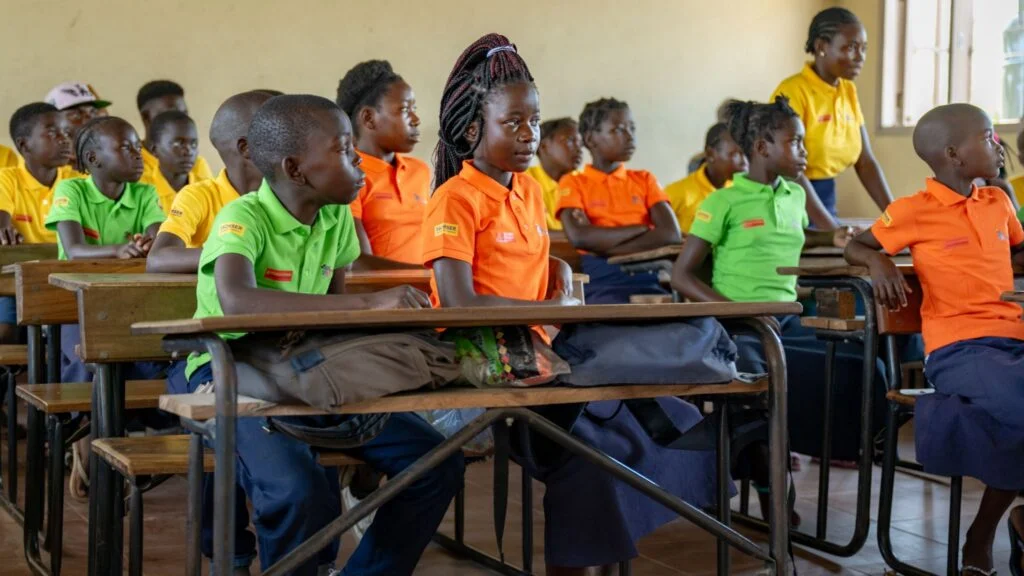
It was an exciting day for the children and young people of the Eco Club in Bambatela, a settlement in southern Mozambique. At the end of October 2025, television reporters from the national broadcaster visited the small village. The journalists wanted to learn more about an environmental and aid project and also interview the members of the local Eco Club. The young environmental activists confidently explained to the camera what particularly concerns them: smoke and greenhouse gases from burning firewood, the destruction of forests and scrubland, and the pollution of water by waste.
Video: Venancio Machaiela – filming; Carlos Gastene – text and voiceover
Improving living standards, reducing emissions, making everyday life easier
Raising awareness of such issues among young people and the entire village community through Eco Clubs is one of the goals of a Terre des Hommes project in Mozambique, which is supported by DACHSER. In the southern provinces of Imhambane and Gaza, a whole range of measures is being implemented to improve the living conditions of local people, protect the environment, and combat the effects of climate change.
The local partner MAHLAHLE is responsible for implementation in close cooperation with the village communities. A central part of the activities is to equip 9,000 families with efficient cooking stoves. The new stoves, manufactured in Africa, have up to 60 percent lower CO2 emissions than traditional cooking stoves, while also improving the indoor climate and requiring less firewood. This means that less forest and scrubland is cleared and families need less time to collect wood and cook.
For people like Sara Sahin, such a stove makes everyday life much easier. She used to spend a large part of her income on charcoal. Then she spent several hours a day looking for firewood and lighting a fire in a sand pit. She also suffered from the smoke of the open fire. Her new efficient stove uses only a third of the wood she used to collect, and the smoke is vented. This gives Sara much more time to look after her grandchildren. This example illustrates the approach of the local projects: they primarily improve people’s lives – the contribution to climate action is a highly welcome side effect.
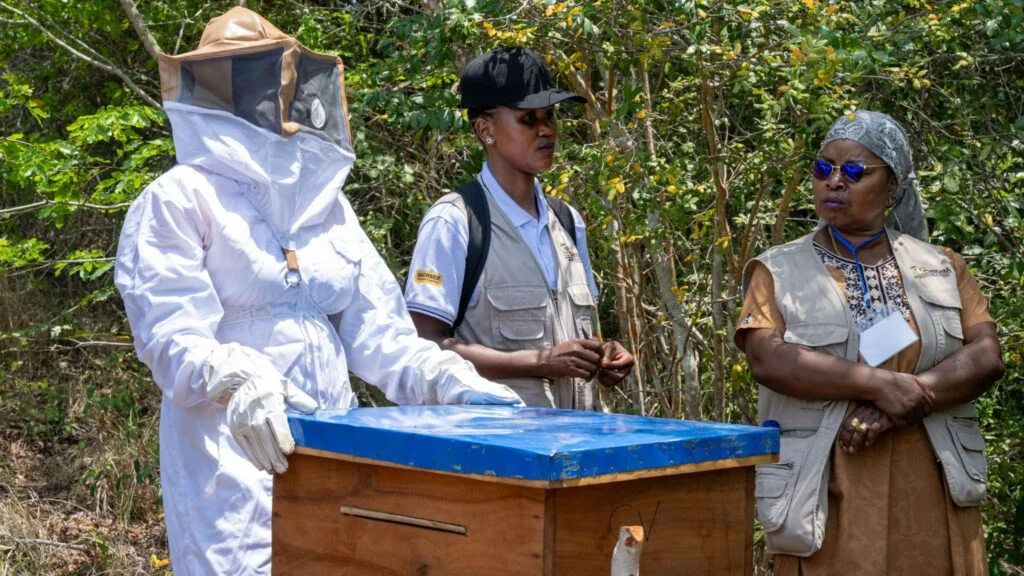
Another 3,000 efficient stoves are to be manufactured and distributed by young local craftsmen. In addition, 60 young people will be trained in honey production and provided with the necessary equipment to open up a new source of income for them—in line with the motto that has characterized the cooperation between DACHSER and Terre des Hommes for twenty years: promoting entrepreneurship, opening up opportunities, and giving people a future.
Mozambique is located on the east coast of Africa on the Indian Ocean, at the same latitude as the island of Madagascar. The country is regularly affected by extreme weather events such as droughts, floods, and tropical storms. At the same time, Mozambique is one of the poorest countries in the world. According to an analysis by the World Bank, Mozambique is one of the countries most affected by climate change worldwide. Without adaptation measures, the effects of climate change could, in the worst case, push another 1.6 million people into poverty by 2050.

Practical help for clean water
Improving the water supply is also one of the project’s goals. 4,500 families in the two provinces of Imhambane and Gaza are to be given better access to water. To this end, six water towers are being built and boreholes drilled to a depth of 79 meters to extract up to 60,000 liters of water.
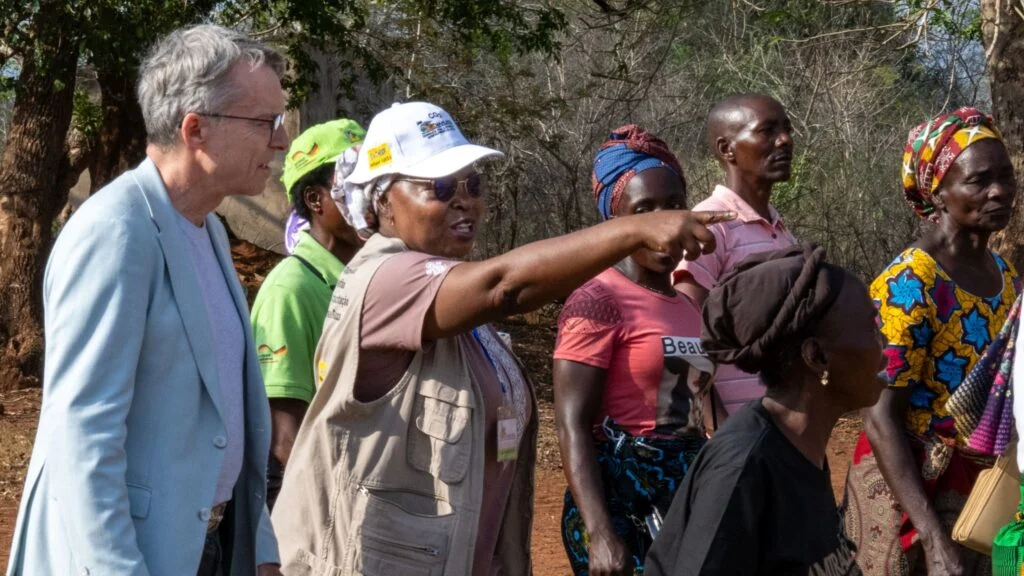
In the community of Bambatela, which was visited by the camera crews in October, assistance with water supply is also a key issue. The local Terre des Hommes project partner MAHLAHLE provides agricultural irrigation, water troughs for animals, a greenhouse, communal washbasins, and wells with drinking water.
Bernhard Simon, Chairman of the Supervisory Board at DACHSER, summed it up during a visit to Bambatela, where he saw the local measures for himself: “Reducing emissions is one of the project’s goals. But that can only work if we talk directly to the local people and understand what they need. Ultimately, it’s about improving their living conditions on the ground.”