Over the Brenner Pass in an e-truck: DACHSER electrifies Alpine route
By Matthias Rathmann I 6 minute read
25/06/2026
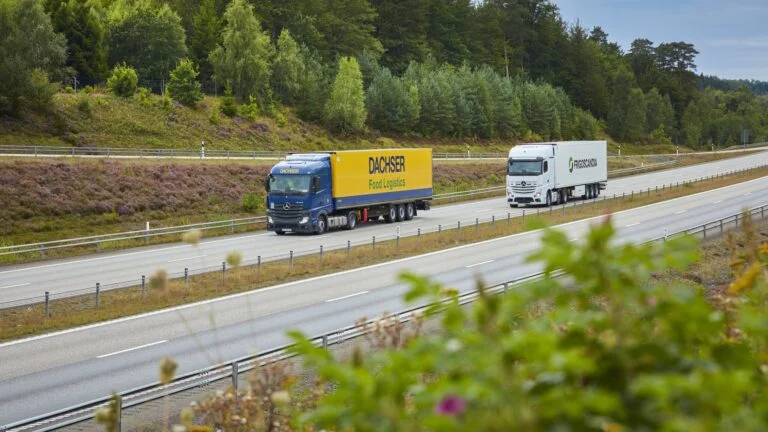
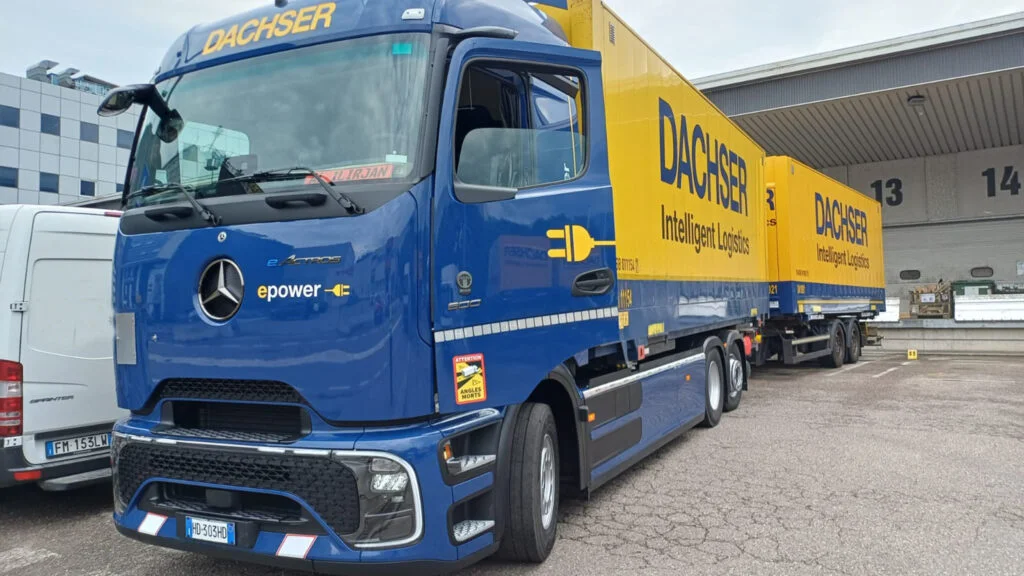
Since April 1, DACHSER has been operating an electric truck on the Brenner route between Bolzano and Munich. That makes its platform freight services across the Alps emission-free, marking another step on the path toward more sustainable logistics.

With approximately 2.5 million truck trips per year, the Brenner route through Tyrol is one of Europe’s busiest and most important freight corridors. Whether it’s dish soap or delicacies, pencils or potatoes—a wide variety of products crosses the Alps by truck every day. For DACHSER, too, the Brenner route is a key European connection. The company operates about 70 truck routes daily between northern Italy and southern Germany, and its Munich logistics center alone has 18 swap-body vehicles in continuous use here.
DACHSER Munich is the driving force behind the electrification project. We’re delighted to see this example setting a precedent and that other DACHSER locations are promoting the use of e-trucks across the Alps.
DACHSER looks to e-trucks for the Brenner Pass
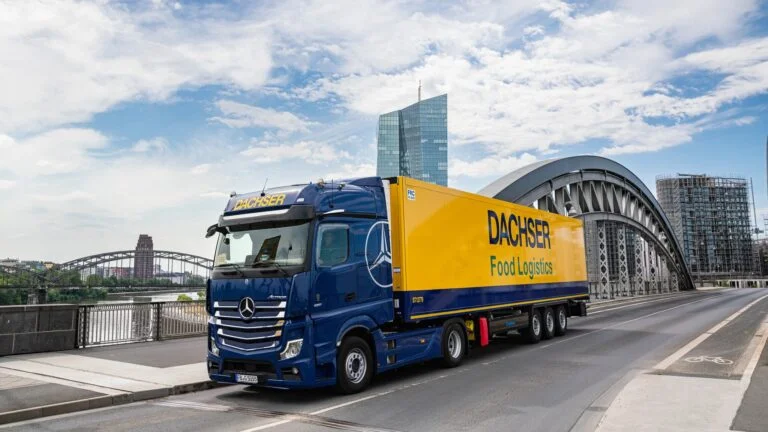
At present, the vast majority of vehicles traversing the Pass are powered by an internal combustion engine. But that could change: Since April 1, DACHSER has been operating an electric truck on the Munich–Bolzano route, representing another step on the path toward making long-haul transportation emission-free, too. The powertrain may be new, but one thing’s still the same: the driver. He’s been driving this route for nearly two decades and is now enjoying the high level of comfort offered by the Mercedes-Benz eActros 600 e-truck. These include the quiet ride typical of electric vehicles inside the truck and the high torque available right from a standing start.
And it’s not just the drivers who benefit. Zero-emission trucks can offer additional advantages, particularly for transalpine transport. With fewer emissions, they have less of an impact on sensitive landscapes and long-suffering residents’ ears. In addition, logistics providers with electric trucks are permitted to drive at night. This helps ease traffic congestion and provides greater flexibility in organizing the network and scheduling. Austria promotes the use of e-trucks by charging them lower tolls, which makes the whole undertaking economically attractive, and Germany has gone so far as to exempt e-trucks from tolls entirely until 2031.
The use of electric trucks is evolving rapidly—from pilot projects to practical solutions for everyday use.
E-trucks in Alpine transit: Simulations and practical experience
DACHSER’s initial assessment of its electric truck’s back-and-forth across the Alps between Germany and Italy is entirely positive: “The route has been running completely smoothly from day one,” reports Tobias Eß, Outbound Manager for Western Europe Exports at the Munich branch. DACHSER carefully prepared this shift to e-mobility and simulated it using the vehicle manufacturers own tools, taking into account both the challenging topographical conditions and the battery charging requirements. Ultimately, as Eß explains, “Getting there and back in one go wasn’t possible, but with the addition of a stop to recharge, the project was clear to move ahead.” In fact, it turns out that the route’s many ups and downs actually work in the e-truck’s favor, because it can recover energy on long downhill stretches.
Instead of recharging en route, the electric truck does so once it arrives at DACHSER in Munich. As a result, it can adhere to exactly the same timetable as its combustion engine-powered predecessor. The e-truck takes four to four and a half hours to complete each of the roughly 300-kilometer legs of the trip between the capitals of Bavaria and South Tyrol. It arrives in Munich around 10 p.m., with the battery at about 40 percent charge. This ensures there’s plenty of time to recharge the batteries before the truck-trailer combination leaves the depot again between 2:30 and 3 a.m. “We have three fast-charging stations on-site, each with a capacity of 180 kW,” explains Ingo Zimmermann, Branch Manager for European Logistics in Munich. A two-hour charging session is enough to get the batteries up from 40 to 70 percent. The eActros 600 is equipped with three LFP battery packs with a total capacity of 621 kWh, giving it a range of 500 kilometers on a single charge.
621
kWh is how much capacity the three lithium iron phosphate (LFP) battery packs in the Mercedes-Benz eActros600 provide. This makes it possible to travel 500 kilometers (and in some cases even further) on a single battery charge.
24-hour service for Bavaria–South Tyrol
When the electric truck sets off for Italy again, it takes shipments not only from Munich but also from other DACHSER locations in Bavaria, which arrive in Munich on various scheduled services shortly before the truck departs for Bolzano. As a result, the e-truck can still accept groupage from, say, Nuremberg, making a 24-hour service between North Bavaria and South Tyrol feasible. Jens Lengefeld, Head of Hub & Traffic Organization at DACHSER, is delighted with the enthusiasm his Munich colleagues are showing for the first electric platform freight service to Italy. “They are the driving force behind the electrification project,” he says.
Another e-truck route goes into service
This Alpine example has already set a precedent: In May, the route from Regensdorf (near Zurich, Switzerland) to Milan entered the electric age. What’s more, the section of the Gersthofen–Verona route between Gersthofen (in Bavaria) and Sterzing (in South Tyrol) has switched to e-trucks; the section to Verona will follow at a later date. Additional routes are being planned. “We do have several other irons in the fire,” says Sebastian Schmid, Team Leader for Eurohubs & Traffic Organization. There are a number of other routes that could, in principle, also be served by e-trucks.
While DACHSER’s customers can already ship their goods to Italy via e-truck, work has started on yet another new transport option: A new intermodal terminal is scheduled to begin operations in the first quarter of 2027 on the grounds of the Augsburg-Gersthofen freight transport center. “Plans are being drawn up to transport loading units to Verona by rail once the new terminal becomes operational,” Lengefeld explains. He can imagine starting out with two loading units on a Kombiverkehr train bound for Verona. “In the future, shipments to Bergamo and Brescia could also go by rail,” he adds. Rail transport is another way to offer customers alternatives to diesel truck transport while bypassing the Brenner road bottleneck.
The route has been running completely smoothly from day one
Groupage by rail – What Kombiverkehr plans as a first step
At Kombiverkehr, an intermodal specialist, planning for new freight services to and from Augsburg is in full swing. “We’re considering offering transport services on the Augsburg–Northern Germany and Augsburg–Northern Italy (Veneto region) routes, and we’ve begun planning and implementing them,” explains Arbi Tonians, Head of Southern Europe in sales and authorized signatory at Kombiverkehr GmbH & Co. KG. “We’ve already talked to DACHSER about the possibility of launching a service on the Germany–Italy corridor.” For particularly time-sensitive shipments, Kombiverkehr plans to use express rail routes to meet DACHSER’s requirements. So, whether it’s dish soap or delicacies, pencils or potatoes—new transalpine routes are coming.