Two Decades of Growth and Integration: Three Questions for Roman Stoličný
By Hendrik Durst I 4 minute read
16/10/2026
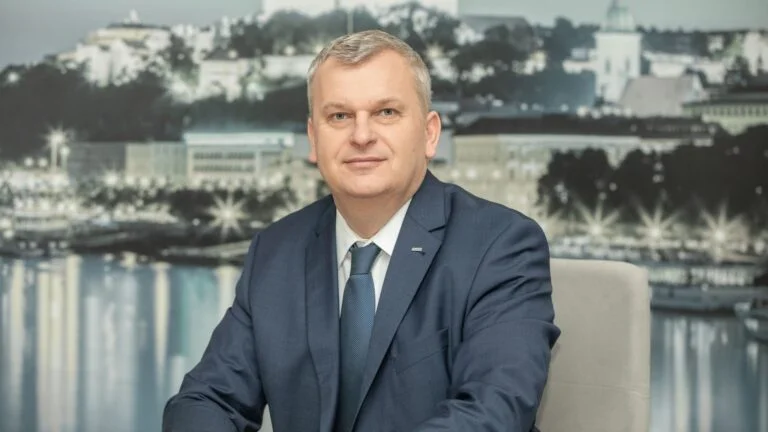
In the latest episode of the DACHSER podcast “Network Talk,” Roman Stoličný, Managing Director Road Logistics South East Europe at DACHSER, discusses 20 years of DACHSER Slovakia, the development of the logistics industry in South East Europe, and the opportunities the local market offers today and in the future. We asked him three key questions.

How did you experience the transition from entrepreneur to becoming part of the DACHSER network?
Roman Stoličný: My career originally began in aviation. After training as a commercial pilot, I initially worked for an airline before founding the freight forwarding company Lindbergh Air Freight with a business partner. After around ten years of growth, we faced the question of how to take the company to the next level. At the same time, DACHSER was beginning to take a stronger interest in the Eastern European markets. This created a win-win situation. We found a strategic partner in DACHSER, while DACHSER found a company whose values and philosophy were closely aligned with its own corporate culture.
The story of DACHSER Slovakia thus began with a handshake, but in fact, the integration was far more than a simple merger. It created an opportunity to combine local market expertise and entrepreneurial spirit with the strength of an international network. Today, our customers benefit from consistent standards, a strong European network, and direct access to local contacts.
Today, our customers benefit from consistent standards, a strong European network, and direct access to local contacts.
How has European integration transformed logistics in South East Europe?
R. Stoličný: The past few decades have been marked by fundamental change. Following the end of centrally planned economic systems, the countries in the heart of Europe had to redefine their place. Joining the European Union was a crucial turning point. It opened up access to the single market, encouraged investment, accelerated infrastructure development, and strengthened trade and industrial production. Logistics also benefited enormously from these developments.
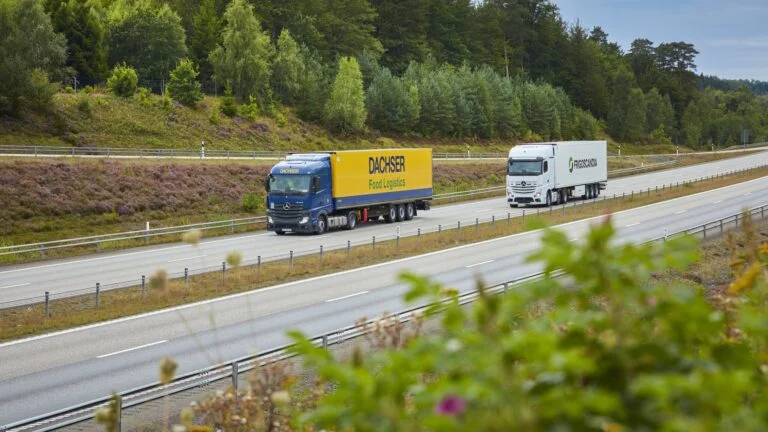
The strong growth in cross-border trade was particularly important. Supply chains became more international, companies increasingly turned their attention to European and global markets, and connectivity within Europe increased significantly. Today, our customers benefit from a closely integrated network that provides daily connections between numerous countries. The Eurohub in Bratislava is a key part of this. It connects the markets of Central and Eastern Europe with virtually the entire European groupage network of DACHSER, enabling efficient services with short transit times.
The latest episode of “Network Talk” with Roman Stoličný provides more insight into DACHSER’s growth in Southeast Europe.
Joining the European Union was a crucial turning point. It opened up access to the single market, encouraged investment, accelerated infrastructure development, and strengthened trade and industrial production.
What will it take to continue to succeed in a dynamic logistics market such as South East Europe?
R. Stoličný: Our customers’ expectations have changed significantly. Today, logistics is about far more than simply moving goods from A to B. What customers need are resilient, flexible, and transparent supply chains. They expect real-time visibility, rapid response capabilities, and consistently high service quality – regardless of the country in which they operate.
That is precisely why one principle remains as important to me as ever. From the beginning of my time with DACHSER, the guiding principle was: “Quality, quality, quality, then profit, and then quality again.” This still holds true today. High service quality builds trust and long-term customer relationships. At the same time, we must adapt to new developments such as nearshoring, digitalization, automation, and artificial intelligence. I am convinced that technology will support many processes in the future, but people must remain at the center. Ultimately, it is people who make decisions, develop new solutions, and identify opportunities.
Learn more about the development of DACHSER in Slovakia, the role of the Eurohub in Bratislava, and the future prospects of logistics in South East Europe in the latest episode of our “Network Talk” podcast. The full episode featuring Roman Stoličný is available here and on all major podcast platforms.