DACHSER ASL Oceania: Good prospects for Down Under
By Marcus Schick I 7 minute read
04/03/2026
The global economy currently dances to the tune of the Asia Pacific economic region. From its base in Australia and New Zealand, DACHSER ASL Oceania connects people, markets, and continents.

At the end of last year, legendary Australian hard rockers AC/DC played a concert in their home city of Melbourne for the first time in ten years. It was such a resounding success that, according to the Australian news channel ABC, earthquake detectors as far as 3.5 kilometers away were being triggered.
But Australia and its southeastern neighbor New Zealand aren’t just the source of hard ‑rock sound waves that can be felt far and wide: They’re also making economic waves—and contributing notably to the development of the Asia Pacific economic region. Economists at the International Monetary Fund are forecasting growth here of over 4 percent for 2025 and 2026, which is well above the global average and significantly above the European average. Prospects are good over the longer term as well: According to the Asian Development Bank, Asia will generate around half the world’s gross domestic product in 2050. “Alongside the two supergiants China and India and other major economies in Asia, the countries of Australia and New Zealand are increasingly becoming important players in global trade,” says Dr. Tobias Burger, COO Air & Sea Logistics at DACHSER.
Alongside the two supergiants China and India and other major economies in Asia, the countries of Australia and New Zealand are increasingly becoming important players in global trade.
Close to economically prosperous markets
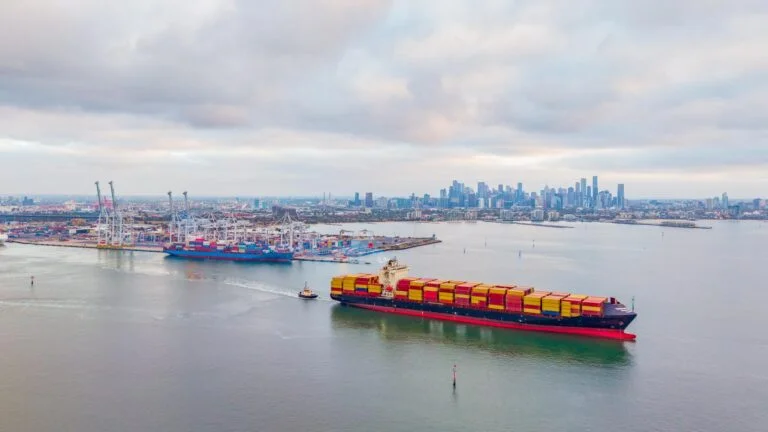
“DACHSER is present wherever our customers and their markets are,” Burger explains. “Targeted acquisitions let us tap into new markets more quickly and consolidate our network, and they also give us the regional skills that we need but would take too long to build up in-house.” DACHSER put this idea into practice in 2023 when it took over the experienced air and sea freight forwarder ACA International, based in Melbourne. The result was six new ASL locations in Australia and New Zealand and the establishment of DACHSER ASL Oceania. “With the integration of ACA International, we are now expanding DACHSER’s own air and sea freight network to cover Australia and New Zealand, countries that are not only economically strong but also closely interlinked with Asia, Europe, and North America,” Burger continues.
A world map of globalization shows Australia and New Zealand to be not only economically prosperous, but also firmly integrated into international trade flows. Adam Cruttenden, one of ACA’s former managing directors and a 30-year veteran of the logistics industry, is now Managing Director DACHSER ASL Oceania and heads the business units in Australia and New Zealand. He sees DACHSER as being on the right track in Oceania: “DACHSER’s agile approach and consistent focus on the customer are meeting a very mature, but also challenging, market environment here. Since the acquisition, we’ve succeeded in increasing shipments by 30 percent.” With the integration of Australia and New Zealand into DACHSER’s air and sea freight network, the region now benefits from more than 40 years of experience in international logistics and customs clearance. “A full 90 percent of our business is made up of imports to Oceania, which is where our market expertise is particularly valuable,” Cruttenden says.
90 %
of DACHSER´s Air & Sea Logistics business is made up of imports to Oceania.
Targeted acquisitions let us tap into new markets more quickly.
Up to the challenge of long transportation distances
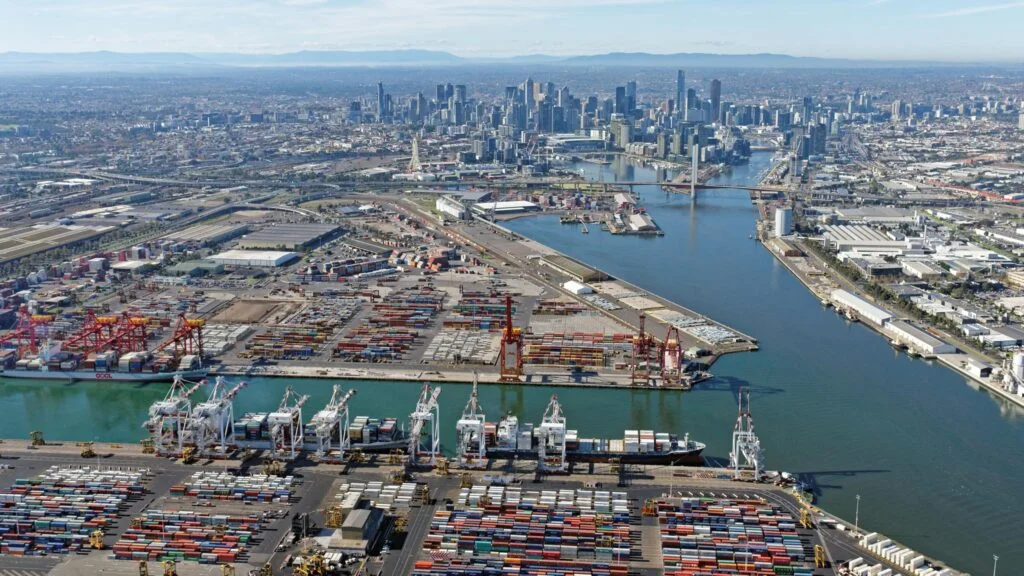
For trading partners from Europe, a key issue with shipments to Australia and New Zealand is the distance—up to 17,000 kilometers as the crow flies—and the associated long transport times to get from the suppliers’ countries of origin to their destination. This geographical fact means that their target customers in Oceania expect reliable data on stock levels, delivery capabilities, and arrival times so they can in turn fulfill their commitments to their end customers. Another consideration is that distances within the region, especially in Australia, are usually very long as well. The majority of Australia’s approximately 28 million inhabitants live in three cities—Sydney, Melbourne, and Brisbane—dotting the east coast, each around 800 kilometers from the next. From there it’s some 3,300 kilometers to the west coast and Perth, the capital of Western Australia and a key regional economic hub.
Customs and import expertise that pays off
In addition to the long distances involved, import regulations must also be taken into account. “The experience and expertise of our teams really pays off, especially when it comes to customs clearance for imports and the correct classification of products and manufacturing equipment. In some cases, the result is major savings in customs duties,” Cruttenden notes. He goes on to say that this is appreciated by DACHSER ASL Oceania’s customers, who are found mainly in the packaging, HVAC, fashion, construction, and mechanical engineering industries.
As an example of the special requirements that DACHSER ASL Oceania’s customers have along their supply chain, take products and equipment for HVAC. “Here, we often have to deal with sensitive materials and the gases or liquids they contain, which require specialized expertise in dangerous goods,” Cruttenden says. “We offer customers a robust, reliable, and economical service. Our focus is on high-performance information systems that provide our customers with transparency throughout the shipment process while optimizing workflows at the same time.”
DACHSER works for Daikin in Australia and New Zealand, among others. This makes DACHSER a reliable global logistics partner for the internationally active company, which is one of the leading providers in the fields of heating, air conditioning, ventilation, air purification, and refrigeration technology.
The experience and expertise of our teams really pays off, especially when it comes to customs clearance for imports and the correct classification of products and manufacturing equipment.
Proof of trust: Long-standing customer relationships
Cruttenden emphasizes that DACHSER’s focus on customers and solutions results in stable and long-term partnerships with customers: “Of our 20 most important customers, the majority have been with us for over ten years.” They value the fact that their DACHSER contacts always tackle any problems with urgency, intensity, and energy and will ensure a quick solution.
Reliability and trust go hand in hand in logistics—in person-to-person dialogue as well as in digital exchange. “DACHSER’s information systems, which offer real-time transparency across the supply chain, are seen as a major strength,” Cruttenden says. For example, DACHSER Oceania can consolidate activities across different suppliers in the fashion sector. “We use the DACHSER network to transport and handle goods for, say, Chinese fashion manufacturers, right through to the recipient. We affix the transport label at the point of origin and consolidate by delivery zone. All this greatly reduces handling effort in the destination distribution center; it makes the processes faster and much less prone to disruption.”
DACHSER Oceania intends to build on such core services and offer them to customers in the global DACHSER network in the future as a way to deepen the integration of Australia and New Zealand into DACHSER’s global structures. “We focus on business that matches our strengths and results in long-term business partnerships,” Cruttenden says. To this end, DACHSER Oceania wants to open up additional trade routes and volumes that the logistics company doesn’t currently serve.
Where is DACHSER ASL Oceania headed? For Cruttenden, the course is clear: “The dynamics in Australia and New Zealand may not be as loud as an AC/DC concert in Melbourne, but their impetus for global trade is easy to recognize. With DACHSER ASL Oceania, the region is now firmly integrated into DACHSER’s global network with an eye to the future.”