Food logistics in Freiburg: A site with a bright future
By Marcus Schick I 9 minute read I Photos: Johannes Meger
17/07/2026
DACHSER’s logistics center in Freiburg is being expanded to accommodate a new food logistics facility. This step not only strengthens the company’s presence in the border region where Germany, France, and Switzerland meet, but also sends a clear signal regarding the strategic development of its network.

On a map of Germany, the city of Freiburg im Breisgau sits in the very southwest of the country. “This location in the Kaiserstuhl hills is home to some of Germany’s sunniest weather,” says Michael Gaudlitz, General Manager of DACHSER’s logistics center in Freiburg. “But there’s much more to it than that. Logistically speaking, Freiburg occupies a central position in Europe.” Since the early 1980s, this university town has connected three economic regions for DACHSER: southwestern Germany, France, and Switzerland. It’s precisely this location that makes Germany’s southernmost big city a key hub in DACHSER’s European network—and explains why the company is investing some EUR 12 million in expanding its business operations there.
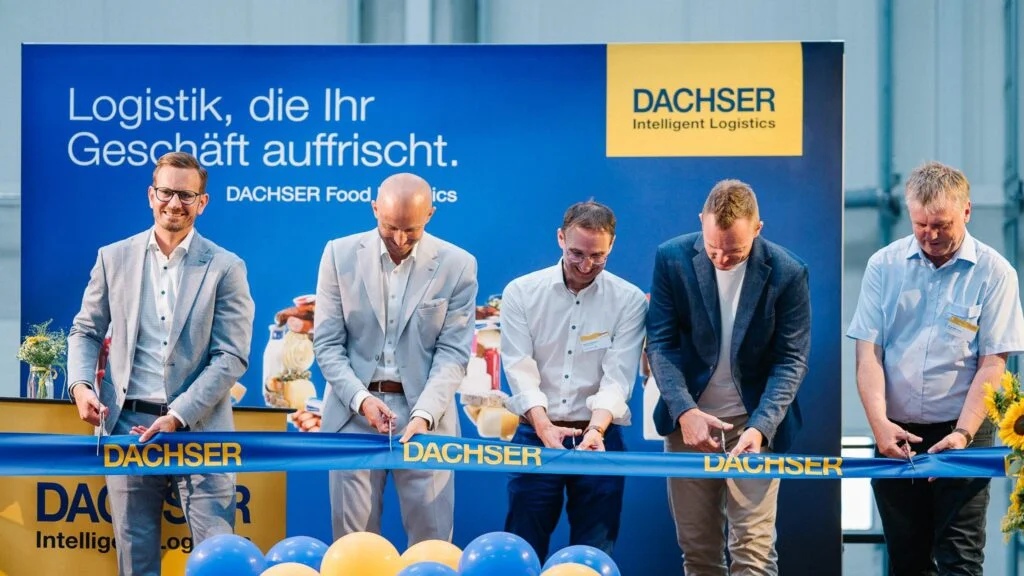
“DACHSER Food Logistics started operations in Freiburg on June 1. We’ve also created more space for the handling and storage of industrial goods at the site. This strengthens Freiburg as a logistics hub for us and creates additional capacity for regional and cross-border freight services between Germany, France, and Switzerland within the European network,” Gaudlitz explains.
Logistically speaking, Freiburg occupies a central position in Europe.
Freiburg as a food logistics hub
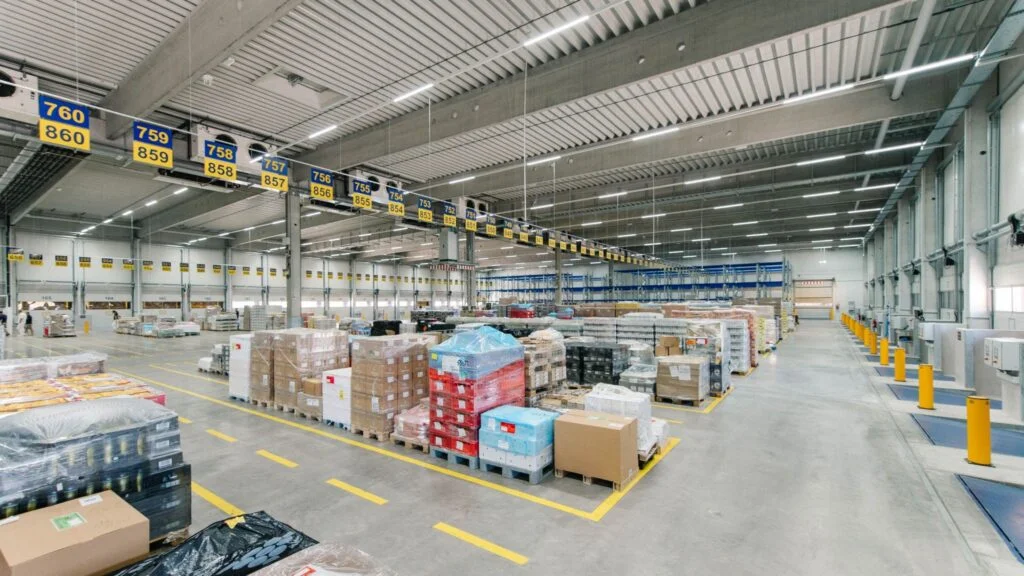
The history of the Freiburg branch is closely linked to DACHSER’s international expansion. As early as 1984, the company decided to expand what was then a Road Logistics location into a hub for cross-border groupage transport between Germany, France, and Switzerland. When the branch ran up against capacity limits at its site in the northern part of the city, a new chapter began with the move to the Breisgau Business Park in 2019. The investment at that time in a new transit terminal with 82 docking bays laid the groundwork for further growth and the site’s development into a high-performance logistics center with state-of-the-art transit terminal and warehousing capabilities.
“We’ve built a strong team in Freiburg and established a very high standard of logistics service quality,” says Alexander Tonn, COO of Road Logistics at DACHSER. “Freiburg’s location, its technical and personnel resources, and its capacity—including its potential for expansion—are a key building block for DACHSER’s growth in Europe and for further strengthening our network. What’s more, it’s the ideal foundation for entering the business of cross-border food logistics.”
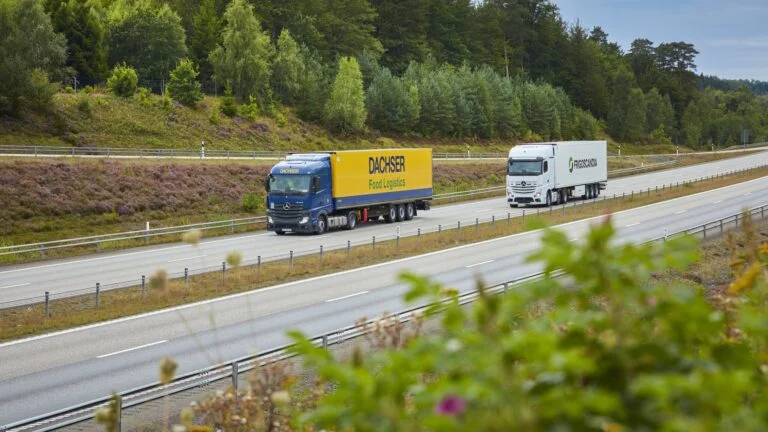
DACHSER is systematically expanding its European Food Logistics network. This includes the continued integration of Frigoscandia, the leading provider of temperature-controlled and frozen logistics in the Nordic market. DACHSER acquired the company in early 2024.
Investing in the location’s future
The recently completed expansion took place in an economic environment marked by considerable uncertainty, volatility, and significant cost pressure. “Many companies are postponing necessary investments or scaling back their operations. DACHSER is deliberately taking a different approach—we’re investing now so that we’re in a position to deliver what our customers expect from us in the future,” Tonn says. And that’s precisely why DACHSER doesn’t view investments in capacity, technology, and infrastructure as a short-term response to current market trends, but rather as a prerequisite for sustainable growth.
Gaudlitz once again points to Freiburg’s unique geographic location, which offers opportunities that extend far beyond the region. “We operate daily direct services connecting our location—and thus DACHSER’s European network—with France and Switzerland. Added to this are the close economic ties that have developed over the years in the area, which is also known as the Upper Rhine tri-national metropolitan region.” The French market, in particular, continues to be very important to DACHSER. Its Freiburg branch is within easy reach of Strasbourg, the economic and political center of France’s Alsace region; ; furthermore, DACHSER already has a European Logistics branch there. The Strasbourg metropolitan area, or “aire urbaine,” has a population of approximately 790,000 and is increasingly becoming an important target market for cross-border logistics services. “Expanding our offerings to include logistics services for food products puts us in an even stronger position,” Gaudlitz says.
Freiburg’s location, its technical and personnel resources, and its capacity—including its potential for expansion—are a key building block for DACHSER’s growth in Europe and for further strengthening our network.
Food logistics operations get underway in Freiburg
Food Logistics has been one of DACHSER’s most dynamic growth areas in recent years—despite significant increases recently in cost and competitive pressure. “Our recent acquisitions of Brummer and Frigoscandia greatly expanded our European food logistics network in the area of temperature-controlled food logistics, integrating frozen products for the first time,” says Stefan Behrendt, Managing Director of Food Logistics at DACHSER. He goes on to explain the rationale behind the decision to choose Freiburg as a new Food Logistics location: “The region’s food industry is particularly diverse—ranging from producers of wines and spirits to dairy products and regional specialties. At the same time, our location close to where three countries meet provides ideal conditions for international freight services with our partners in the European Food Network.”
DACHSER opted to implement the construction project while operations were ongoing, a move that proved especially challenging. “Unlike with the new construction project in 2019, this time we had to keep our day-to-day operations and processes running smoothly throughout the construction work,” Gaudlitz says. “Not only have we launched a new business field—Food Logistics—with 3,200 m2 of temperature-controlled logistics space for food products, but we’ve also expanded our handling capacity for European Logistics by 2,700 m2. There’s no way we could’ve achieved this remarkable feat without everyone involved pulling together.” The food logistics business has been operational since early June, with DACHSER Food Logistics Freiburg serving as the inbound branch for food products that are then transported to local retailers. Now the goal is also to build a customer base within the local food industry and to offer efficient food transport from the region to international markets. As a first step, Gaudlitz sees great potential primarily in regional wines and spirits, as well as in dairy products and regional specialties that are internationally renowned, such as Black Forest ham.
3.200 m²
of temperature-controlled transit terminal space has been built for Food Logistics in Freiburg. An additional 2,700 m2 of capacity was created at the same time for the European Logistics business line.
A growing site – with a growing workforce
Starting operations in a new business field while once again greatly expanding handling capacity calls for skilled workers—“and they’re becoming increasingly hard to find these days,” Gaudlitz says. That’s why DACHSER’s Freiburg branch kicked off the recruitment process roughly nine months before the new facilities came online. “We’ve already hired about 40 new people, and we’re not quite done yet. It helps that DACHSER is perceived in the region as a strong employer brand with a good reputation,” he adds. “The setup here at our branch is great for employees, who are clearly enthusiastic and motivated when they see the facilities and the modern workstations we have on offer.”
According to Gaudlitz, this results in tangible benefits for customers in the Food Logistics and European Logistics businesses. “They benefit from experienced teams, from our established, high-performance IT systems, from standardized and well-aligned processes, and from infrastructure that enables synergies between the two business lines—for example, when existing regular scheduled services can be shared for certain routes.”
A pioneer in zero-emission logistics
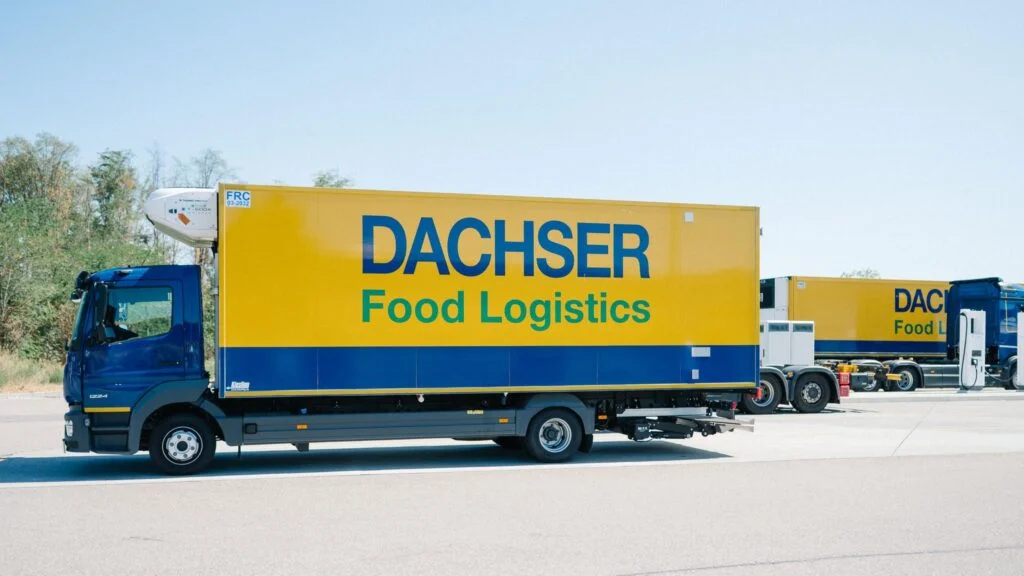
Freiburg also plays a particularly prominent role in the long-term transition to zero-emission logistics. As early as 2019, the branch was selected as a pilot location for the DACHSER Emission-Free Delivery program. Later, Freiburg became one of the three e-mobility sites in the DACHSER network, which have spent several years putting zero-emission vehicles, charging infrastructure, and the use of photovoltaics through their paces in comprehensive practical tests. The experience gained from this is now being incorporated into the ongoing development of electromobility across the DACHSER network. There are now 17 electric trucks in operation in Freiburg. As part of the construction work, the site also expanded its energy and charging infrastructure. Photovoltaics with a capacity of approximately 500 kWp will supplement the existing PV system, enabling nearly 1 megawatt-peak of electricity to be generated at the Freiburg site in the future. DACHSER has also added another 20 charge spots for e-trucks, bringing the total to 32, as well as a new substation and battery storage facility.
Since the end of 2024, DACHSER has been serving the entire city of Freiburg exclusively with e-trucks and cargo bikes. “Food logistics involves additional requirements. Along with zero-emission delivery, we also have to ensure a consistent supply of power to maintain a stable cold chain,” Gaudlitz says. To this end, DACHSER Freiburg recently started operating two new 7.5-ton e-trucks with refrigerating units that also run on electricity. “What’s more, in the coming months we’ll be adding an all-electric 16-ton truck with an electric refrigerating unit. Our goal is to supply the entire city of Freiburg with food emission-free. I’m confident that we’ll be able to achieve this by the end of 2026.”A pioneer in zero-emission logistics
EUR 12 million
is how much DACHSER is investing to expand and upgrade its Freiburg location.
Our recent acquisitions of Brummer and Frigoscandia greatly expanded our European food logistics network in the area of temperature-controlled food logistics, integrating frozen products for the first time.
More capacity for customers and the network
Tonn says that right now, just a few weeks after the opening of the expanded branch in Freiburg, it’s still too early to say how things are going. But it’s not too early for a look to the future. “Additional capacity, new international connections, the combination of Food Logistics and European Logistics, and high network density create more stability and provide greater planning certainty at a time when supply chains are coming under increasing pressure,” he says. Gaudlitz adds: “The entry into service of the expanded branch and the start of the new era for Food Logistics were a success.” For the Freiburg site, this expansion is about much more than just introducing another business field. “Freiburg is at the heart of Europe—not only geographically, but also logistically,” Gaudlitz says. “For us as a branch, the expansion is both a recognition and a commitment. To today and to the future.”