A game changer for Northern Europe: DACHSER and Frigoscandia merge
By Marcus Schick I 13 minute read
22/09/2026
When two strong networks merge, the benefits go far beyond the simple sum of their combined capacity. For DACHSER’s Food Logistics division, the acquisition of Frigoscandia in 2024 meant nothing less than the beginning of a new era. The integration of the Nordic market’s leading provider of temperature-controlled and frozen-food logistics into the DACHSER Food Logistics network is progressing rapidly—to the benefit of customers throughout Europe.

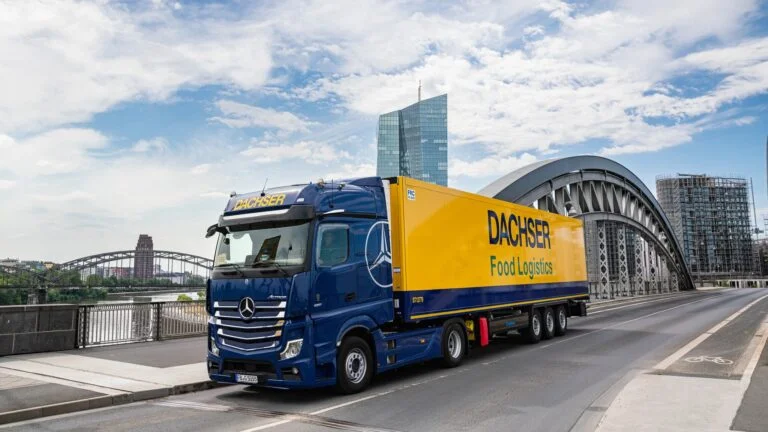
It was December 21, 2023, just a few days before Christmas, when the news flashed across the ticker: “DACHSER acquires Frigoscandia.” The acquisition of the European Food Network partner for Sweden, Norway, and Finland marked an important milestone for DACHSER’s European food logistics network.
Up to that point, DACHSER had been known in the region for the transport and storage of industrial and consumer goods, as well as for its air and sea freight services. The DACHSER Food Logistics business unit didn’t have operations of its own in the Nordic countries. That changed overnight with the acquisition of Frigoscandia. Following approval from the competition authorities, integration into the DACHSER network began in March 2024. As of February 2026, Kristian Jönsson has been managing all three business lines of the four country organizations in Sweden, Norway, Denmark, and Finland as Managing Director of DACHSER Nordics.
Strengthening food logistics in Europe
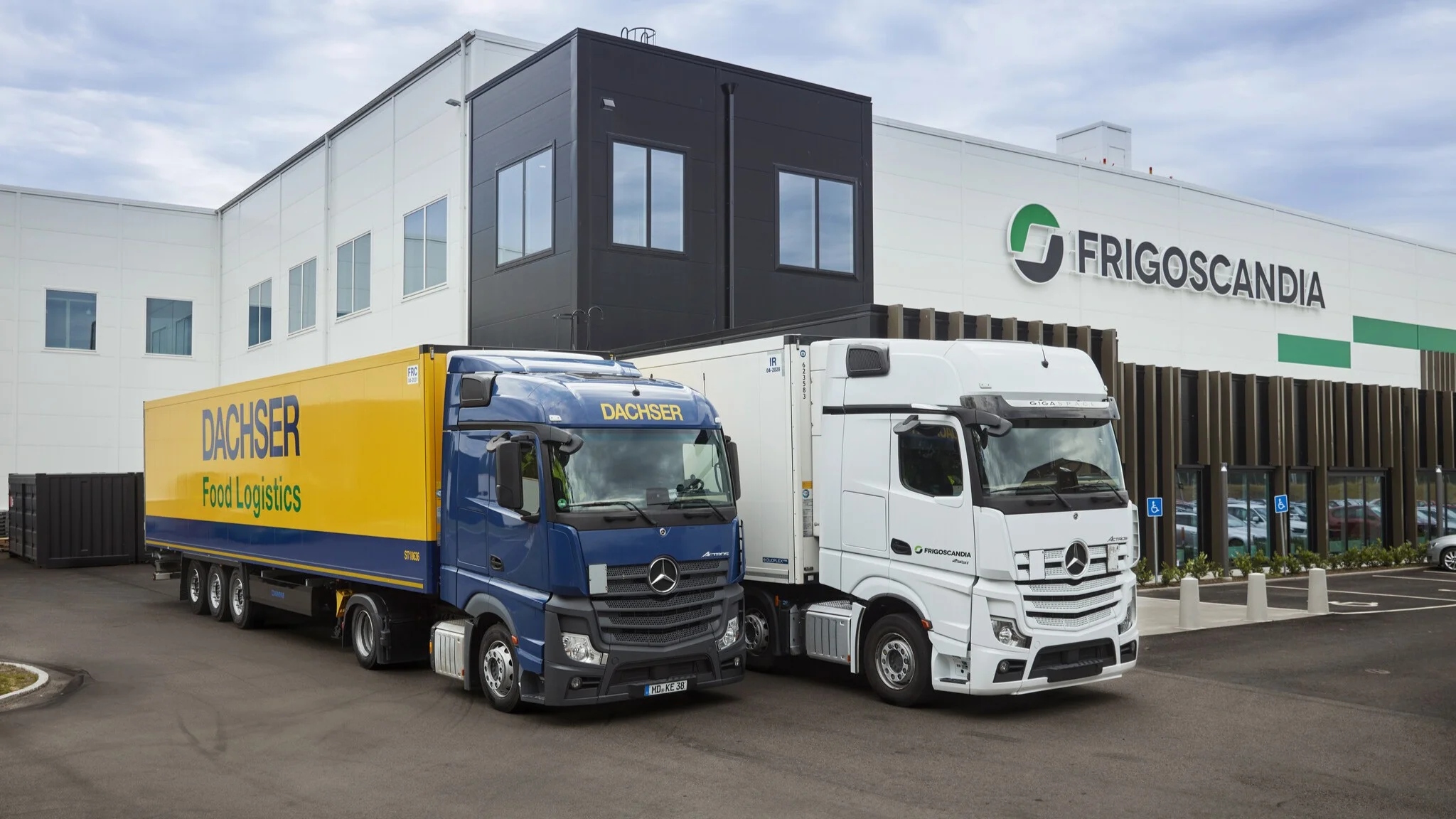
“This acquisition expands our own food logistics network into the Nordic markets of Sweden, Norway, and Finland. At the same time, it strengthens our position among Europe’s leading food logistics providers,” said Alexander Tonn, COO of Road Logistics at DACHSER, immediately after the European competition authorities approved the acquisition. While the family-owned company’s focus is on organic, long-term growth, on several occasions it has expanded its global logistics network through targeted acquisitions, as it is currently doing in Northern Europe.
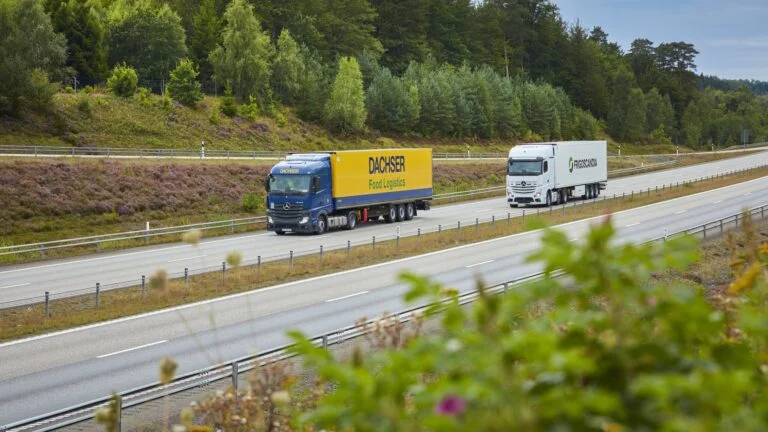
The acquisition of Frigoscandia, the leading provider of temperature-controlled and frozen-food logistics in the Nordic market, ranks among the largest acquisitions in DACHSER’s history. A glance at the figures makes that clear: In 2022, Frigoscandia generated sales of approximately EUR 300 million with a workforce of some 1,300 people, primarily in its core market of Sweden. This means the company is bringing more than twice as many employees into the organization as DACHSER had in total across the Nordic countries at that time. Founded in 1948, the food logistics company was also a major player in Norway, Finland, Denmark, and the Netherlands. As a result, Frigoscandia was hardly an unknown quantity, especially as it had joined the European Food Network, which spans 34 European countries under DACHSER’s system leadership, back in 2019. The long-established company, previously owned by a private-equity investor, brought a remarkable setup to the table: a tightly knit and highly efficient network for distributing temperature-controlled (2–7 °Celsius) and frozen foods (below −18 °Celsius); its own fleet of 235 vehicles plus another 200 or so trucks from transport companies providing comprehensive domestic transport services in Sweden; warehousing at eleven logistics facilities in Sweden and three in Norway designed for food storage; and food transport to 57 other countries via road, air, and sea.
DACHSER offers the full range of products and services in the Nordic region, covering European Logistics, Food Logistics, and Air & Sea Logistics. Since February 2026, Kristian Jönsson has been managing all three business lines in the four country organizations in Sweden, Norway, Denmark, and Finland as Managing Director of DACHSER Nordics.
Our customers in the region and throughout Europe benefit from our efficient food distribution network. Quality and reliability always come first.
Integration strengthens Food Logistics in a sustainable way
Merging two major players in food logistics into one organization calls for a great many adjustments. That’s not news to Jönsson, who’s been leading DACHSER Nordics as Managing Director since the beginning of this year and is driving the integration of Frigoscandia into the DACHSER family. He knows Frigoscandia, DACHSER, and the Nordic food logistics market inside and out, having spent the last four years in a leadership role at the Swedish food logistics company.
“Working with DACHSER, a globally positioned logistics provider, opens up significant growth opportunities for us and our customers,” Jönsson says. As a family-owned company, DACHSER stands for stability as well as for long-term, strategically guided planning. “Before Frigoscandia was acquired by DACHSER, it was managed by a private equity investor, which didn’t have this kind of long-term perspective. That makes this integration a real game changer for us in the Nordics, but also in the European market.” Jönsson goes on to point out that, as a global company with European roots, DACHSER has a reputation for combining clear processes, a high degree of precision, and modernity. “And that’s exactly what our customers expect: reliability, highly efficient operations, and deeply digitalized, seamless processes.”
The integration is accelerating DACHSER’s international growth. For Tonn, the direction and goal of the restructuring in the Nordics are clearly defined: “Our customers in the region and throughout Europe benefit from our efficient food distribution network. Quality and reliability always come first.” That’s what DACHSER and Frigoscandia stand for. “With their proven expertise in the Nordic markets, Frigoscandia’s 1,300 employees are the key to ensuring continuity and new growth in the region,” he says.
Scandinavia and Finland: Logistics works differently in the North
Integrating a large organization, along with its systems and workflows, and fostering a culture of collaboration and exchange are not automatic processes. “The markets in the North are characterized by a specific food supply chain; as a result, they differ from those in Central and Southern Europe—in some cases significantly,” Jönsson explains. Despite its relatively small population of just under 10.7 million people, Sweden is the largest consumer market in the Nordics. Add Norway, Denmark, and Finland, and the sales market grows to nearly 28 million.
Overall, the food industry plays a central role in the economies of the Nordic countries today. In 2024, the food market in Sweden alone recorded revenue of just under EUR 35 billion, and Statista forecasts a revenue increase of nearly 34 percent by 2030. According to the umbrella organization “Food and Drink Europe,” in 2022 the industry was the fourth-largest employer in Sweden, with approximately 4,335 companies and 56,900 employees. The most important categories are meat products, followed by dairy products, eggs, confectionery, and snacks.
When it comes to logistics, Jönsson believes that one particular aspect of the market plays a decisive role: “The North is rather sparsely populated; with the exception of Denmark, population density is quite low.” In food logistics, this means that the North has more full truckloads and less groupage—so it’s a business all its own.
And one with its own customer structure: In Central Europe, small and medium-sized businesses make up a large portion of the customer base, whereas in Northern Europe, it tends to be large customers. Take a Scandinavian furniture manufacturer, for example, a long-standing customer of Frigoscandia. It is also Sweden’s largest food exporter. From here, the company’s in-house food service and the Swedish shops in its furniture stores around the world are supplied on a large scale. The food and drink selection ranges from meatballs, crispbread, and hot dogs to pickled herring, fruit smoothies, and blueberry juice.
+34%
The food market in Sweden is expected to grow by about one-third by 2030.
Expertise in European frozen-food logistics
The storage of frozen vegetables has been a core part of Frigoscandia’s business since its founding in 1948. Vegetable farming in the Skåne region of southern Sweden in particular laid the foundation for Frigoscandia’s business model at that time, which was to offer food manufacturers integrated storage and transport solutions for refrigerated and frozen products.
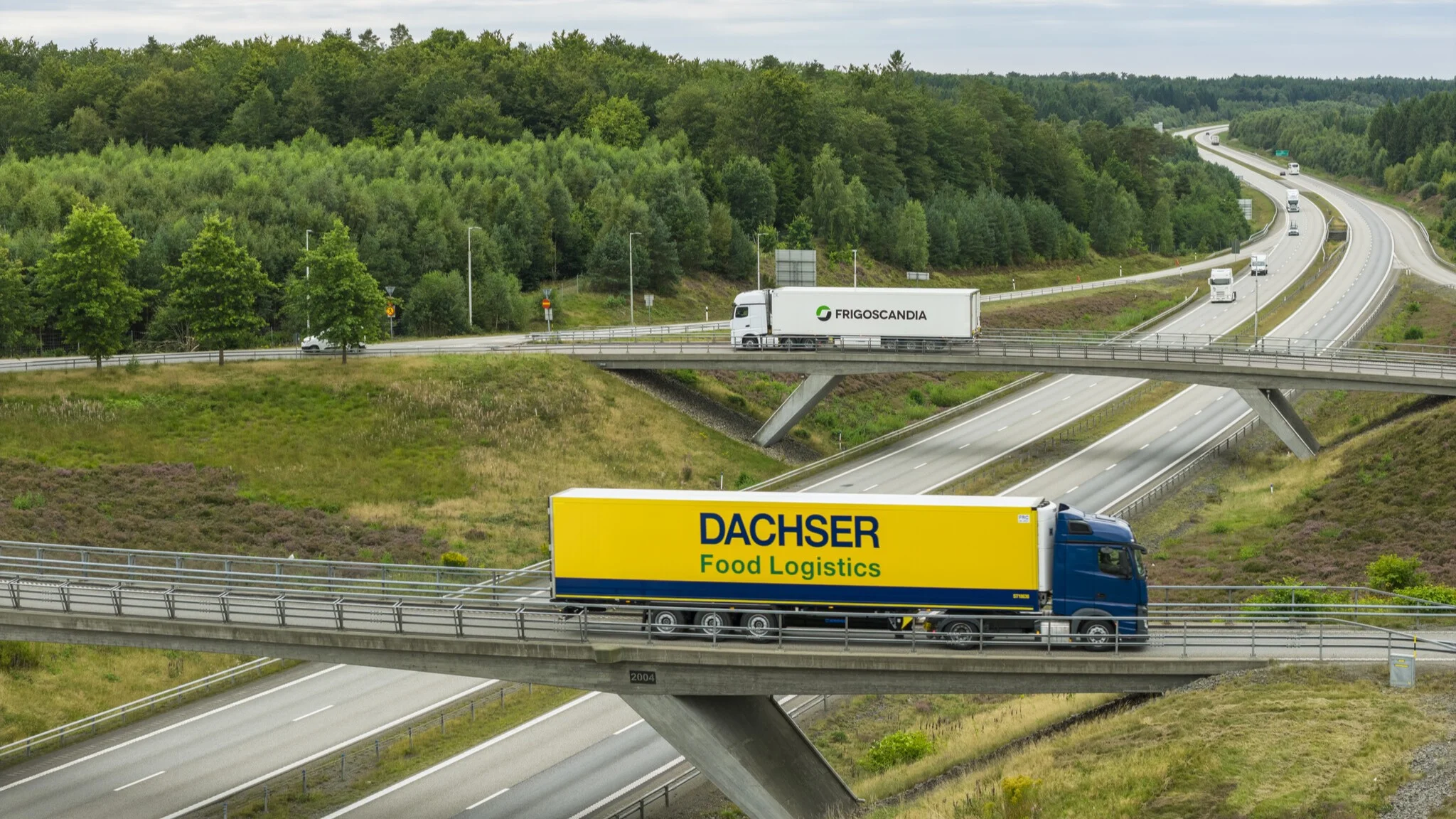
Due to the Nordics’ geographic location, frozen foods remain very popular there today—especially in Norway’s fish and seafood processing industry and in Denmark’s pork production sector, from where products are exported as far as Asia. Finland also produces meat and dairy products for export, although imports clearly dominate the trade balance. The main transit centers for imports and exports are the Swedish ports of Helsingborg and Gothenburg on the Baltic Sea. Here’s where the trucks set off to take shipments to trading partners in Sweden, Norway, and Finland.
When it comes to transporting frozen goods, Jönsson explains, the Frigoscandia integration gives DACHSER Nordics a long-term and comprehensive edge in terms of knowledge and experience, which can also be leveraged for DACHSER’s European food network in the future. “Having up to four different temperature zones in a truck and trailer is standard practice for us. For the Scandinavian furniture manufacturer, for example, we transport ambient-temperature, refrigerated, and frozen goods along the same route. This expertise wasn’t available in DACHSER’s Food Logistics network until now.”
-18°C
Frozen, yet still flexible: Frozen food is kept at −18 °C during transport, but other temperature ranges can be included as well. A truck can handle up to four different temperature zones.
Share knowledge, grow stronger together
The gradual integration of Frigoscandia into the DACHSER network is currently proceeding at full speed. The Norwegian and Finnish branches have been fully integrated since early 2026, with integration in Denmark due to take place later this year. “We’ve set key milestones for 2026 and 2027 and are continuing to accelerate the pace of integration. This also includes the rollout of DACHSER’s core IT systems at Food Logistics in Sweden, so that we can all work together seamlessly using the same applications,” Jönsson explains. At the same time, management and organizational structures in the Nordics region have now been standardized. “This is crucial for quickly leveraging synergies between sales and production for the benefit of our customers,” Jönsson says. One example is setting up joint sales teams at DACHSER Nordics to ensure an efficient sales process.
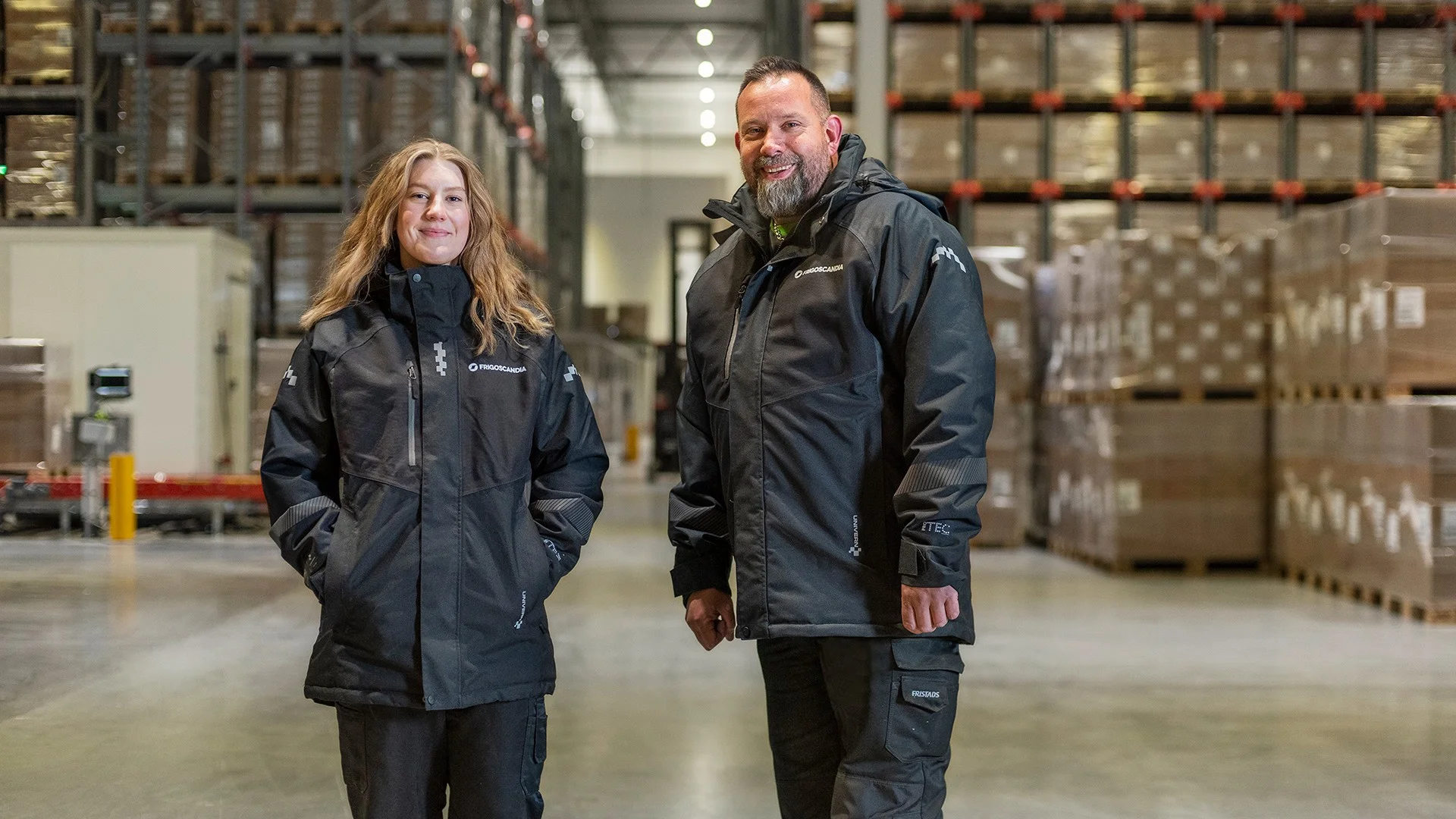
The mutual exchange of experience and knowledge is also a top priority at DACHSER Nordics. “Employees at the food locations are faced with the challenge of embracing a new corporate identity and then actually putting those values into practice in their day-to-day work,” Jönsson says. “We’re in the midst of an exciting cultural journey for all employees, focused on instilling core Working with DACHSER, a globally positioned logistics provider, opens up significant growth opportunities for us and our customers.” values and fostering forward-thinking and working within network contexts.” He points out that that’s not always easy; it takes time, inner conviction, and a variety of communication methods. Take “Lunch Talk,” for example. “This is where strategic topics are explained to employees in a casual, conversational manner, allowing them to better understand and appreciate the DACHSER world,” Jönsson explains. Conversely, each of the approximately 270 employees at DACHSER’s existing country organization in Sweden will be assigned a “best buddy” from Frigoscandia in order to benefit from the experience of the “newcomers.” As Jönsson says, “This lets the teams get to know each other better and support one another.”
Working with DACHSER, a globally positioned logistics provider, opens up significant growth opportunities for us and our customers.
Sustainable solutions for food logistics
DACHSER’s emphasis on sustainability has been welcomed with open arms in Northern Europe. According to a recent study by global market research and consulting firm Mordor Intelligence, incentives for zero-emission vehicles in Scandinavian countries are accelerating the fleet transition. For example, Norway exempts heavy-duty battery-electric trucks from road tolls, ferry fees, and sales tax, which results in “total cost of ownership parity with diesel for high-mileage city-to-city routes.” Sweden is also currently testing battery-swap stations along the E4 corridor, which stretches from Tornio in northern Finland to Helsingborg on Sweden’s east coast and is being massively expanded as an “e-highway” with fast-charging stations. The plan is to reduce the downtime for electric trucks to a level comparable to that of diesel refueling.
“We have customers who’ve been demanding fossil-free transport across all sectors for the past years,” Jönsson says. “Besides which, we have to document our CO2 emissions and report them to customers every month. So we’re right where the action is as DACHSER drives the industry forward.” Frigoscandia currently has a total of eleven electric trucks in its fleet, including vehicles from service partners.
Jönsson believes that the integration of Frigoscandia and the restructuring of DACHSER Nordics are currently on track: “We’ve already accomplished a great deal, but we still have a lot of work to do to turn two into one.” That won’t happen on its own, he cautions; it requires commitment and cooperation from everyone. At management meetings, he’s made it a habit to wrap things up by saying, “Let’s do it.” DACHSER’s full strength lies in “WE”: “That is and will always be the difference we make for ourselves and our customers.”