When Europe grew closer together: 20 Years of DACHSER in Eastern Europe
By Marcus Schick I 9 minute read
01/10/2026
Twenty years ago, DACHSER began establishing its own country organizations in Poland, the Czech Republic, and Slovakia. This expansion was about much more than just opening up new markets—it became an example of how the interplay between European integration, entrepreneurial vision, and long-term investment enables shared growth.

Fireworks, laser and light shows, dancing, popping champagne corks, and jubilant celebrations all around: At midnight on May 1, 2004, tens of thousands of people took to the streets in many European cities to celebrate what remains the EU’s biggest expansion to date. “Ode to Joy,” the anthem of the European Union, served as the unifying soundtrack for the event. A grand stage for a watershed moment for Europe and the Central and Eastern European countries that had lain on the other side of the Iron Curtain until 1990—including Poland, the Czech Republic, and Slovakia.
The largest single expansion in the history of the EU opened up new markets, harmonized regulatory frameworks, and boosted cross-border trade. For many companies, this marked the beginning of a new, previously inconceivable chapter in European cooperation and the connecting of people and markets. And DACHSER was no exception.
Long before the EU’s eastward expansion, it had been clear to DACHSER that the closer integration of countries in a united Europe would bring about lasting changes to logistics on the Continent. After all, as the flow of goods increases and supply chains become more international, new demands arise for transport, connectivity, and reliable logistics services. In this spirit, DACHSER’s expansion into Central and Eastern Europe beginning in 2006 was not a short-term reaction to the political situation as of May 1, 2004, but rather the result of strategic planning that had begun years earlier.
Attention had long been directed eastward
As early as 1997–98, DACHSER’s then management board had identified Central and Eastern Europe as the “logistics market of the future.” It was a period that saw international industrial and commercial enterprises, such as those in the DIY sector, increasingly relocating production capacity, tapping into new markets, and expanding their supply chains eastward. “Many of these customers expected the same level of logistics quality there that they were accustomed to in Western Europe,” explains Bernhard Simon, Chairman of the Supervisory Board and DACHSER CEO from 2005 to 2020. At the time, it helped enormously that people along the supply and procurement chains had known and respected one another personally for some time.
DACHSER initially responded with partner networks, pilot projects, and customer-driven initiatives. “Back then, I often visited the emerging Eastern European countries myself, had many conversations, and took on mentorships. You could practically feel the optimism and enthusiasm for building something new in the air—the excitement of becoming part of DACHSER’s vast logistics network across Europe,” Simon remembers. During this transformative period, it was all these personal encounters, together with a wealth of practical experience, that helped DACHSER understand the markets, customer requirements, and regional characteristics. And those same factors helped the company develop the expansion model that it began systematically implementing and breathing life into in 2005 when it established DACHSER country organizations in Poland, the Czech Republic, and Slovakia.
“While Central and Eastern Europe’s economic development was foreseeable from an early stage, and all signs pointed to further market liberalization and sustainable growth, that didn’t automatically mean economic success was a given,” DACHSER CEO Burkhard Eling explains as he looks back at the dawn of this era. “It took patience and perseverance on the part of our family-owned company to lay the groundwork for that success and turn red ink into black by building up new structures. And it also called for everyone to have a clear goal in mind: Then as now, it was and remains crucial for DACHSER not only to tap into new markets, but to see them as part of a shared network from day one.”
The key to this lies in the employees’ mindset. “Not everyone is naturally inclined to see change not as a threat, but rather as an opportunity that opens up new possibilities,” Simon says. That’s why targeted external support was also needed to convince people at DACHSER of the value of entrepreneurial thinking and action and to get them excited about it. “It wouldn’t have been possible to integrate Central and Eastern European countries so successfully into the DACHSER network without the outstanding dedication of all employees and their strong commitment to the path we’ve taken together.”
In the tenth episode of the DACHSER podcast Network Talk, Roman Stoličný, Managing Director Road Logistics South East Europe at DACHSER, joins podcast host Charlotte Goldstone to look back on the development of DACHSER in Slovakia and to discuss how business and logistics have evolved across the entire region of South East Europe since the 1990s.
It wouldn’t have been possible to integrate Central and Eastern European countries so successfully into the DACHSER network without the outstanding dedication of all employees and their strong commitment to the path we’ve taken together.
From market entry to network strategy
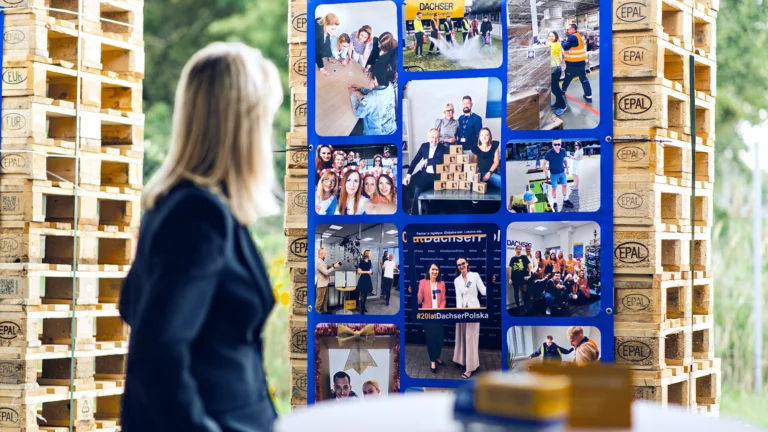
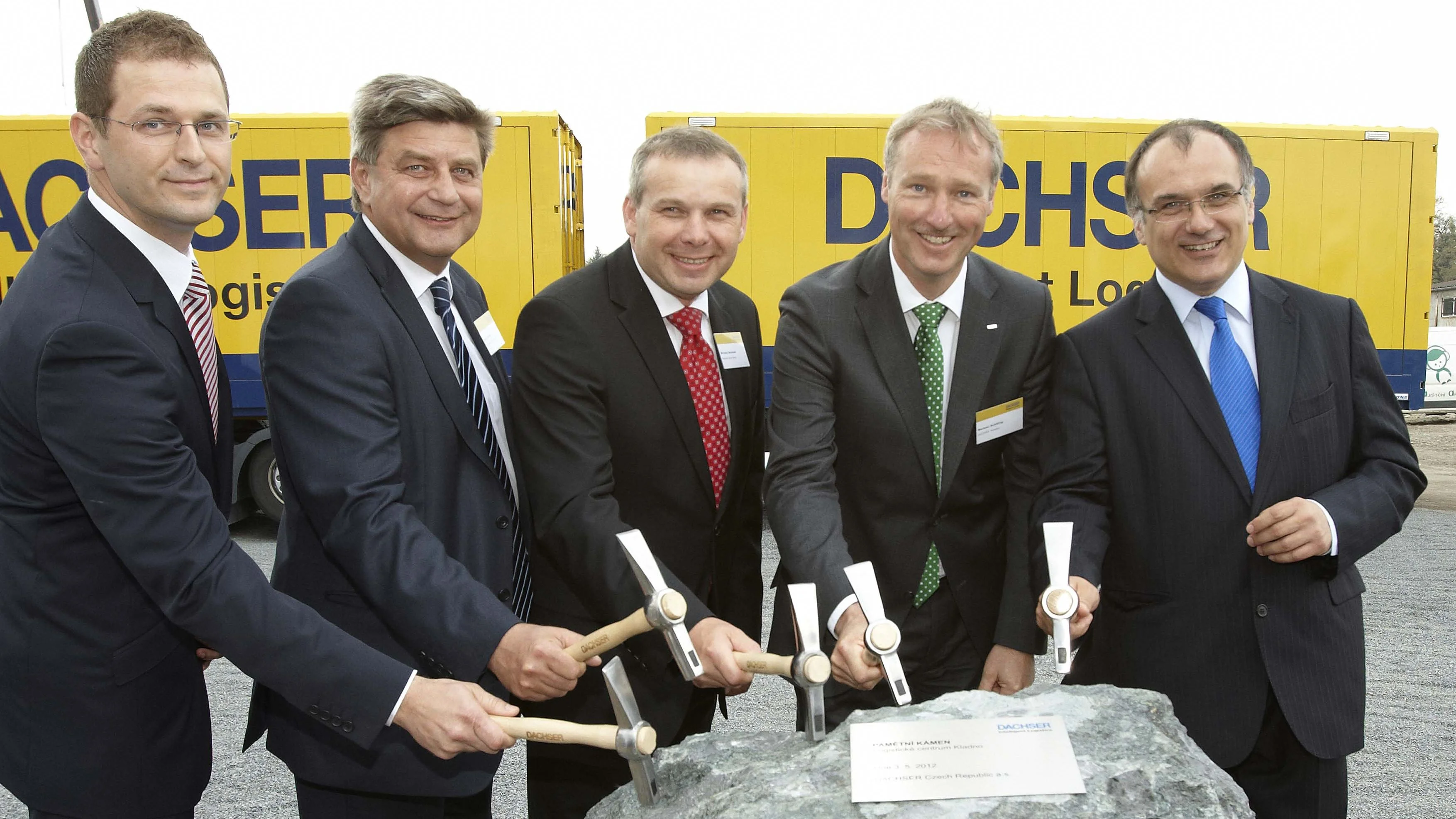
The foundation for this was the general spirit of optimism that went hand in hand with the EU’s eastward expansion. For Simon, this meant that the long-term strategy of systematically building and expanding the network gained momentum. “DACHSER was on track back then and stayed on track.” Take Poland, for example. Having initially explored various partnership arrangements and projects there, DACHSER ultimately decided to set up a country organization of its own. The foundation for this move was the local organizational structure and activities of Graveleau, the French logistics provider that Dachser had acquired in 1999. The Polish business was officially renamed DACHSER Sp. z o. o. on January 25, 2006. This was the point at which Dachser formally assumed responsibility and system leadership for four branches in Poland: Stryków/Łódź, Warsaw, Poznań/Gadki, and Sosnowiec. Turning to the Czech Republic and Slovakia, DACHSER first pursued existing partner networks and equity stakes here, as it had in Poland, before building these up into clear, DACHSER-led organizations. In the Czech Republic, DACHSER collaborated with Drusped-Lagermax until spring 2004. Following that, the company got a new strategic partner by acquiring a stake in a Czech logistics provider called E.S.T. In 2006, this led to the formation of a joint venture, DACHSER E.S.T., in which DACHSER held an 80 percent stake. In subsequent years, the company was further integrated into the DACHSER network and eventually changed its name to DACHSER Czech Republic a.s.
Slovakia, in contrast, was steadily incorporated into the network by way of the DACHSER & Liegl organization, founded as a joint venture in Hungary in 1999, as well as other equity stakes. In October 2004, Liegl & DACHSER Hungary acquired 80 percent of the Slovak freight forwarding company Lindbergh. January 10, 2005, marked the start of operations for Lindbergh & DACHSER, paving the way for its subsequent renaming as DACHSER Slovakia.
Although Poland, the Czech Republic, and Slovakia had each taken their own paths into the DACHSER world, all three shared a clear guiding principle. “For DACHSER, entering a new market was never a question of making a splash as quickly as possible. The key was to combine local experience with the quality standards of an international network,” explains Alexander Tonn, COO Road Logistics at DACHSER.
For DACHSER, entering a new market was never a question of making a splash as quickly as possible. The key was to combine local experience with the quality standards of an international network.
A united Europe needs common standards
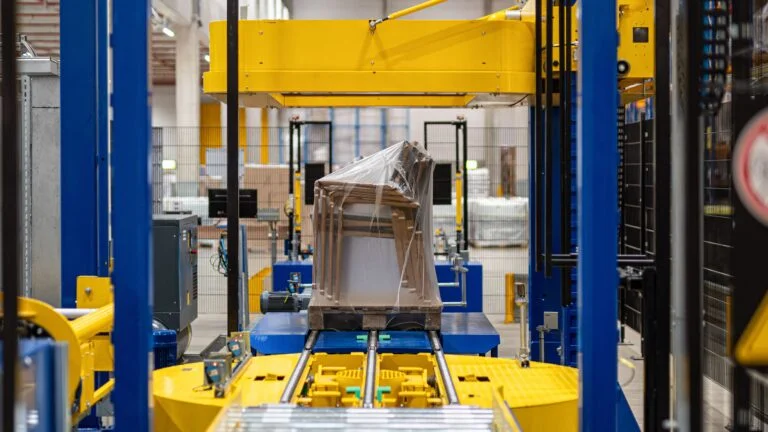
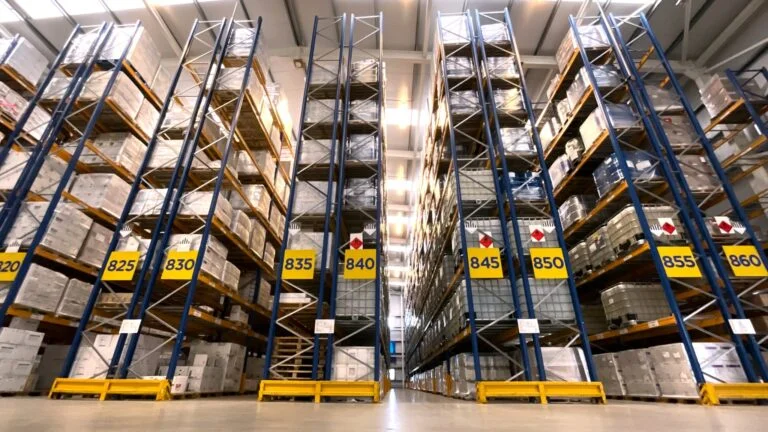
“The real marker of success,” Tonn says, “wasn’t that we entered the market, but how we integrated the new country organizations into a unified European network and into the standardized entargo product line.” Step by step, DACHSER introduced its core DOMINO and MIKADO IT systems, established standardized processes, and merged its locations into cross-border groupage transport operations. Moreover, the establishment of the Eastern Europe hub in Bratislava in 2007 put in place a central hub that shortened transit times and greatly improved connectivity both within the region and to the rest of Europe.
“These country organizations started out as independent units, but over the years they’ve become closely integrated components of a pan-European network,” Eling says. “And that’s precisely where the real added value of incorporating the new countries lay: Customers could count on the same quality standards, regardless of what side of a national border their goods happened to be on.”
Growth needs endurance
However, building this business up was by no means straightforward. In Poland in particular, DACHSER initially had to contend with low brand recognition, transportation infrastructure that was still inadequate in some areas, and intense competition. Added to this were challenging integration processes, operational losses, and the need to make multiple adjustments to organizational structures.
“Sustainable growth and the development of new market opportunities call for much more than a decision to invest in something. They require patience, outstanding management performance, and the willingness to consistently adhere to a long-term strategy even during difficult times,” Eling says. Beginning in the late 2000s, DACHSER increasingly deployed programs such as MOBILE 2015 to shift its focus to profitability, network balance, and the systematic expansion of its organizations. It expanded branches, set up contract logistics, and streamlined sales and management structures. This ultimately became the common thread running through the success story in Central and Eastern Europe: After several years of consolidation, Poland has developed into a country organization that enjoys dynamic growth and serves as a model for quality, and the Czech Republic and Slovakia have also grown steadily in stature in DACHSER’s European network.
Sustainable growth and the development of new market opportunities call for much more than a decision to invest in something.
An example of European integration in action
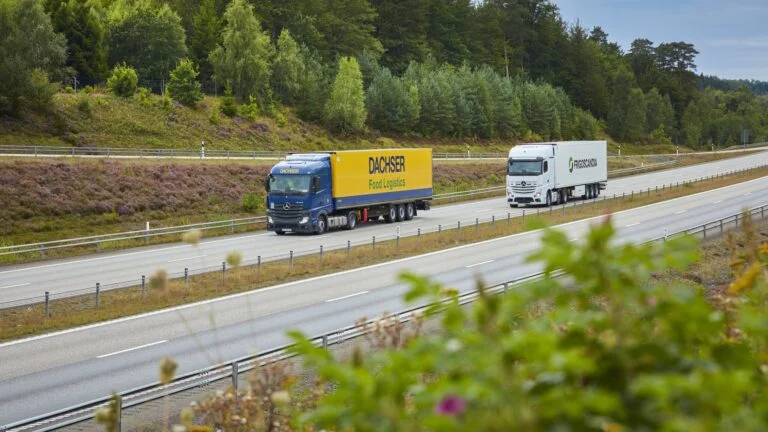
Poland, the Czech Republic, and Slovakia have now been integral parts of DACHSER’s European network for a long time. Every day, cross-border transports connect production sites, distribution centers, and customers throughout Europe. What began in the early 2000s as a series of small strategic expansion steps has since become a well-established and fully embraced aspect of daily logistics operations at DACHSER.
At the same time, this development shows that economic success is rarely the result of individual decisions. “Open markets create opportunities. But the only way to achieve sustainable growth is when companies are willing to make long-term investments, take on responsibility, and—with the help of motivated and competent employees—consolidate different markets into a cohesive whole,” Eling says.
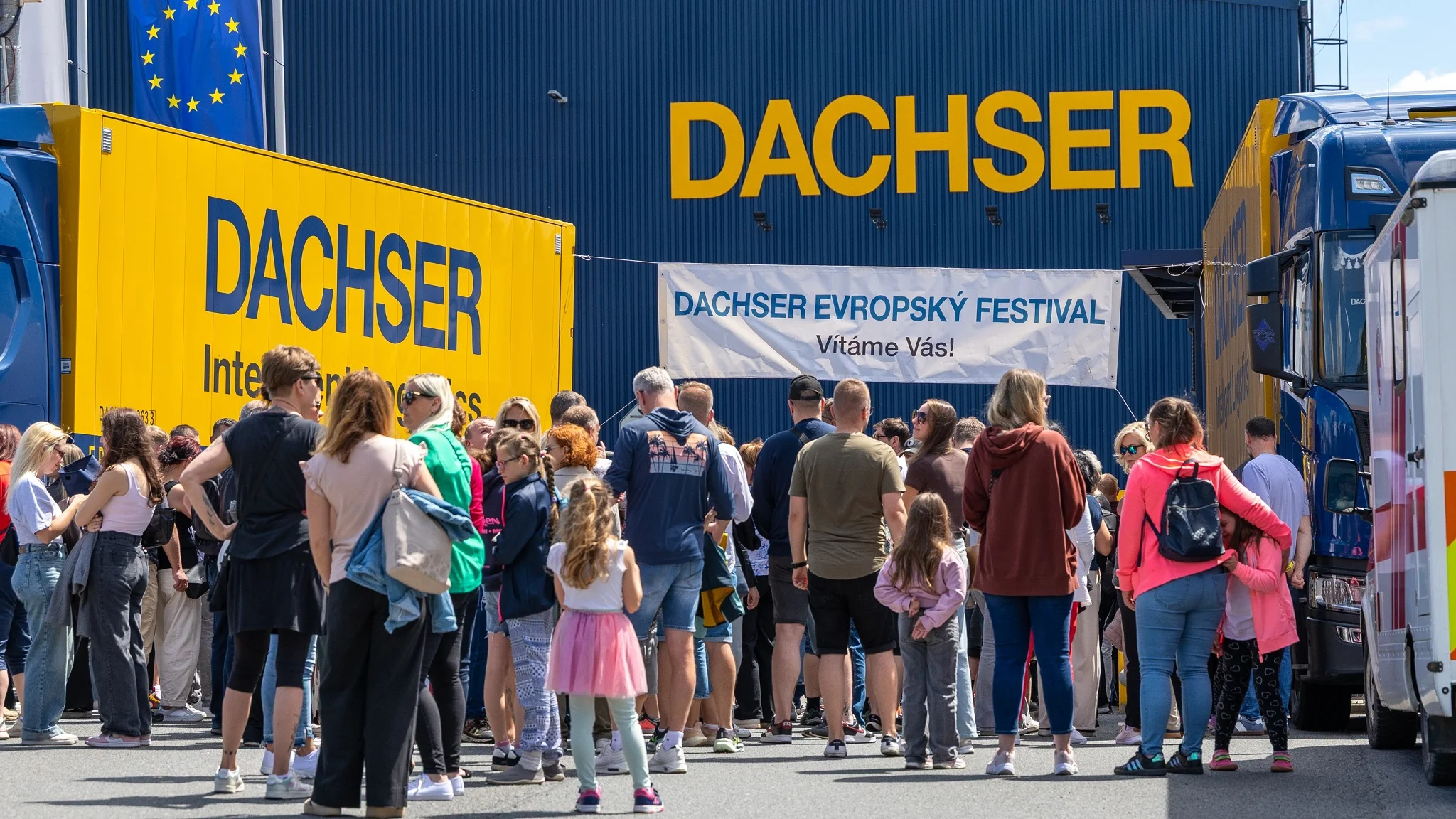
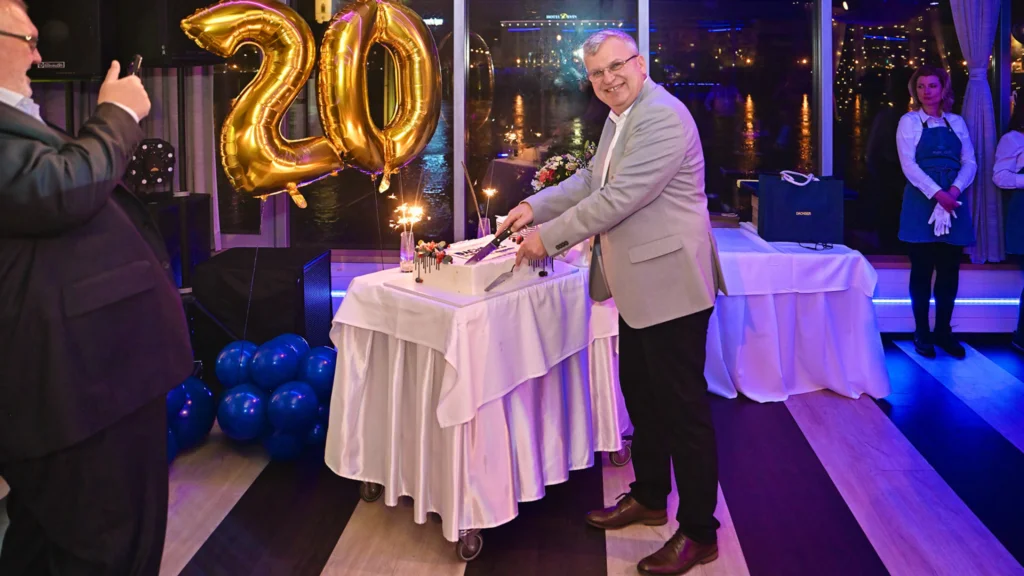
That’s why, as Eling sees it, DACHSER is writing a greater story in Poland, the Czech Republic, and Slovakia than just marking off anniversaries: “It’s an example of how European integration works in practice—not as an abstract political concept, but as the day-to-day interaction of people, businesses, and a network that connects them across borders.” That’s certainly a good reason to celebrate together with employees, partners, and customers in each country—and perhaps even play the “Ode to Joy” one more time.