Digital transformation in dialogue
By Marcus Schick I
6 minute read
16/12/2025
Digitalization is changing the world of work – including in logistics. But technological innovations alone are not enough. As a reverse mentoring format at DACHSER shows, trust, openness, and genuine cooperation are crucial for anchoring digital changes in everyday life and in the minds of employees.

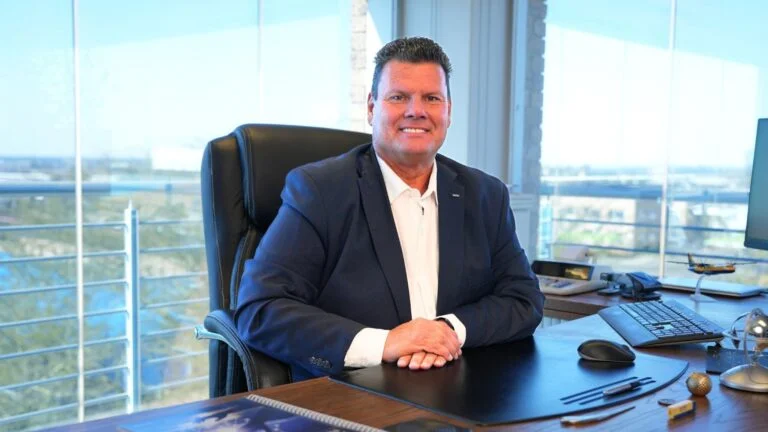
Cultural change at the touch of a button? Can that work? For Hendrik Jansen, Managing Director of DACHSER Driver and Truck Fleet Services GmbH, the switch to Microsoft M365 was initially a step out of his comfort zone. Away from the familiar system environment and into a new, cloud-based collaboration environment with Outlook, Teams, SharePoint, and more.
The technical upgrade turned out to be a cultural challenge as well. It quickly became clear that it was about more than just using a new chat or email program. “New forms of communication emerged within the team, decision-making processes became faster, expectations changed – and, not least for me as a manager, a new understanding of leadership and collaboration emerged. With the new digital tools, information was suddenly being shared instead of sent, and doors were opened to collaborative decision-making instead of delegation,” says Jansen.
New ways of thinking for a Digital Mindset
And that is precisely the core of DACHSER’s digitalization strategy. The company pursues a comprehensive approach that not only creates the technological prerequisites, but also specifically promotes new ways of thinking and behaving among employees. The aim is to create a Digital Mindset and promote openness, a willingness to learn, and the courage to change. At DACHSER, digital technologies are not only introduced, but also used effectively in everyday logistics.
Digitalization at DACHSER is a comprehensive transformation that combines technological innovation with a change in thinking and working methods. A central element is the “digital mindset,” which promotes openness and a willingness to learn and embrace change in order to use digital technologies effectively in everyday life.
With the new digital tools, information was suddenly being shared instead of sent, and doors were opened to collaborative decision-making instead of delegation.
Steep learning curve on the digital journey
For Hendrik Jansen, who is responsible at DACHSER for driver processes, driver training and further education, and cooperation with service partners, working with digital tools is part of his “daily bread.” However, that doesn’t make him a “digital native” by any means. On a digitalization competence scale of 1 to 10, the 49-year-old would place himself somewhere in the lower third. This is exactly where DACHSER’s reverse mentoring program comes in. Mostly younger employees from the IT and digital world coach experienced colleagues on their journey through digitalization.
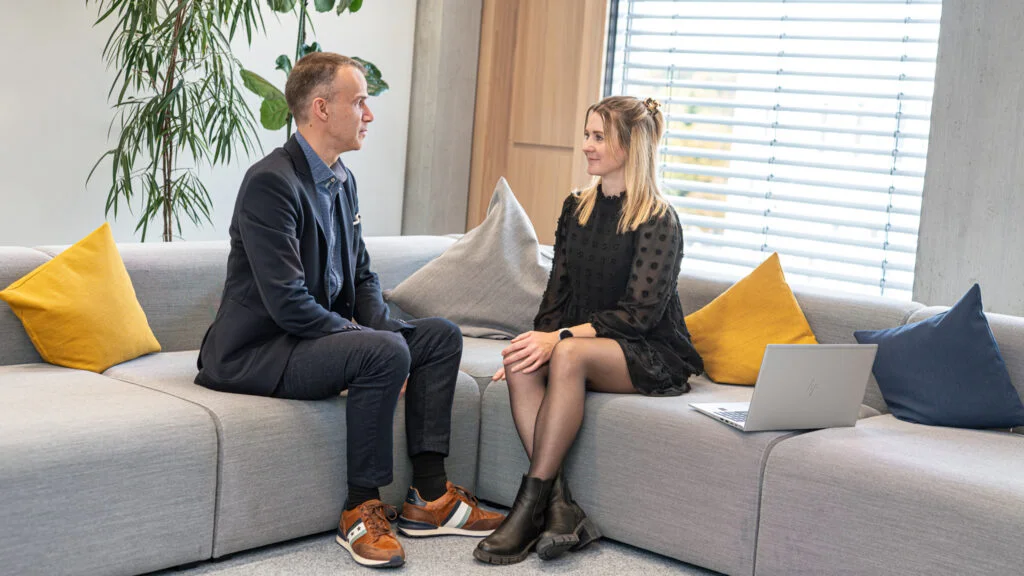
“Reverse mentoring is not top-down technology training, but a dialogue between mentor and mentee on an equal footing. The focus is on the specific application needs and the ‘Digital Mindset’ of each individual,” says Kerstin Beckmann, Team Leader IT Education & Communications at DACHSER. The 28-year-old was one of the first mentors in the new format. “At DACHSER, we are committed to breaking down barriers – in both directions,” she says. “Reverse mentoring means learning and exchanging experiences on an equal footing. It is not training, and certainly not a lecture, but rather a conversation. Two hours, once a month. There is plenty of room for questions, experimentation, and personal perspectives.”
Reverse mentoring reverses traditional roles: younger employees coach more experienced colleagues – for example, on digital tools, new ways of working, or social media. This is not about technical training in the narrow sense, but rather about exchanging perspectives, mutual understanding, and concrete support in everyday work.
Dialogue across all hierarchical levels
What happens in the process is often astonishing: those who work with the new, increasingly sophisticated digital applications not only change their tools, but often also their understanding of their roles. “Suddenly there is a chat window where you can send a message directly to the managing director – and get a reply. Collaboration becomes visible – for everyone and in real time,” says Beckmann. This also directly contributes to DACHSER’s leadership principles. Providing guidance, building trust, and empowering teams to self-organize: that’s what modern leadership at DACHSER is all about. “The Digital Mindset is a key to acting quickly and flexibly in a dynamic environment while maintaining clear values and guidelines.” Kerstin Beckmann and Hendrik Jansen can both confirm this from their very different perspectives and backgrounds.
“In Reverse Mentoring, managers quickly realize that they can open up and embrace new ways of thinking. And the younger mentors experience how much appreciation they receive from managers for their knowledge,” says Beckmann. “In my dialogue with Hendrik, I myself learned a lot about the responsibility that managers bear – and how important it is to introduce new technologies with a sense of proportion, but also with consistency.”
Reverse mentoring is not top-down technology training, but a dialogue between mentor and mentee on an equal footing. The focus is on the specific application needs and the ‘Digital Mindset’ of each individual.
Growing together instead of continuing as before
Hendrik Jansen agrees. However, for the Managing Director of DACHSER Driver and Truck Fleet Services GmbH, opening up to new knowledge and insights as a manager and thus actively promoting teamwork is also something that has to be “learned.” He knows from experience: “Training is never a one-way street. We want responsible employees who think for themselves and get involved. To achieve this, managers need to stay in dialogue and exchange ideas with them. Digital tools are a big help in this regard today.” His own attitude has already changed significantly as a result of Reverse Mentoring. “I used to be rather skeptical about digital meetings or collaborative work via MS Teams. Today, I use our tools as a matter of course. This is also because I have experienced that they are really useful tools for me and my team in our everyday work.”
Kerstin Beckmann is pleased to hear this: “It is personal experiences like these that make digitalization tangible and break down reservations. Not as a compulsory exercise, but as an opportunity to break new ground. For Hendrik Jansen, one thing is certain: “Kerstin and I have formed a great tandem of youth and experience. Our joint Reverse Mentoring has definitely broadened my horizons and shown me how much potential there is in digitalization and the personal collaboration it supports.” On a digitalization competence scale of 1 to 10, he has now reached 6. “There is always room for improvement. But I know how to move forward – with curiosity, openness, and growing enthusiasm for constructive collaboration.”