Climate change: Comprehensive help for smallholder farmers in India
By Christian Auchter I 7 minute read
29/10/2026
Through their Corporate Citizen+ partnership, DACHSER and myclimate are providing assistance in developing and emerging economies to help people cope with the effects of climate change and develop long-term prospects for the future. A current project under this initiative supports smallholder farmers in the Indian state of Maharashtra.

In the Ahilyanagar district of Maharashtra, the effects of climate change are increasingly perceptible. Much of the region lies in the rain shadow of the coastal mountains, which makes the monsoon rains from June through September all the more important. According to government figures, about three-quarters of the state’s agricultural land is not irrigated and relies on rainfall. However, monsoon rains are becoming more irregular, and the water table is dropping. This is making farming more difficult, leading to crop failures, and worsening the food situation for the already impoverished population. Year after year, it’s getting harder for families in the villages of Ahilyanagar to make a living from their fields. “Everything depends on the rain, and the prices of chemical fertilizers have also risen sharply in recent years,” says Nils Hegel, Professional Expert Corporate Sustainability at DACHSER, who recently visited the project as part of his work.
And there are other challenges as well: The soil quality is getting worse and worse. People regularly use firewood harvested from the forests for cooking, which causes air pollution. The alternative, liquefied petroleum gas (LPG), is becoming increasingly expensive for families, partly due to current geopolitical developments. Locals’ sources of income are usually limited to farming and livestock raising. And there are hardly any other job opportunities for young people.
Year after year, it’s getting harder for families in the villages of Ahilyanagar to make a living from their fields.
How the project helps smallholder farmers in India cope with the effects of climate change
With this complex situation in mind, the climate organization myclimate is launching a new, long-term project—with backing from DACHSER as part of its Corporate Citizen+ program, which brings together all the logistics provider’s activities beyond its corporate boundaries relating to sustainability, society, and the climate. “With a long-term and, above all, holistic approach, we want to provide local people with very concrete assistance in coping with the consequences of climate change. That includes creating healthier living conditions, making agriculture more sustainable and productive, and achieving positive long-term development for communities,” Hegel explains.
A series of interrelated measures will be implemented over a period of about six years. These will focus on clean cooking fuel, climate-resilient and regenerative agriculture, water management, educational opportunities, and inclusive participation. Responsibility on the ground lies with the local partner, SKG Sangha. This Indian nonprofit organization has over 30 years of experience in sustainable rural development.
The India project is part of DACHSER’s global social responsibility efforts under its Corporate Citizen+ initiative. The latest annual report documents projects in the areas of climate action, education, and social development.
Biogas, water management, and climate-resilient agriculture
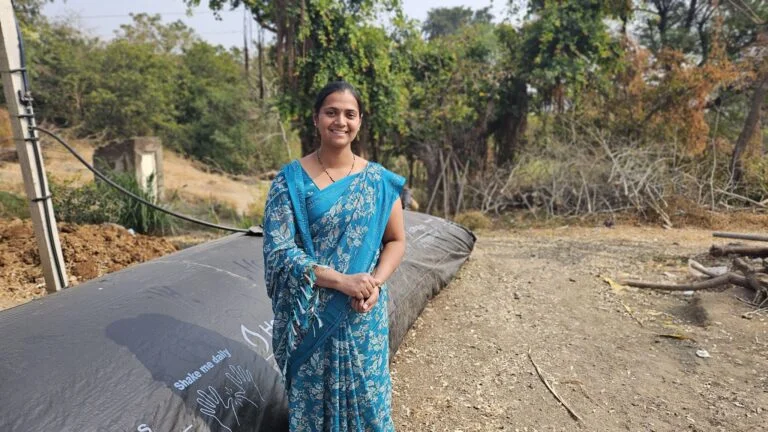
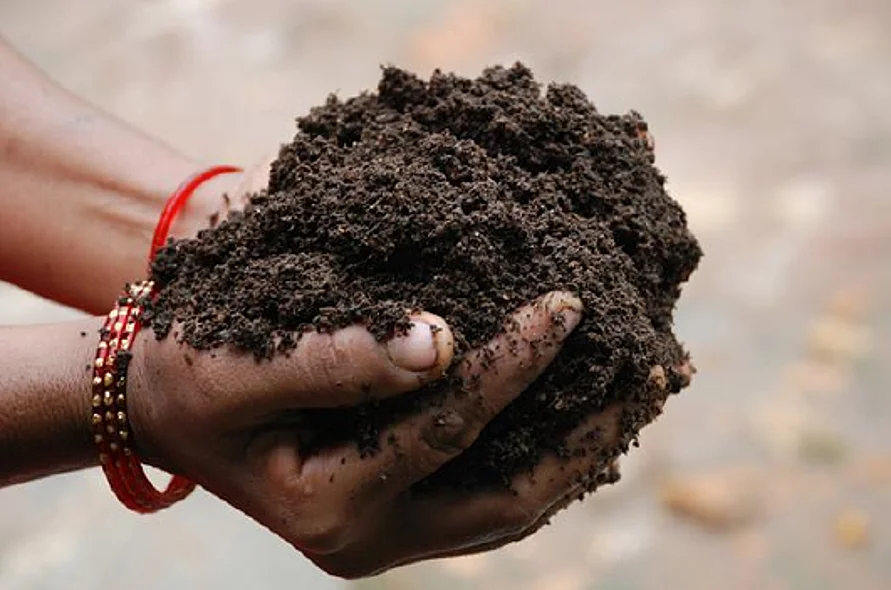
The use of biogas is fundamental to the project. 6,000 households with their own livestock will receive biogas systems. In addition, 20,000 improved cookstoves will be provided. Biogas can be used as a clean cooking fuel. Less firewood means less air pollution, and the availability of biogas also reduces purchases of expensive LPG. There’s also a use for biogas slurry: Applying it to fields increases their fertility and resilience and reduces farmers’ costs since it lets them cut back on chemical fertilizers. All households with biogas systems will receive training on how to use them properly as well as ongoing support in subsequent years.
Agriculture is also set to become more climate-resilient through the use of biochar made from crop residues. To that end, 200 pit facilities will be built. Once applied to fields, biochar helps them retain water and nutrients and improves soil quality. Moreover, the project will establish agroforestry systems featuring mango, papaya, and pomegranate trees for about 100 households. These systems support agricultural production and can generate additional income.
Water supply is another key focus of the project. Many households have only limited access to water, which has consequences for agriculture, hygiene, and basic sanitation. As part of the project, roughly 200 ponds covered with Azolla fern will be built on the farms to collect surface water and produce natural nitrogen fertilizer. In addition, there will be some 50 municipal drinking water systems, rainwater harvesting systems, as well as the construction of 50 new dug wells and the renovation of 50 existing wells. These measures are intended to improve water availability, reduce crop losses, and improve the health of the local population.
Measures will also be taken to address limited opportunities for education and income generation. In addition to awareness campaigns, the project includes training on the construction of biogas plants, composting, and biochar production; training in water and energy systems management; and training for women in agroforestry and marketing. The goal is for at least 50 people to find long-term employment opportunities.
74 %
of agricultural land in Maharashtra is not irrigated and relies on monsoon rainfall.
For DACHSER, it’s imperative that we support projects that combine climate action with tangible improvements for local communities.
Tangible benefits for the communities
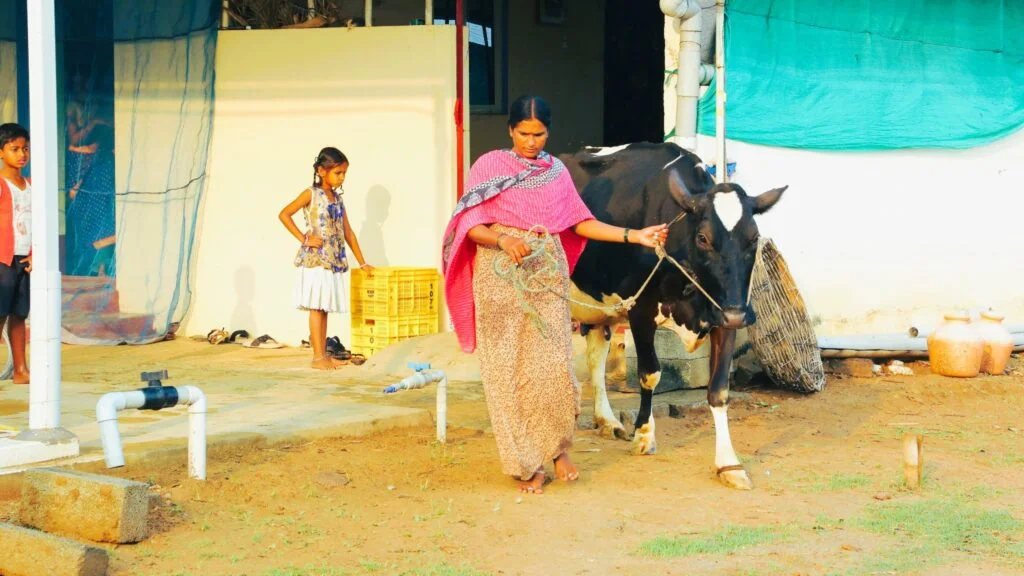
In preparation for the project, the local conditions were assessed and families in the participating villages were surveyed. Their feedback shows how closely climate impacts, rising energy costs, and agricultural challenges are linked. “Our crop yields depend on the rain,” says Sevantha Popatarao, a farmer from Mukindapur. Some of her land can be irrigated, but the fields she uses to grow sorghum are dryland and depend on rainfall. At the same time, the cost of cooking fuel is rising: “We spend about a quarter of our income on cooking fuel,” she says. Biogas plants could provide some relief for families with their own livestock.
It’s precisely this feedback that shows why the project isn’t focused on a single measure, but instead encompasses action on various fronts. “For DACHSER, it’s imperative that we support projects that combine climate action with tangible improvements for local communities,” explains Bernhard Simon, Chairman of the DACHSER Supervisory Board. “That’s exactly why we favor this project’s holistic and integrated approach: Its measures are interconnected—ranging from clean cooking fuel and improved water management to climate-resilient agriculture, education, and new opportunities to generate income. As a result, it will not only provide short-term assistance, but also create long-term prospects for the rural communities in the Ahilyanagar district.”