Strong together: Inclusion at DACHSER
By Inklusives Arbeitsleben & Christian Auchter I 8 minute read
09/03/2026
Illness can suddenly change your life, as was the case for Luzia Niestroj from DACHSER Steißlingen—an eye infection left her unable to work. With patience and support, she found her way back into working life. Daniel Metzdorf-Muigg, Inclusion Officer at DACHSER, explains in an interview with Inklusives Arbeitsleben how the company helps those affected and what hurdles there are when it comes to inclusion.

Luzia Niestroj worked at a computer screen for years without any problems until she suffered severe eye infections three years ago. Her corneas scarred and her vision was severely impaired, so she was initially unable to continue working. But with the help of Thomas Helmlinger, the company’s integration management representative, solutions were developed to enable her to return to work. Thanks to special lighting at her workplace, Luzia Niestroj can now work four hours a day despite her severe visual impairment. A lamp directly on the screen and an adapted light source on her desk make this possible.
The case from Steißlingen shows that sometimes seemingly simple measures can help. However, creating a suitable workplace for people after an illness or with a disability and integrating them into working life remains a challenge. In an interview with the blog “Inklusives Arbeitsleben,” Daniel Metzdorf-Muigg, Inclusion Officer at DACHSER, talks about practical measures and challenges, emphasizing that cultural change is more important to the family-owned company than quotas.
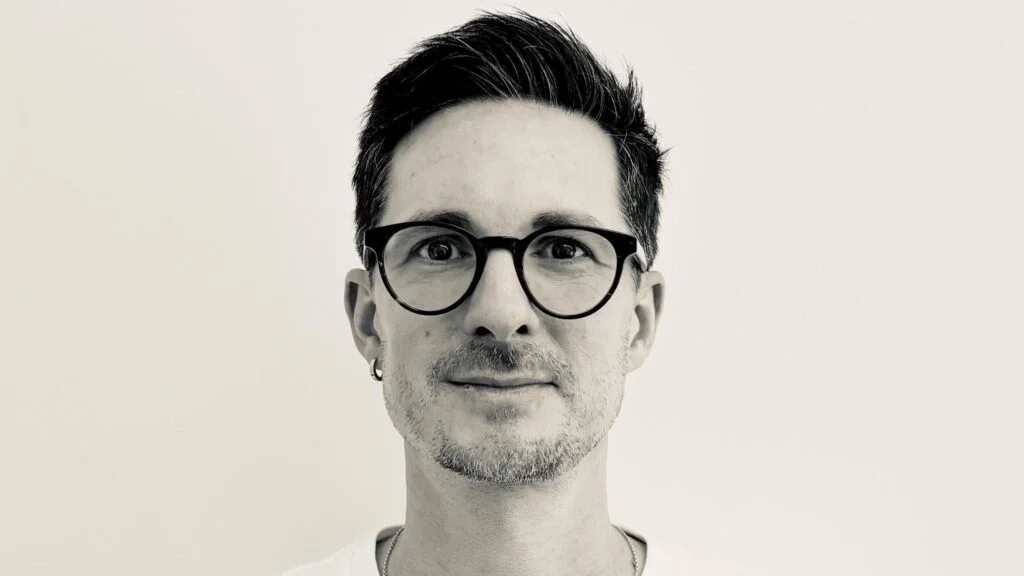
Mr. Metzdorf-Muigg, what are your responsibilities at DACHSER as Inclusion Officer?
I am responsible for developing and implementing an inclusion strategy for our company and advising the company on all issues relating to inclusion and disability. We have concluded an inclusion agreement which, among other things, stipulates that our colleagues with disabilities are entitled to an adapted working environment. We have also agreed that managers must be trained in dealing with inclusion and diversity.
I offer some training courses and workshops for managers, recruiters, and other employees myself—not only to convey content, but also to stay in touch with people. It is very important to me to present the topics of inclusion and disability in a tangible and understandable way in my work, without the seriousness and negativity that often accompanies them.
How exactly do you want to raise awareness of the issue within the company?
I publish articles on the intranet and design practical aids such as our “Disability Awareness” guide, which provides information on how to interact and communicate with people with disabilities. In the future, I would also like to recruit “role models” for the topic, i.e., colleagues with disabilities who can act as role models, stand up for their identity, and encourage others. For example, we have a deaf colleague at one of our locations. His workplace has been technically adapted, among other things, by replacing acoustic signals with a vibration alarm on his smartphone. We have made this colleague visible internally and also featured him in external magazines. I think the idea of such role models is very effective and would like to expand on it.
DACHSER has 70 locations and around 19,000 employees in Germany alone. Are you the only person in the company responsible for inclusion?
No, we have a total of more than 40 inclusion officers at our German locations who perform similar tasks to those I do at the corporate level. Together with the representatives for severely disabled employees, they are confidential contact persons for local employees and provide assistance at short notice. One of my tasks is to coordinate and expand this internal network. I have developed a three-part training program for the inclusion officers. This ensures that everyone has the same level of knowledge and a common understanding of inclusion and corporate culture at DACHSER. At the same time, such training also provides an opportunity for exchange. The inclusion officers were able to learn from each other and continue to support each other in their day-to-day business.
We have a total of more than 40 inclusion officers at our German locations who perform similar tasks to those I do at the corporate level.
How many positions at DACHSER are filled by people with disabilities?
It’s impossible to give a general answer to that question. The proportion varies depending on the location and also depends on whether someone is open about their disability or even wants to disclose it. We know that there are unreported cases. Not all employees feel secure enough to talk about their limitations for fear of stigmatization. Others may not feel affected at all. In this regard, the company must first earn the trust of its employees by raising awareness and making the issue visible. Our most important goal is therefore not to meet a quota, but to create a working environment in which people can open up without fear. However, we have also set ourselves the goal of filling at least five percent of our jobs in Germany with people with disabilities.
So far, DACHSER does not yet meet the legal employment obligation—why is that?
One challenge is our diverse locations, where we have to develop individual solutions for different activities, working conditions, and shift models. The issue of structural accessibility should not be underestimated either. We have many older buildings in our portfolio, some of which have not yet been converted to be barrier-free. Such renovations are often complex and require a significant investment of time and organizational effort.
In addition, many managers and employees first need a basic understanding of the issues of inclusion and disability in order to become more confident in dealing with them and to break down barriers (including mental ones). Inclusion is therefore not a short-term project, but a long-term process that requires the involvement of many people. We want to achieve sustainable cultural development so that new people with disabilities are hired and existing employees find the courage to talk openly about their disabilities. We are aware that this will take more time to achieve purely quantitative goals. However, we are already seeing an increase in the employment rate – in our view, this is a sign that our measures are working. There are also already locations that meet or even exceed the statutory employment quota.
DACHSER in Memmingen is committed to ensuring that employees with disabilities can participate in working life by offering individually flexible working hours, advice and support, and technical aids. For this, the branch received the “JobErfolg – Menschen mit Behinderung am Arbeitsplatz” (Job Success – People with Disabilities in the Workplace) award from the Bavarian State Ministry of Family, Labor, and Social Affairs in 2024.
Our most important goal is to create a working environment in which people can open up without fear.
Which ones, for example?
At our logistics center in Memmingen, the proportion of employees with severe disabilities or equal status is well above the legal requirement of five percent. The representative for severely disabled employees, the inclusion officer, and the human resources department have been working closely together there for many years. They also have good networks with external partners such as the employment agency, the integration service, and the inclusion office, so that employees can receive the best possible support. Employees with physical limitations, for example, are provided with so-called exoskeletons, which are aids that stabilize the spine and prevent incorrect strain. This allows these employees to continue working in the warehouse. In addition, we offer flexible working time and shift models or break regulations to respond to health needs and thus ensure long-term employability. All of this makes the Memmingen branch a pioneer within the company.
However, we have also found good and sometimes creative solutions at other locations. Our headquarters in Kempten, for example, is currently being rebuilt. In the process, we are also redesigning our existing offices into open-plan offices with different zones for collaboration, conferences, and so-called “focus rooms” where employees can retreat to concentrate on their work. One colleague with a visual impairment at this location needs special computer equipment as well as a room that he can completely darken. We have therefore equipped one of the focus rooms near his team with opaque curtains and arranged it so that this colleague has priority when booking the room. These were relatively small measures – but they had a big impact.