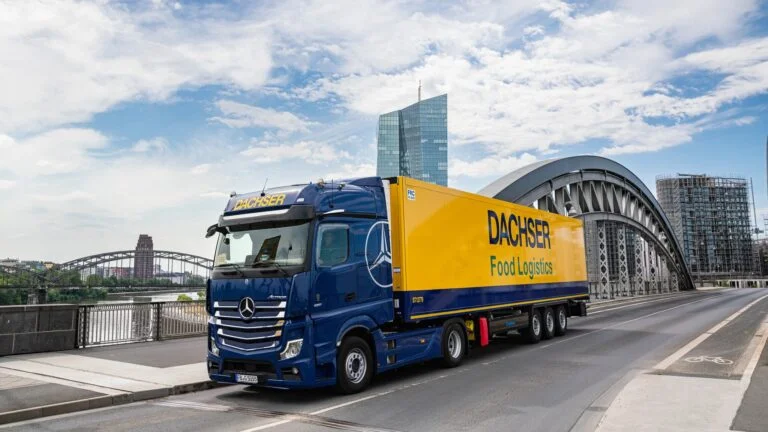
Alliance for Food Rescue – DACHSER and Tafel Deutschland e.V.
Autor: Matthias Rathmann I Lesezeit: 9 Minuten
08/05/2026
Some 1.5 million people in Germany regularly make use of the services offered by food banks—and that figure is on the rise. But while demand is growing, the volume of food left over in the retail sector for distribution to people in poverty is declining. Tafel Deutschland and DACHSER have therefore joined forces to actively tap into a new source, namely, food producers.

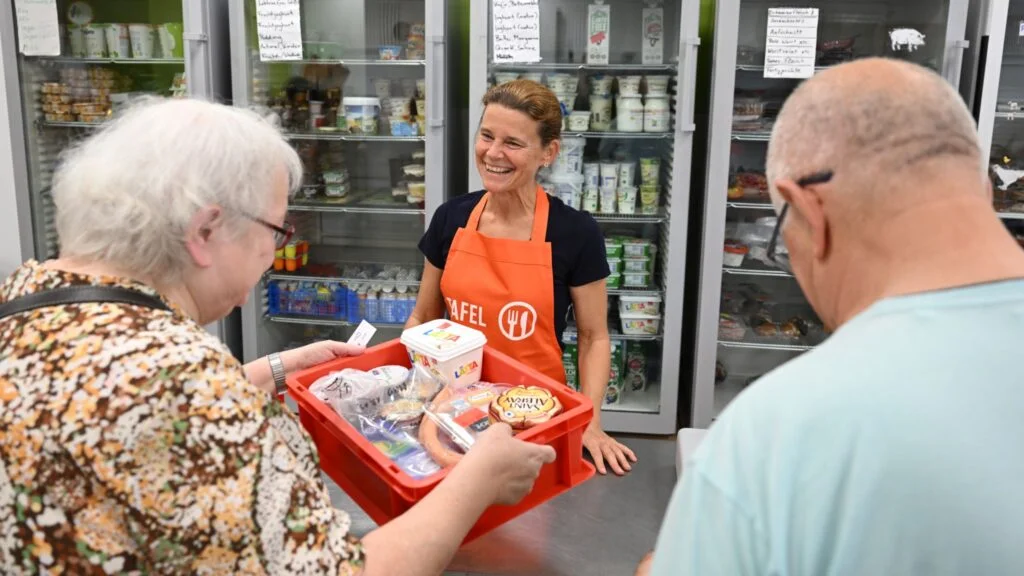
What’s on the table today? The number of people affected by poverty who can barely make ends meet with their household money is increasing. As a result, offers of help such as those provided by the regional associations and member food banks that together make up Tafel Deutschland are becoming all the more important. Roughly 1.5 million people gratefully accept the goods offered at Tafel’s more than 970 food banks across Germany. However, supply at its distribution points can hardly keep up with the increasing demand. One of the main reasons is that today’s supermarkets, food retailers, and bakeries are left with significantly fewer unsold items than in the past. Modern checkout and merchandise systems allow them to meet demand more accurately when placing orders for the products that will end up in their customers’ shopping baskets.
In response, Tafel wants to offset the decline in the supply of surplus retail goods to its food banks by specifically approaching food producers. The problem is, these often have bulk volumes to donate, which makes for correspondingly demanding logistics. That’s where the collaboration between Tafel Deutschland and DACHSER comes in. In March 2025, the two organizations signed a cooperation agreement aimed at attracting producers and wholesalers for food donations. Their joint mission is called “Alliance for Food Rescue.” This alliance is the culmination of a process that began back during the coronavirus pandemic, when Alfred Miller—the then head of Food Logistics at DACHSER, who now advises and supports Tafel Deutschland pro bono with his logistics expertise—saw how pandemic-related distribution problems at Tafel’s food banks were making the situation for people affected by poverty even more acute. He responded by initiating close cooperation with the nonprofit at the national level. Prior to that, some DACHSER branches had already been cooperating with Tafel food banks in their region, but there had been no overall, comprehensive partnership concept.
DACHSER contributes its logistics expertise to the network
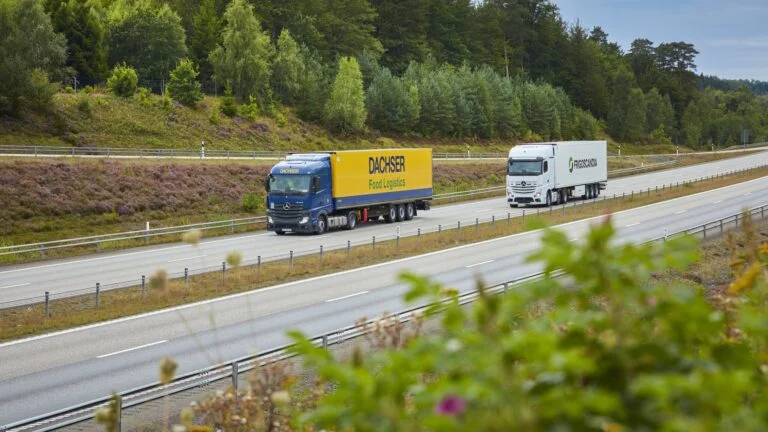
DACHSER Food Logistics is one of the key players for temperature-controlled food transportation in Germany. The logistics provider’s customers include food retailers, who have been supporting the Tafel organizations with donations for years, as well as food producers. One of the tasks of the DACHSER branches within the alliance is to target specific producers for possible food donations and connect them with the regional Tafel associations.
What are the main advantages of the alliance? “The food banks no longer have to turn down donations for logistical reasons. Thanks to our logistics network, we’re able to accept any and all quantities and handle them in our system at a proven level of quality—whether it’s one pallet or several hundred,” explains Stefan Behrendt, Managing Director Food Logistics at DACHSER. The local food banks often use their own vehicles to collect goods from retailers, but they’re unable to handle bulk quantities. “DACHSER can now take care of pickup and delivery—to the logistics centers of a regional Tafel association, to associations in other regions of Germany, or even to the local distribution point,” explains Markus Belter, Department Head Sales Development at DACHSER Food Logistics, who coordinates and drives collaboration with the Tafel food banks as project manager.
Rescuing food, helping people—this is the motto and motivation of the Tafel food banks in Germany. The network brings together around 77,000 helpers, most of whom are volunteers, and covers the whole of Germany through 13 regional associations. At the local level, more than 970 legally independent food banks offer additional services for people affected by poverty. The food banks regularly support around 1.5 million people with food, around half of whom are children and retirees. According to their own figures, the helpers rescue around 265,000 metric tons of food every year.
The food banks no longer have to turn down donations for logistical reasons. Thanks to our logistics network, we’re able to accept any and all quantities and handle them in our system at a proven level of quality – whether it’s one pallet or several hundred.
All regional Tafel associations have joined the Alliance for Food Rescue
The new alliance began with the regional Tafel association in the German state of Hesse and gradually expanded to the other 13 regional associations over the past few months. Last to join was Baden-Württemberg, which did so this past March. These regional associations are the linchpin for processing the food donations. In preparation for the alliance project, they adjusted their internal structures and took on many new staff in the areas of logistics and acquisition. They also appointed people to be in charge of operational donation processing and donor support. These individuals (and their deputies) serve as central contacts for the food industry. Andreas Steppuhn, Chairman of Tafel Deutschland, highlights the advantages of this setup: “For us, the Alliance for Food Rescue means that, in addition to our long-standing collaboration with food retailers, we can now also establish efficient ways of working with the food processing industry. With DACHSER, we have a strong partner at our side. Our vision is clear: less waste, more support, strong partnerships.” Steppuhn is also pleased to see support coming from the political level. Alois Rainer, Germany’s Federal Minister of Agriculture, Food, and Regional Identity, has become patron of the alliance. “In doing so, he has taken an important stance against food waste and for more solidarity,” Steppuhn says.
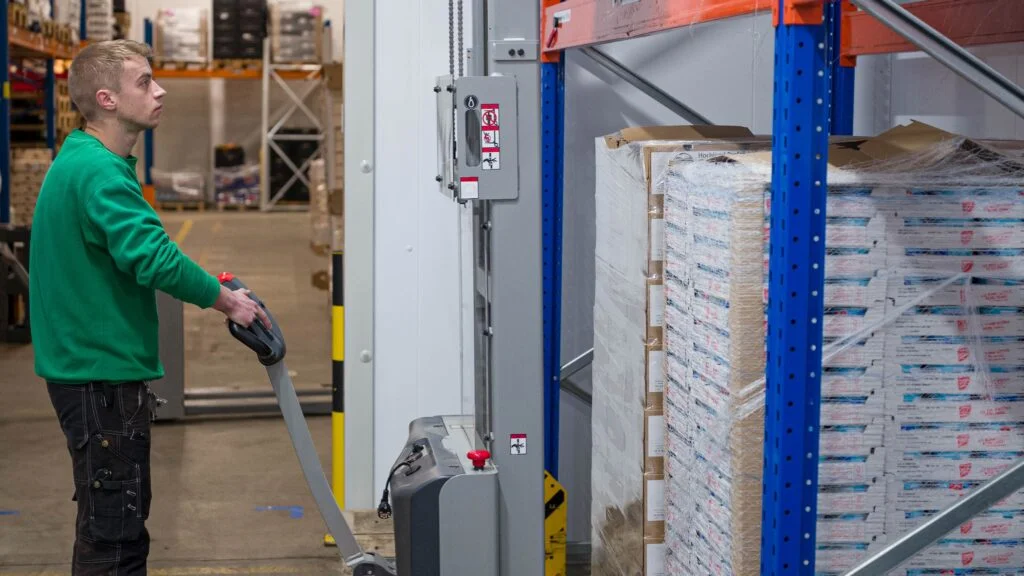
Both sides rely on digital processes. Thanks to the TafelConnect IT solution, the food banks can transmit all their transport and shipment data to DACHSER Food Logistics. The donations are also reported to the food banks via this platform. Once the food donations are in the system, fixed transit times of 24 and 48 hours apply, as for the other shipments in the network. In the DACHSER system, each food bank warehouse is set up like a typical retail recipient. Last year, the logistics provider organized over 600 transports of food donations across the country. “That’s just the beginning, because the more Tafel regional associations we add, the more donations we ship,” Belter reports.
13
regional associations of the Tafel cover the entire country to support people affected by poverty.
For us, the Alliance for Food Rescue means that, in addition to our long-standing collaboration with food retailers, we can now also establish efficient ways of working with the food processing industry. With DACHSER, we have a strong partner at our side
Tip for producers: Plan ahead, manage surpluses in good time
Belter recommends that producers plan the logistics of surplus goods early on. “It takes the Tafel organizations up to two weeks from accepting donations to handing them out at the individual food banks,” he explains. That may sound like a long time, given that DACHSER manages the logistics within Germany in 24 or 48 hours, but the food banks aren’t usually open every day. In addition, Tafel and DACHSER have developed a two-stage logistics concept to minimize transport costs for producers. Ideally, donors ship their goods to the Tafel logistics centers at no cost to the nonprofit, from where the respective regional Tafel association takes over distribution to its food banks.
For DACHSER, the alliance with Tafel Deutschland is another way to practice social responsibility. It carries out its transports on behalf of Tafel at cost. “The partnership is a real win-win,” Behrendt says. “By going directly to the producers, the food bank organizations are tapping into a new and important source of food donations. The producers benefit as well, as DACHSER makes it possible for them to donate their surplus to a good cause at proven logistics quality and without any extra effort on their part for handling.” Food rescue is also a plus for those concerned about sustainability. A considerable part of the industrialized world’s carbon footprint is due to discarded food, with estimates calculating that around one‑third of the food produced ends up as waste. This is a major concern for the United Nations, which aims to cut global food waste in half by 2030. The alliance between DACHSER and the Tafel food banks helps ensure that good food isn’t thrown away but instead ends up on the plates of people in need.