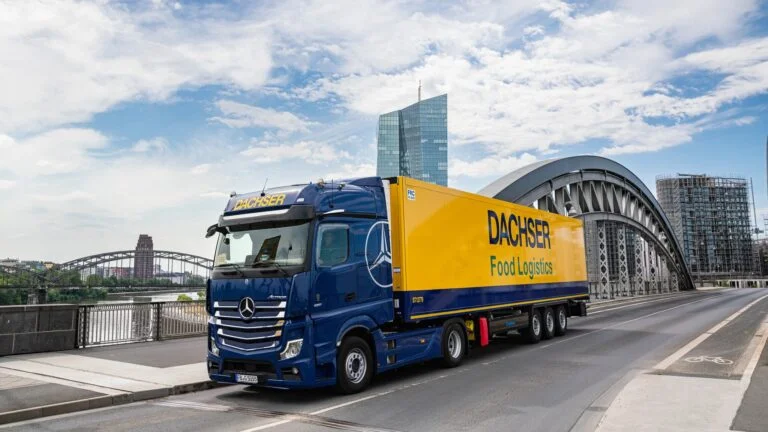
Rewetting of raised bogs: Pulling on rubber boots for climate action
By Marcus Schick I 7 minute read
06/05/2026
Together with myclimate and ZukunftMoor, Dachser is launching a long-term climate action project in Lower Saxony, Germany. Through rewetting and the cultivation of peat moss, a natural CO2 sink is being reactivated—while simultaneously creating a new model for sustainable agriculture.

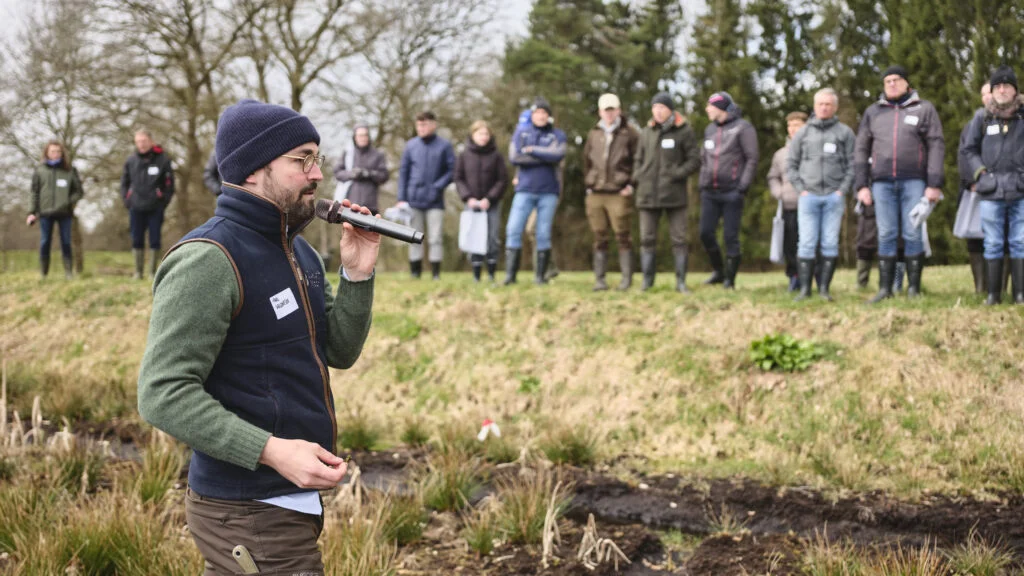
It’s a cool morning in late March in the North German lowlands, and the weather can’t make up its mind. The sky is overcast and the icy wind brings rain showers, but every now and then, the sun peeks through. That brightness is reflected in the joy on the faces of the people gathered out here. Dachser and its partners, the nonprofit foundation myclimate and ZukunftMoor Gnarrenburg GmbH, have invited guests to Gnarrenburg, a town of 9,000 in the district of Rotenburg in Lower Saxony. The occasion is a groundbreaking ceremony of a very special kind: part of a Corporate Citizen+ project, “Rewetting of the Langenhausen Moor.”
An undertaking that goes far beyond one day
Active participation is on the agenda, but nothing here is done without rubber boots: The ground gives way with a squelch underfoot, and water collects in shallow depressions. Anyone pitching in here needs to be willing to stand in the mud and has to move carefully to avoid getting stuck. That’s exactly what everyone present is doing today: Bernhard Simon, Chairman of the Supervisory Board at Dachser; members of the shareholder family; and Burkhard Eling (CEO) and Stefan Hohm (CDO) representing the Executive Board. Joining them are branch managers and trainees from Bremen, Hamburg, and Hannover, representatives of the partners myclimate and ZukunftMoor, and colleagues from the Corporate Sustainability department who are coordinating the project at Dachser.
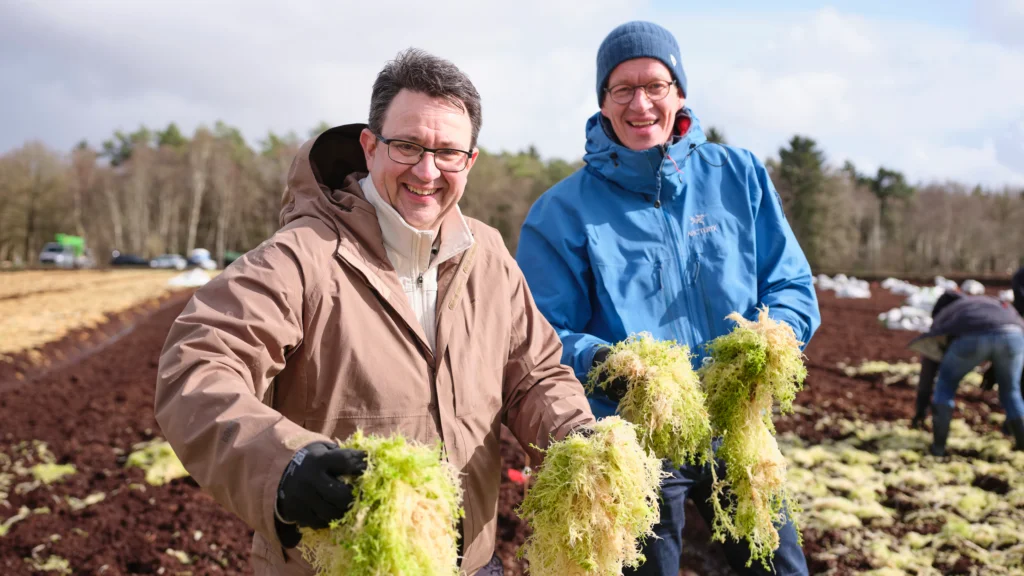
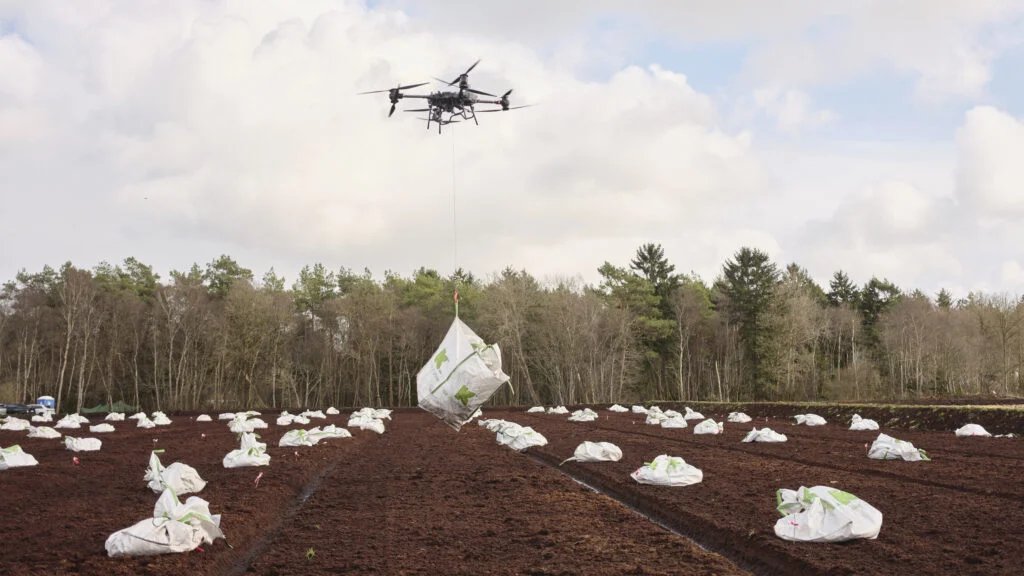
“The motivation and drive, especially among our younger colleagues and our local partners, is impressive. When generations work side by side like this, they make tangible progress. Above all, however, it’s an expression of a culture of sustainability within the company that goes far beyond this project,” says Dachser CEO Burkhard Eling, who, together with fellow Executive Board member Stefan Hohm, is visibly enjoying himself as he lends a hand in sowing peat moss. What’s beginning here is part of a long-term climate action project: the rewetting of a drained peatland area covering nearly 12 hectares, equivalent to approximately 16 soccer fields or the size of one of the larger Dachser branches.
At the end of 2023, DACHSER, myclimate and the children’s charity Terre des Hommes decided to work together on a long-term basis to launch new climate protection projects worldwide or to expand existing initiatives.
When generations work side by side like this, they make tangible progress. Above all, however, it’s an expression of a culture of sustainability within the company that goes far beyond this project.
An underestimated climate key
Bogs are among the most effective natural carbon sinks on Earth. Although they cover only about 3 percent of the world’s land area, they store twice as much carbon as all forests combined. When a bog is drained, however, this effect is reversed: The carbon bound over centuries is released—and on a massive scale. In Germany alone, this accounts for around 7 percent of annual greenhouse gas emissions. According to the Peatland Atlas published by the Heinrich Böll Foundation, the use of drained peatlands in Germany for low-yield agriculture generates 25 times as many greenhouse gas emissions as domestic air travel.
The Langenhausen Moor and its history are an integral part of the local culture. It was drained as early as the 18th century and is primarily managed as pastureland for dairy cattle.
Like many others, this moor was drained over decades for agricultural use with comparatively low yields that decrease year by year and eventually run out. The result was continuous emissions that have accumulated over long periods of time. According to calculations by ZukunftMoor, more than 2,000 metric tons of CO₂ equivalents are currently released annually on the project site. Without intervention, this process would continue for centuries.
3 %
of the Earth’s surface is covered by peatlands. They store twice as much carbon as the biomass of all forests combined
Bring back the water, stop emissions
The solution is as simple as it is effective: Put the water back. Drainage systems are being dismantled, the water level raised, and the area rewetted. This stops the decomposition process and the moor can resume its original function as a carbon sink. Rewetted peatlands are also essential for greater biodiversity and the development of a sustainable rural value chain.
The project relies on an innovative concept that combines climate action with land use: paludiculture. The term derives from the Latin word “palus,” meaning “marsh,” and refers to the agricultural and forestry use of wetlands or rewetted peatlands. On the Langenhausen Moor, this means cultivating sphagnum moss, which serves as a climate-friendly substitute for peat in the substrate industry. This not only creates an effective carbon sink but also offers economic opportunities for local farmers.
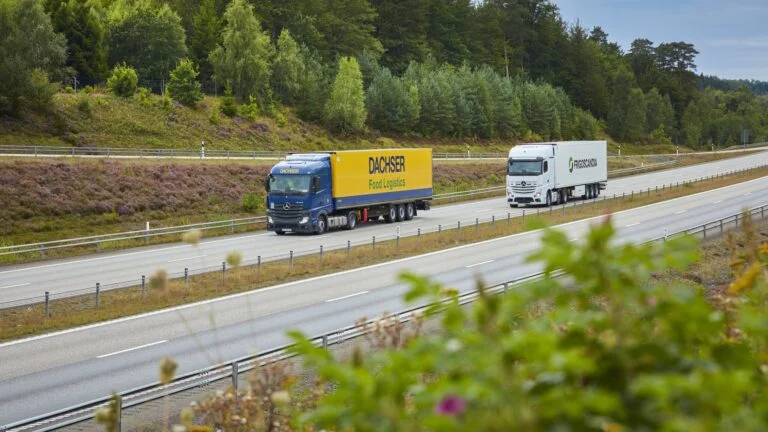
Restoring the peatlands will cut carbon emissions equivalent to those from 14 million kilometers of heavy-duty truck traffic.
New Prospects for Agriculture
This creates an approach that brings together ecological and economic interests. “Sphagnum moss has the potential to replace the use of climate-damaging peat—an important step in light of the planned phase-out of peat in the European Union by 2030,” says Julia Kasper, co-founder and managing director of ZukunftMoor.
Stefan Hohm, who as Chief Development Officer (CDO) is responsible for areas including research & development and innovation at Dachser, emphasizes the scale of the project: “Restoring the peatlands will cut carbon emissions equivalent to those from 14 million kilometers of heavy-duty truck traffic.” This approach creates a model that demonstrates how climate action projects can be scaled and integrated into existing economic structures.
14.558
tons of CO2e will be reduced on the DACHSER site in the Langenhausen Moor through rewetting.
Taking responsibility together
DACHSER’s commitment to the Langenhausen Moor is part of its Corporate Citizen+ program—an expanded understanding of long-term, social, and climate-related engagement that goes beyond the core business. “With our Corporate Citizen+ program, we want to make a lasting contribution to environmental and climate action, beyond advertising and certificates,” says Bernhard Simon.
50
years of project duration
With our Corporate Citizen+ program, we want to make a lasting contribution to environmental and climate action, beyond advertising and certificates.
The project in the Langenhausen Moor connects Dachser’s identity and roots in Germany with this global commitment to better living conditions and stability. The project exemplifies a new form of land use that combines climate action, resource conservation, and regional value creation. “The rewetting of a bog is not a quick fix but a sustainable investment in the future. The project’s 50-year duration underscores this long-term approach,” Simon explains. “Future generations will benefit from what we have set in motion today.”