Toward more sustainable logistics
By María Hernansanz I 7 minute read
19/08/2026
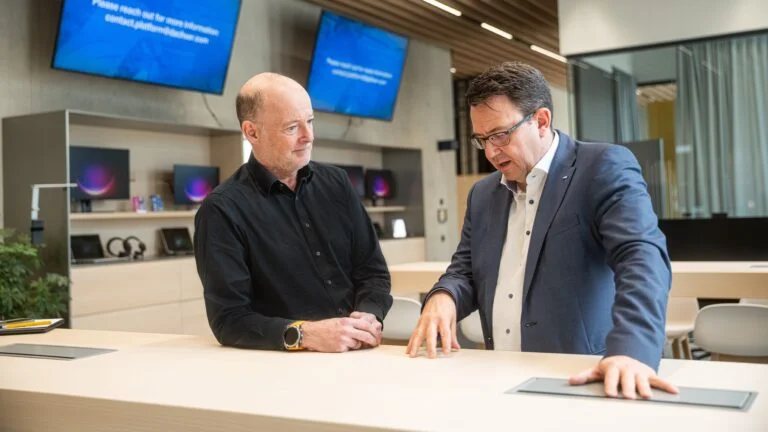
Alberto Gil González heads the Energy Management & Sustainability team at DACHSER Iberia. It’s his job to put the Zero-Emission Transition Plan—derived from the company’s climate protection strategy—into practice at the local level. He’s convinced that the transition to zero-emission mobility can’t be achieved through new technology alone. What really matters is getting people to support this change and make it happen in their daily lives. Once all the pieces of the puzzle fall into place, that’s when electromobility, energy efficiency, and cross-departmental collaboration can make logistics a little bit more sustainable.

When Alberto Gil González began his career more than 20 years ago, most companies in Spain didn’t yet consider sustainability to be a core strategic issue. At that time, his work focused on optimizing industrial processes, improving the energy efficiency of facilities, and using technical solutions to boost the competitiveness of his respective employer. Later, he realized that much of what he had been doing back then was already heading in the same direction as his current work: using energy and resources as efficiently as possible. “Back in the day, we called it optimizing costs and improving efficiency, but in reality we were already focused on sustainability even then, just without realizing it,” he says. “Today, though, things are different, and sustainability has moved from being just a technical issue to become a key priority in many industries, including logistics.”
Two years ago, Gil González joined DACHSER Iberia to take over as head of the local Energy Management & Sustainability team. “What I found compelling about DACHSER was that sustainability isn’t just a one-off project here, and neither is it the responsibility of a single department. Instead, it’s part of the corporate strategy and is directly embedded at the senior management level,” he explains.
In addition to the organizational structure, another aspect quickly won him over: the family-owned company’s unique culture of collaboration. During his onboarding, he quickly realized that at DACHSER, it’s not just professional expertise that counts, but also the person behind it. It’s an attitude that, in his view, is also evident time and again in his day-to-day work. “One minute you can be talking to a driver who’s just back from his route, and then a few minutes later you might be chatting with the managing director. This ease of access says a lot about how DACHSER operates.”
Sustainability as a corporate strategy
As team leader of Energy Management & and Sustainability, Gil González is responsible for issues that extend far beyond electromobility. These include energy management, emissions reduction, alternative fuels, ESG reporting, and compliance with new European regulations. “Sustainability can’t be the sole responsibility of a specific person or unit. The only way it can work is if the entire company integrates it into daily operations,” he says.
This all-embracing approach is especially important to him in his work. “It also obliges me to keep learning.” That’s why he spends a lot of time interacting with colleagues in nearly every part of the company: with the operations team on optimizing routes; with the real estate department on making buildings more efficient; with the purchasing team on new criteria for supplier selection; and with human resources, the legal department, and the communications team on how to make progress visible.
“Each department has its own unique circumstances. That helps me better understand how the business works—not just at DACHSER in Spain and Portugal, but also worldwide,” he says.
How can we achieve zero-emission logistics in practice? In the Network Talk podcast, DACHSER Chief Development Officer (CDO) Stefan Hohm explains which technological and strategic decisions are driving the transformation. Learn more in Episode #4, “DACHSER’s Path to Zero-Emission Logistics.”
Sustainability can only work if the entire company integrates it into daily operations.
Why electric trucks alone aren’t enough
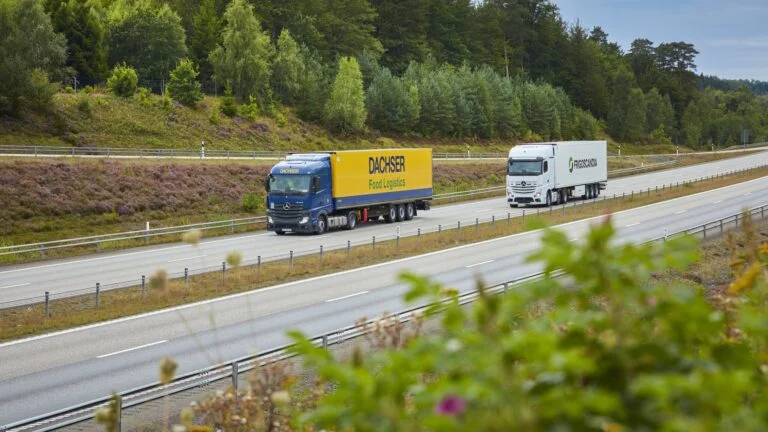
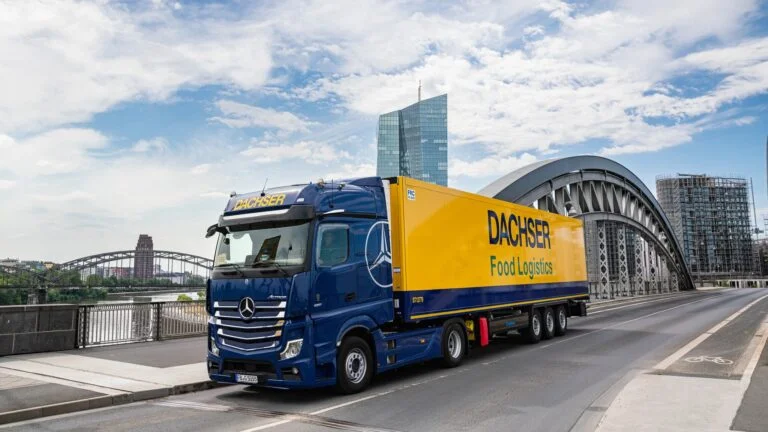
One key focus for DACHSER’s sustainability strategy is electromobility. On the Iberian Peninsula, the logistics company currently operates 20 electric trucks of its own and is gradually expanding its zero-emission fleet for both short- and long-distance transport.
However, emphasizes that the future doesn’t depend solely on electric vehicles. “There’s no one-size-fits-all solution for decarbonizing logistics. To achieve our goals, we need to take a holistic approach involving electrification, alternative fuels, operational efficiency, innovation, and digitalization,” he explains.
“People often get the impression that everything depends on the trucks. But making logistics more sustainable also means planning routes more effectively, reducing empty runs, increasing trucks’ capacity utilization, and using configurations such as duo trailers and mega trailers.” Essentially, Gil González says, the goal is to make logistics smarter—in keeping with DACHSER’s “Intelligent Logistics” claim.
Sustainability is also playing an increasingly important role for customers in Spain and Portugal. Many companies have set themselves goals for reducing emissions and are looking for logistics providers who can support them in this effort. Gil González is convinced that the only way to accelerate change is if the entire ecosystem continues to evolve: the charging infrastructure, the availability of vehicles, technological advancements, and even the way customers and consumers view transportation.
For him, this also includes considering delivery speed and predictability: “Demand for ever-quicker deliveries also has a harmful impact on the environment. The more flexibly we can plan, consolidate shipments, and optimize routes, the more efficient and sustainable logistics can be.”
People often get the impression that everything depends on the trucks. But making logistics more sustainable also means planning routes more effectively, reducing empty runs, increasing trucks’ capacity utilization, and using configurations such as duo trailers and mega trailers.
Why people are decisive for change
What Gil González finds most appealing about his work is its ever-increasing dynamism: “I get really motivated by everything relating to technology.” Electric vehicles, batteries, renewable energy, digitalization, and data analysis are all part of a rapidly evolving landscape that constantly obliges him to keep up to date. However, when asked what the biggest challenge of the energy transition is, he answers without hesitation: “It’s not the technology. It’s the people.”
Based on his experience with various transformation processes, he knows it’s often easier to implement new technical solutions than it is to change habits. That’s something he is seeing again now as the company gradually integrates electric vehicles into its fleet. While some people are enthusiastic about the change, others are initially skeptical about putting the vehicles to use on a daily basis. “Every change creates uncertainty. The best way to deal with this is to show that it works.”
This viewpoint also reflects his understanding of leadership: Listen, build trust, move forward step by step, and ensure that innovation becomes part of everyday life. For him, the success of the transition to zero-emission logistics won’t be measured solely by the number of electric vehicles in use, but above all by how well the company is able to win people over to the change and permanently embed new ways of working into the company’s day-to-day operations.