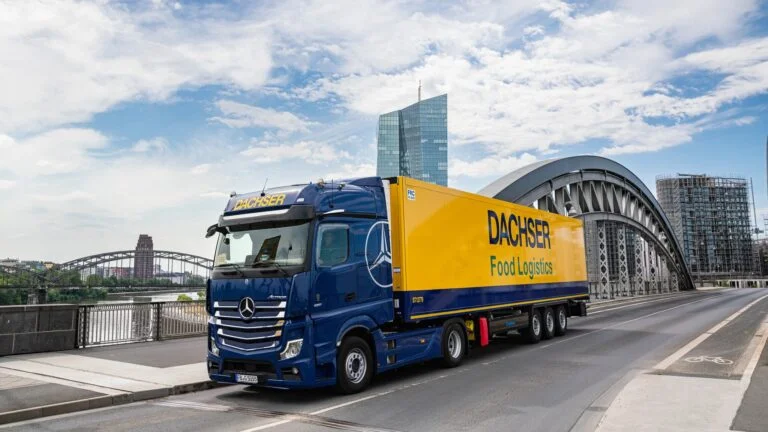
Global business means global responsibility
By Marcus Schick I 7 minute read
22/05/2026
Giving opportunities, creating the future: How DACHSER is shaping the dialogue on development work and driving it forward as an impulse generator for strategic engagement in the countries of the Global South.

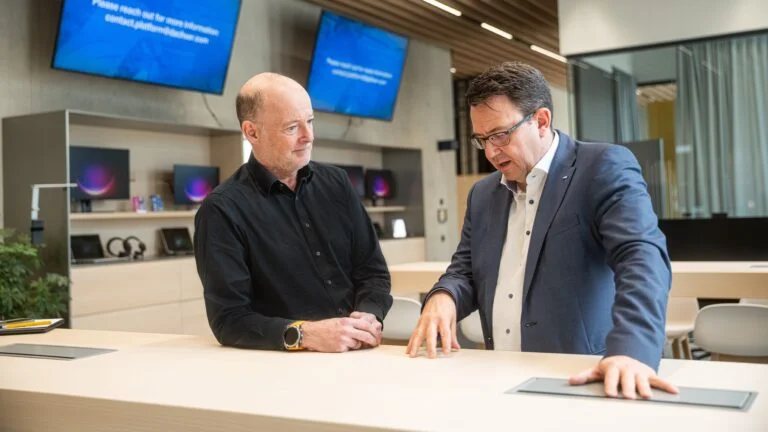
Whether it’s a pair of jeans, a smartphone, or a cup of coffee in the morning: In our everyday lives, there’s barely a product that doesn’t rely on global supply chains. Such chains connect markets, create prosperity, and provide the basis for economic activity. At the same time, they highlight how closely economic success and social responsibility are intertwined. “Globalization is the driving force, the flywheel of our business,” said Bernhard Simon, Chairman of the Supervisory Board of DACHSER, in a panel discussion at the new DACHSER Network Campus (DNC) in Kempten at the beginning of April. “It also results in a responsibility for the living conditions of people worldwide.”
“Global value chains aren’t simply economic structures; they’re also social spaces. Decisions along these chains have a direct impact on living and working conditions in other parts of the world,” Simon says. “Supply chains secure lives and prosperity—but that mustn’t come at the expense of people.” This turns sustainability and social standards into integral components of economic value creation.
The question is no longer whether companies should take on responsibility, but how. In recent years, this “how” has changed fundamentally. What used to be understood as “corporate social responsibility,” and was often seen as a supplement to the core business, is increasingly becoming an integral part of corporate strategy.
“Strategy, not advertising” is how Simon refers to the aim of embedding responsibility in the company’s substance rather than treating it as a communications exercise. The “Corporate Citizen+” concept deliberately goes beyond traditional CSR, he says: “DACHSER sees itself as a company that’s not only economically active but, as a global player, also consciously assumes responsibility for people who are vulnerable and marginalized. We’re a company that leaves its mark on the world.”
Profound change in society’s expectations
This change is taking place against the backdrop of a profound shift in society’s expectations. Trust in state institutions, the media, and nongovernmental organizations is declining in many places. At the same time, people are attaching greater importance to their direct, personal environment—and the role of companies in it.
The Edelman Trust Barometer shows that employers are the most important source of trust for many people today. This gives rise to a new responsibility: Companies are becoming intermediaries between economic, social, and political interests. “Trust is created where business, politics, the media, and civil society work together and build bridges between different perspectives,” Simon explains. The only way to achieve this is by talking to one another. That inevitably involves rubbing people the wrong way, and the struggle to find solutions and compromises can at times be tough, but that’s how to turn friction into new energy.
Trust is created where business, politics, the media, and civil society work together and build bridges between different perspectives.
Impact is a question of partnership – not charity
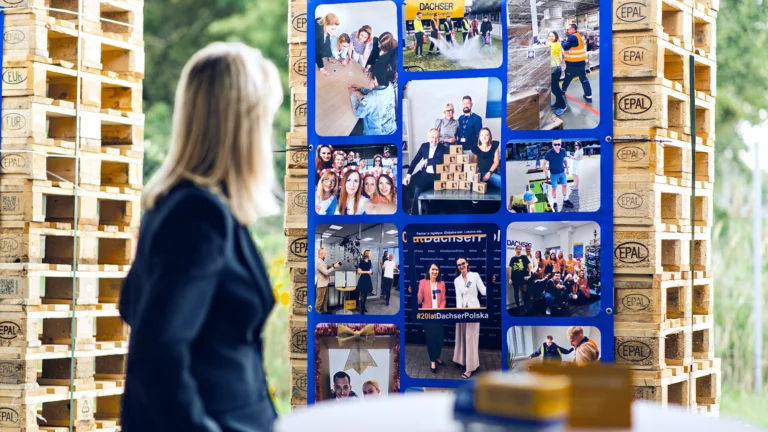
DACHSER’s more than 20 years of collaboration with the children’s aid organization Terre des Hommes shows the form that such an approach can take in practice. What began as a reaction to the tsunami disaster in 2005 has since developed into a long-term partnership between DACHSER, Terre des Hommes, and local organizations, resulting in projects across several countries in the Global South.
At the heart of DACHSER’s partnership with Terre des Hommes and other partners, such as the nonprofit climate protection organization myclimate, is a clear change of perspective: away from short-term aid and toward sustainable development. “Glamorous showcase projects, which generate beautiful images and headlines but are immediately forgotten once the project ends, might be good for ‘greenwashing’ climate action or ‘bluewashing’ social commitments, but they’re the opposite of sustainable,” Simon states. “We don’t just build schools—we empower people to take their lives into their own hands.”
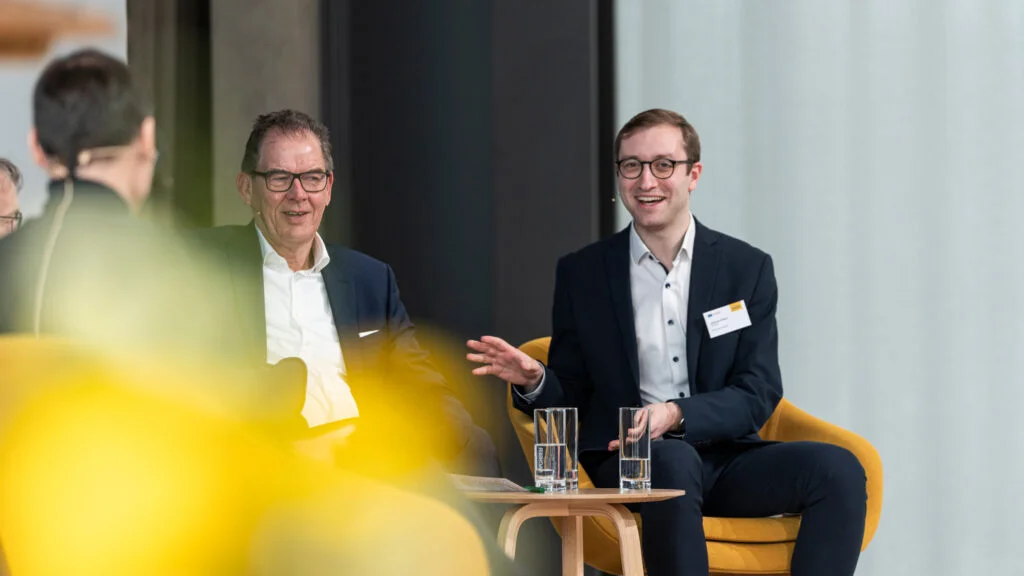
Joshua Hofert, Executive Board Member Communications and Spokesperson for Terre des Hommes, lists three factors that make for a successful endeavor: strategy instead of PR, partnerships between equals, and long-term reliability. During a panel discussion at the DACHSER Network Campus in Kempten, Dr. Gerd Müller, German Federal Minister for Economic Cooperation and Development (BMZ) from 2013 to 2021 and Director General of the United Nations Industrial Development Organization (UNIDO) since the end of 2021, also endorsed this approach. He sees enormous potential in the markets of the Global South: “As the world’s population grows, particularly in Africa and Asia, it opens up opportunities for economic development—provided this is shaped in partnership. These countries aren’t looking for handouts; they’re interested in collaboration.” He goes on to explain that this will inevitably also change the fundamental understanding of development cooperation, turning it into a joint, partnership-based process.
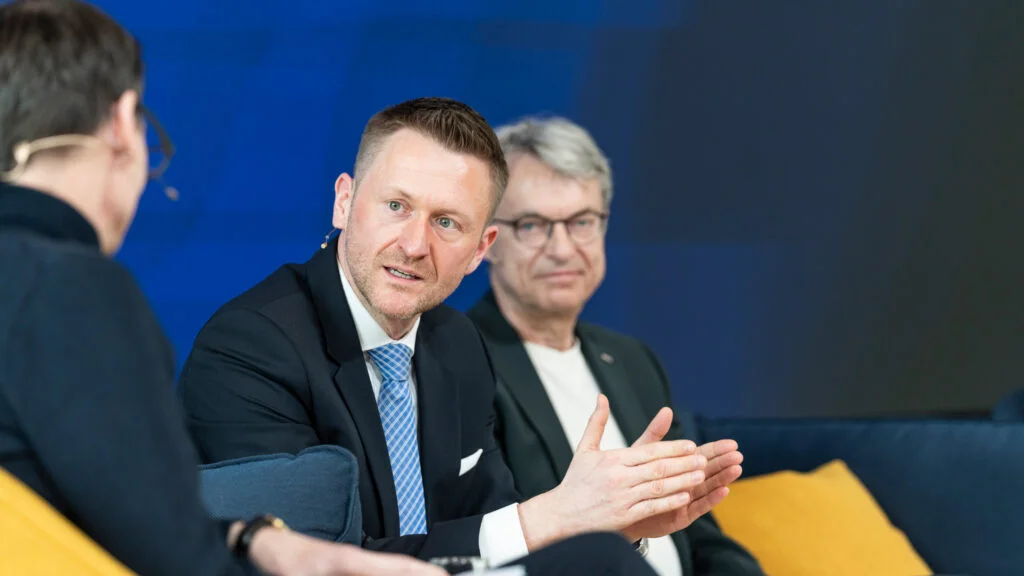
For 20 years, DACHSER and the children’s rights organization Terre des Hommes have been working together to promote development and equal opportunities in the Global South. To mark this anniversary, the event “Creating Opportunities, Shaping the Future: Impulses for Strategic Engagement in the Countries of the Global South” was held at the new DACHSER Network Campus in Kempten.
Impact takes time – and clear role models
Sustainable development isn’t something that can be achieved in a short space of time. Instead, it develops over years of continuous commitment and specific local projects. One example of this is the “Trash4Cash” initiative in Zambia, which emerged from a joint project by DACHSER and Terre des Hommes. Following a German-Zambian youth exchange, young entrepreneurs in the pollution-plagued metropolis of Livingston began collecting, processing, and marketing recyclable waste.
Today, the project is creating jobs, improving people’s living conditions, and raising stakeholders’ awareness of sustainable business practices. At the same time, it demonstrates that knowledge transfer isn’t a one-way street. DACHSER participants take what they’ve learned from the project back to the company and modify processes in Germany, too; for example, in recycling and waste separation. That’s what turns a long-term approach into a decisive success factor—and into a prerequisite for credibility.
As the world’s population grows, particularly in Africa and Asia, it opens up opportunities for economic development—provided this is shaped in partnership. These countries aren’t looking for handouts; they’re interested in collaboration.
Collaboration as a model for the future
DACHSER’s findings from this and other projects crystallize into a clear picture. “Global development isn’t an isolated field of action, but always a close interplay between different players,” Simon says. “The onus is equally on business, politics, civil society, and the media to take responsibility and work together.”
At the panel discussion in Kempten, Dr. Wolfgang Stefinger, Member of the German Bundestag and Chairman of the Bundestag’s Committee on Economic Cooperation and Development, aptly summed up what makes corporate political responsibility a necessity: “Everything is connected to everything else,” he said—economically, politically, and socially. Stefinger pointed to the growing role for international collaboration in an increasingly fragmented world, saying that national perspectives are no longer enough to overcome global challenges.
For Simon, this also confirms DACHSER’s overall social and entrepreneurial commitment as a Corporate Citizen+: “If you’re doing business globally, you’re also shaping global development. And if you’re putting conscious effort into that, then you’re doing more than just adding value: You’re building the future—for current and future generations.”