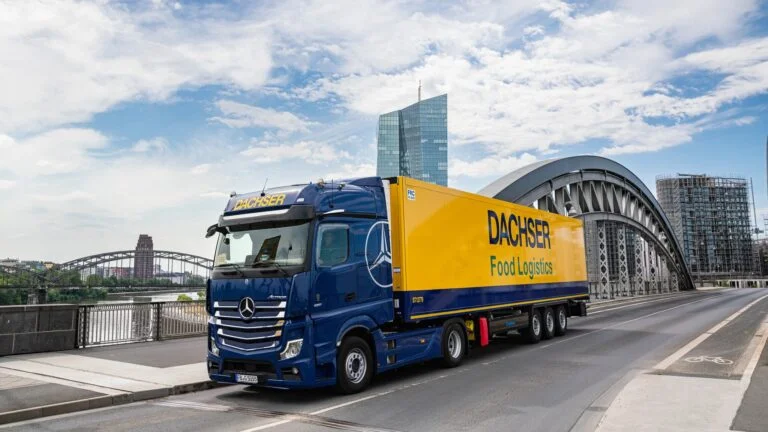
DACHSER & FERCAM Italia: Regionally rooted, networked across Europe
By Hendrik Durst | Reading time: 8 minutes | Photo: NicoElNino via Getty Images
14/08/2026
Italy’s economy is strongly shaped by the unique characteristics of its individual regions. Export-oriented industrial centers, traditional family-owned businesses, and a food industry with an international reputation: a wide variety of industries, economic structures, and logistical requirements converge within a small area. The branches of DACHSER & FERCAM Italia reflect this diversity—and enable their customers to benefit from the strength of a shared network.

Italy has held special significance for DACHSER for many years. Since 2003, the logistics service provider has maintained a close partnership with the South Tyrolean family-owned company FERCAM, which has in-depth knowledge of the Italian market. In 2024, this collaboration reached a new level: Following the successful carve-out of the groupage and contract logistics operations, DACHSER & FERCAM Italia was established as an independent company, in which DACHSER holds an 80 percent stake.
Integration into the European logistics network
Today, with around 1,000 employees and 47 locations, DACHSER & FERCAM Italia connects Italy’s regional economic hubs with DACHSER’s European groupage network—whether it involves industrial goods from northern Italy, furniture from the Adriatic coast, or parts for confectionery production in Umbria. A look at selected DACHSER & FERCAM Italia locations illustrates just how diverse these regional requirements can be and how they come together within a shared structure. Despite regional differences, they are united by a common goal: to combine local market knowledge with the capabilities of a Europe-wide network. And as always, it is the people who bring logistics to life: people who see integration as an opportunity for both professional and personal growth—and who seize that opportunity with courage and motivation.
“While our Italian colleagues reliably handle day-to-day operations, they are driving the transformation of systems and processes with great dedication. With the introduction of our integrated core systems for transport and warehouse management, we are currently moving into the next phase of integration to further enhance quality and transparency. At the same time, we are rolling out the standardized DACHSER product portfolio, including the entargo family, in Italy. In this way, we are laying the foundation for linking regional market knowledge even more closely with the capabilities of the European network,” says Alexander Tonn, COO of Road Logistics at DACHSER.
1.000
employees at DACHSER & FERCAM Italia combine regional market knowledge with a Europe-wide network.
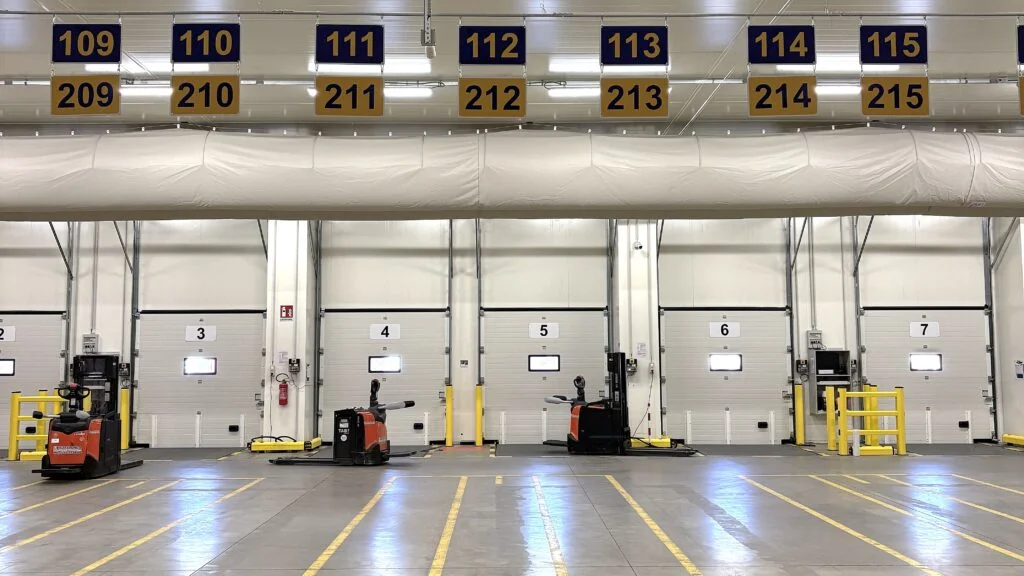
Regional expertise is key in Italy
The Italian economy is heavily export-oriented—with pronounced regional differences. In Parma, for example, the so-called Food Valley shapes the region’s economic identity. Emilia-Romagna is one of the most important centers of the Italian food industry and combines this tradition with a diverse supply industry. The Parma branch therefore brings together DACHSER’s European Logistics and Food Logistics business lines under one roof for the first time in Italy. Consolidating operations at a single location enables more efficient use of space, vehicles, and transport capacity. At the same time, customers benefit from a broader range of services from a single source.
About 50 kilometers to the southeast, in Campogalliano near Modena, the Emilia-Romagna region is, by contrast, more strongly characterized by technologically advanced industries and export traffic. The automotive industry, ceramics, furniture manufacturing, metal processing, and biomedicine dominate the economic landscape there. Thanks to its location in the Brenner Corridor, the branch has become one of the most important transportation hubs in the Italian network, connecting export and domestic shipments daily with key European markets.
Further south, in the central Italian region of Umbria, the Perugia branch serves a diverse regional economy. The region’s varied geography and decentralized industrial structure make logistics processes particularly challenging: routes must be optimized, and time windows and delivery times must be precisely coordinated. In addition to manufacturers and OEMs in the confectionery and baked goods sectors, companies in the textile and home improvement industries, as well as manufacturers of mechanical and industrial components, also play an important role. Consequently, there is high demand for customized logistics solutions tailored to customers’ specific requirements. “Our goal here isn’t simply to increase our volume. First, we analyze the requirements, develop a customized solution for the customer, and assess the long-term value of the service,” says Branch Manager Stefano Felicioni, describing the approach at the Perugia location.
How can new organizations be integrated into a Europe-wide network while simultaneously ensuring quality and stability? In the interview, Alexander Tonn explains the role that standardized processes, systems, and corporate culture play in this.
First, we analyze the requirements, develop a customized solution for the customer, and assess the long-term value of the service.
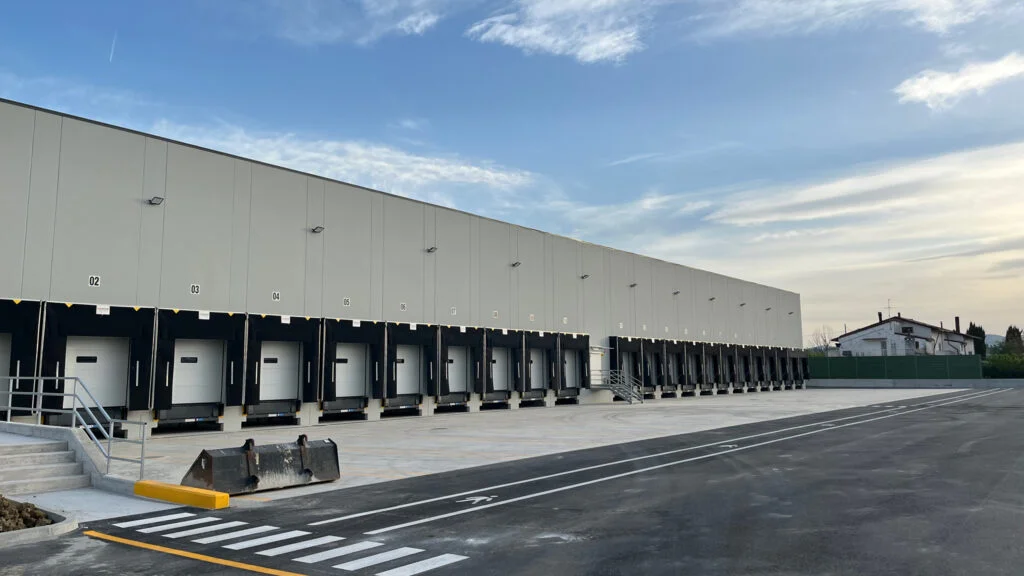
Regional characteristics also pose high challenges on the Adriatic coast. A large number of medium-sized manufacturers from the furniture and furnishings industry are concentrated around the branch in Cattolica . The transport of these goods often requires particularly close coordination, as the recipients are frequently private customers and aspects such as access to historic city centers or traffic-restricted zones must be taken into account.
In this context, Customer Service acts as the coordinator between the client, local operational units, and the network. “In the first few months after the integration process began, there was a strong willingness to learn. Everyone had to adapt to new processes and ways of working, but we all quickly grew into our roles,” says Elisa D’Agostino, Customer Service Specialist in Cattolica. “We were able to establish a genuine team spirit right away. That makes all the difference, especially when it comes to challenging tasks.”
We were able to establish a genuine team spirit right away. That makes all the difference, especially when it comes to challenging tasks.
Local strengths within the European network
Despite their different areas of focus, the branches share many common approaches: proximity to their customers and the ability to integrate local requirements into supraregional and Europe-wide logistics processes. “If the employees are committed, the company is strong too. Here, we see teams that truly view their work as a shared project,” says Stefano Felicioni, describing the culture at his branch in Perugia.
This mindset is also evident at other locations. For example, the Mantua branch was among the first in Italy to implement the new network structures of DACHSER & FERCAM Italia following the establishment of the joint venture. At the same time, the location is supporting various future-oriented projects, including rebranding and the introduction of new digital solutions. In addition, Mantua plays a pioneering role within DACHSER & FERCAM Italia as a pilot location for the rollout of DOMINO, DACHSER’s own transport management system.
At the Padua branch, the Customer Service department stands out as a central interface between customers, sales, and operational units. National and international tasks were consolidated into a single team early on, and with the increasing focus on inbound and outbound processes, the location continues to evolve in line with the structures of DACHSER’s European network. “For me, good customer service means listening and finding solutions together. This also includes learning from mistakes and avoiding them in the future,” says Giorgia Ortolani, Head of Customer Service in Padua.
For me, good customer service means listening and finding solutions together.
A network for Italy’s diversity
Since the founding of DACHSER & FERCAM Italia, the teams have been working to combine the deep-rooted market knowledge from the individual regions with the standards, structures and systems of the Europe-wide DACHSER general cargo network.
“Integration is successful when existing expertise is preserved, customer relationships are strengthened, and operational excellence is secured for the long term. Italy is a key market for many DACHSER Road Logistics customers. With DACHSER & FERCAM Italia, we have created strong structures to reliably meet their needs and integrate regional strengths even more effectively into our European network,” says Alexander Tonn.
The examples from the Italian branches demonstrate how this integration process is taking shape step by step—not as a one-time project, but as a continuous evolution of opportunities for customers, employees, and the entire DACHSER network. Whether it’s food logistics in the Food Valley or furniture transport along the Adriatic coast, the key to shared success remains the same. After all, regional market knowledge truly comes into its own when it is part of a high-performance network.