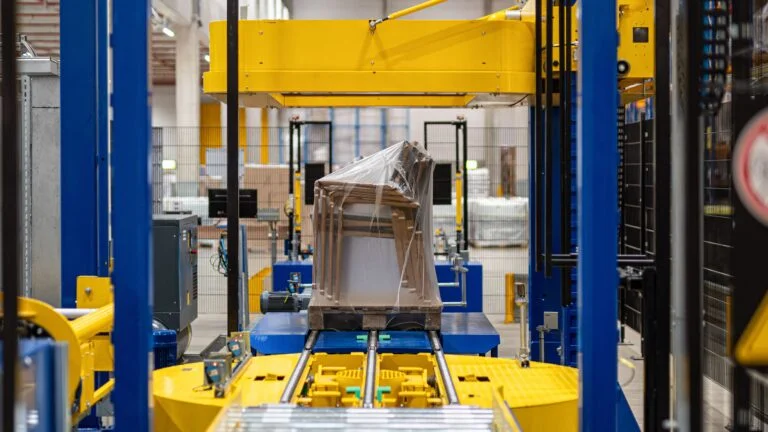
Innovations in logistics: Highlights from the last ten years of Research & Development at DACHSER
By Melanie Guggenberger I 8 minute read
28/08/2026
Many innovations begin as an idea—and later transform entire processes. Over the past ten years, DACHSER has tested, refined, and implemented numerous technologies and concepts. The following examples illustrate how digitalization, automation, and sustainability are gradually transforming logistics.

Innovation has always played a major role at DACHSER. From the development of the swap body to the introduction of the NVE barcode (shipment unit number) and the company’s pioneering role in information logistics, new ideas with network relevance have played a key role in the family-owned company’s evolution from a national freight forwarder to an international logistics service provider. Ten years ago, the strategic focus program Idea2net was specifically strengthened and firmly anchored within the organization with the establishment of the “Corporate Research & Development” division—and later, under the “IT & Development” department led by Chief Development Officer (CDO) Stefan Hohm, even at the Executive Board level. Since then, numerous projects have emerged that are shaping modern logistics through digitalization, sustainability, and automation. Our photo gallery showcases significant developments and innovations from the past ten years.
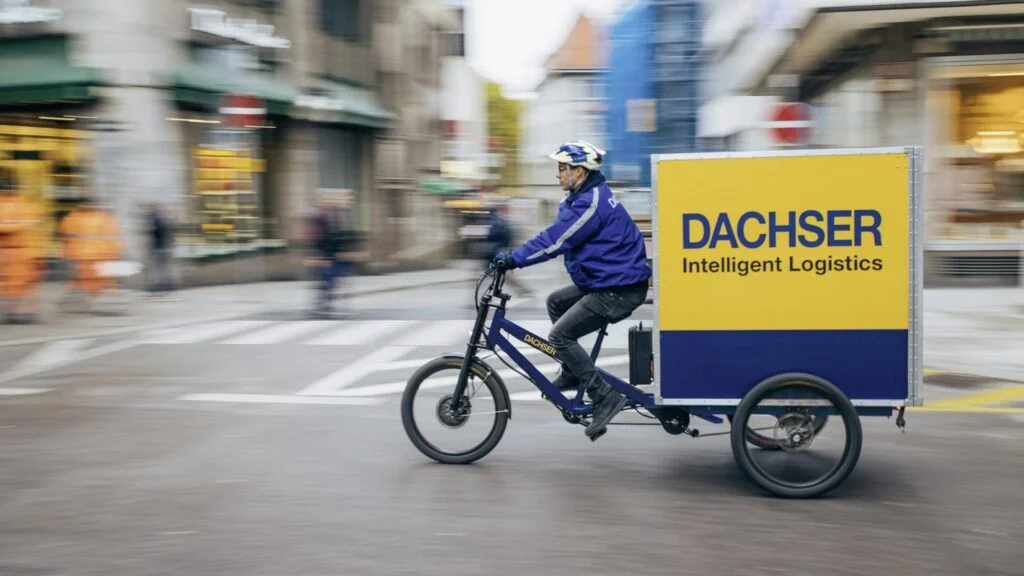
With its zero-emission city delivery concept, DACHSER plays a valuable role in improving air quality in heavily polluted urban areas, as e-trucks and cargo bikes don’t emit any greenhouse gases locally.
The “DACHSER Emission-Free Delivery” innovation project was developed at the Kornwestheim branch and debuted in the city of Stuttgart in 2018. That same year, the pilot implementation received an award from Germany’s Federal Ministry for the Environment in the national Sustainable Urban Logistics competition.
At the beginning of 2023, DACHSER announced its plan to double the number of its urban zero-emission delivery areas in Europe over a three-year period. The logistics provider realized this goal by the end of 2025. In 25 major European cities and metropolitan regions in ten countries, DACHSER has specified downtown areas in which it delivers non-refrigerated groupage shipments with zero local emissions. The company has thus implemented a further component of its long-term climate strategy. This milestone notwithstanding, the expansion of emission-free city-center delivery and the transformation toward net zero emissions remain long-term and continuous tasks for the family-owned company.
DACHSER Emission-Free Delivery: Urban zero-emission deliveries

Together with DB Schenker, duisport, and Rhenus, DACHSER founded the Open Logistics Foundation in 2021. The purpose is to develop open-source digital standards and to promote digitalization along supply chains. To this day, the foundation is regarded as a pioneering initiative in the industry.
One joint achievement is the first industry-ready eCMR software. “The new eCMR standard shows that open source simplifies entry into digitalisation and drives standardisation of commodities across digital value chains,” explained Stefan Hohm, Chief Development Officer (CDO), during the solution’s presentation at transport logistic 2025 in Munich
“The eCMR software significantly reduces the workload for everyone involved in the transport chain—from drivers to dispatchers to the recipients of the goods.” Furthermore, Hohm noted that this open-source approach presents a major opportunity to digitize even more transport documents and information.
DACHSER will implement the Open Logistics Foundation’s solution as part of the Digital Accompanying Document (DCA), which will be required by Spanish authorities starting in October 2026.
Founding of the Open Logistics Foundation: Open Source for logistics
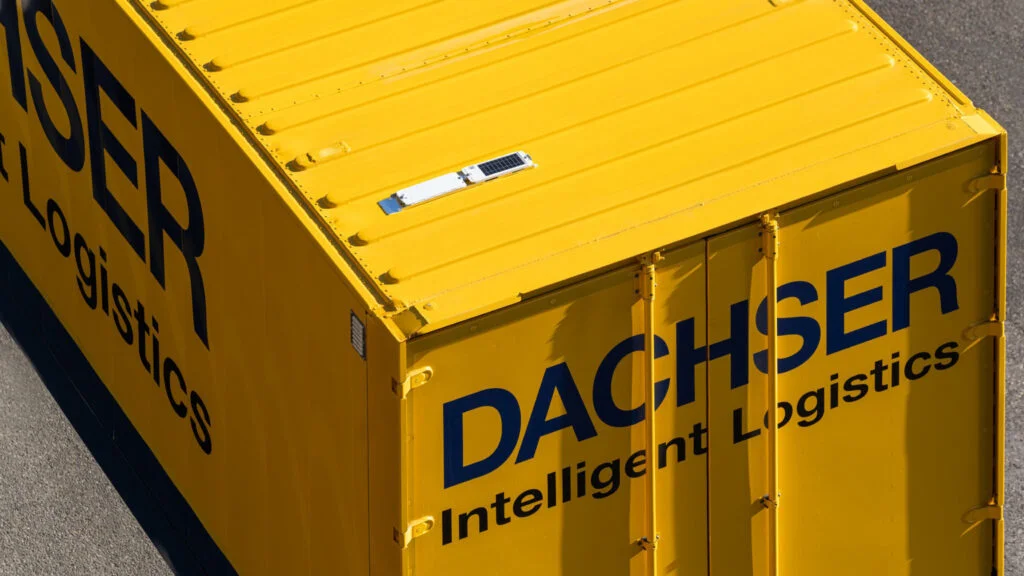
In 2022, DACHSER has added smart tracking devices to 8,500 swap bodies. This means transport containers can be tracked in real time and arrival times (ETA) can be calculated precisely using the internet of things.
All position data—including from trailers and tractor units—is consolidated on a central platform and “wedded” with the shipment data from DACHSER’s transport management system. The data collected enhances transparency, planning capabilities, and service quality across the European network.
Smart Tracking Devices for the European General Cargo Network: The Internet of Things (IoT) in Long-Haul Transport
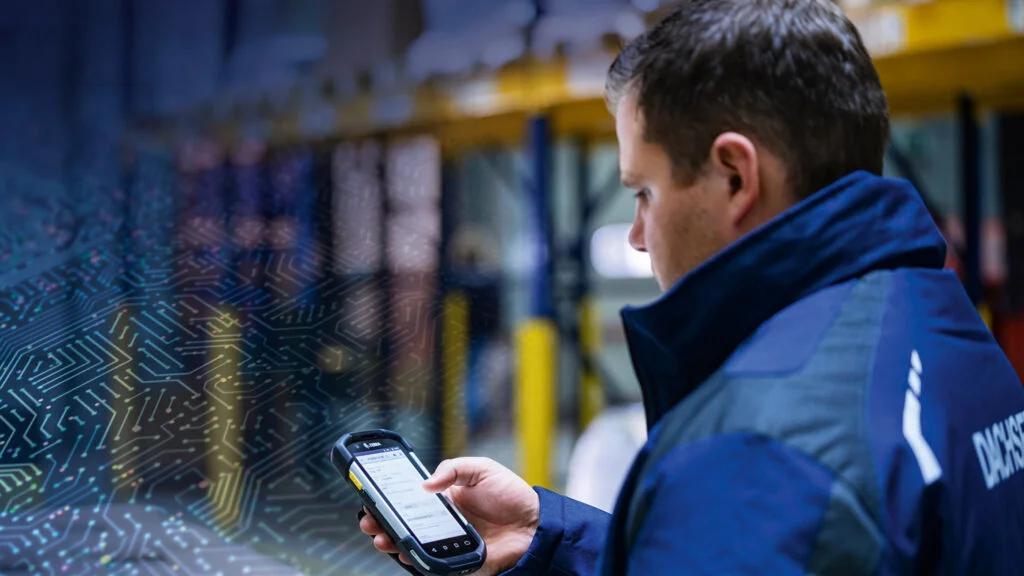
With the establishment of the internal “Competence Center Data Science & Machine Learning” in 2021, DACHSER pooled the expertise it had gained in various research and innovation projects related to artificial intelligence, data analytics, and machine learning. The center lays the groundwork for the targeted integration of innovative technologies into logistics processes.
Specific machine learning applications have been developed at DACHSER as part of the DACHSER Enterprise Lab in collaboration with scientists from the Fraunhofer Institute IML in Dortmund. One example is PAnDA One. The acronym stands for Predictive (P) Analytics (An) DACHSER (DA), and “One” refers to the first machine learning (ML) project.
The PAnDA One model was specifically designed to forecast inbound volumes for a Road Logistics branch. That makes it possible to obtain appropriate load capacity on the market at an early stage, or to plan resources in the transit terminal, explains Thomas Schmalz, Head of Production Management at DACHSER.
With flexible connection options to relevant interfaces (e.g., EDI, API), DACHSER makes data transfer as straightforward as possible.
AI in logistics: Data Science & Machine Learning at DACHSER
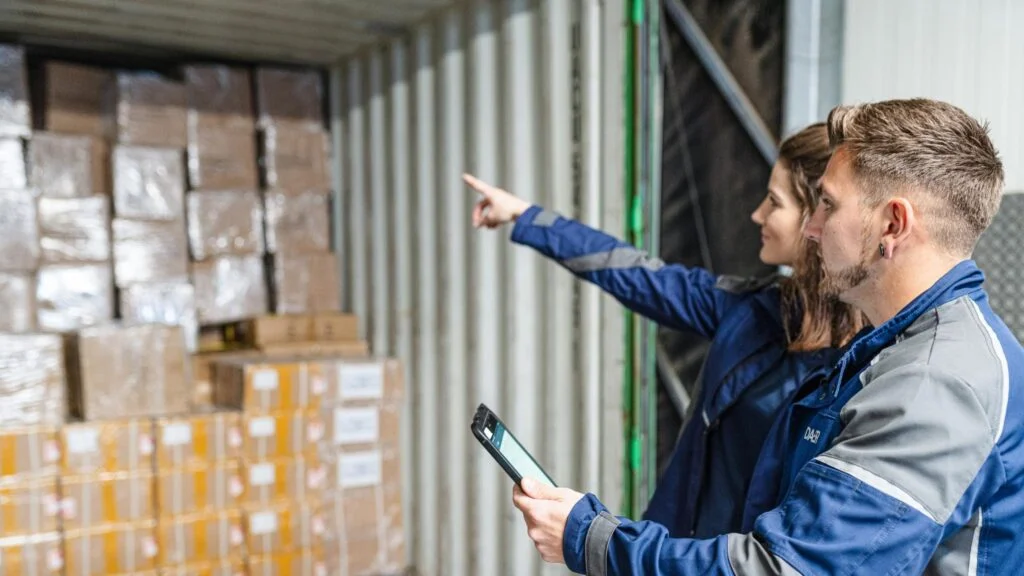
Under the motto “Away from the Clipboard,” DACHSER launched an initiative in 2019 to build a global community of employees who develop their own applications—without any programming knowledge—and thereby drive digitalization within the company. The Citizen Development initiative has already saved more than 17.2 million pages of paper in various processes and has been honored multiple times with the “Citizen Development Empowerment Award.”
Citizen Development: Digitalization Driven by the Workforce
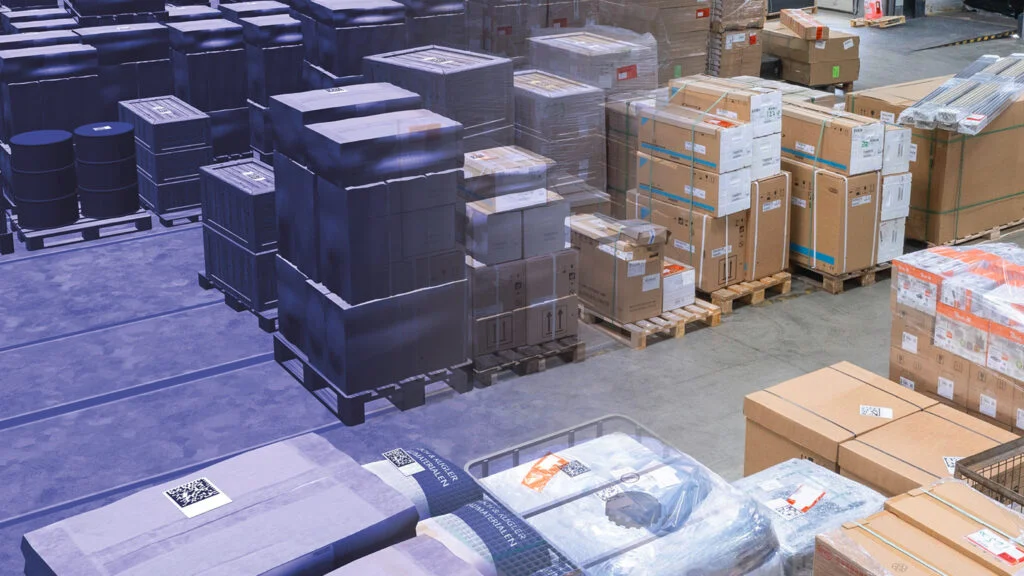
Together with Fraunhofer IML, DACHSER developed the digital twin @ILO at its Enterprise Lab in Dortmund. The fully automated @ILO digital twin records up-to-the-minute data on all packages, assets, and workflows in the transit terminal. After proving its worth since 2021 in two pilot transshipment warehouses at the branches in Unterschleißheim near Munich and Öhringen near Heilbronn, the technology is currently being rolled out step by step across DACHSER’s logistics terminals throughout Europe.
For this innovation, DACHSER and the Fraunhofer IML were awarded the German Logistics Award in 2023. The German Logistics Award was followed by international recognition: @ILO received the European Logistics Association Award in early 2026.
The digital twin: @ILO revolutionizes the transshipment warehouse
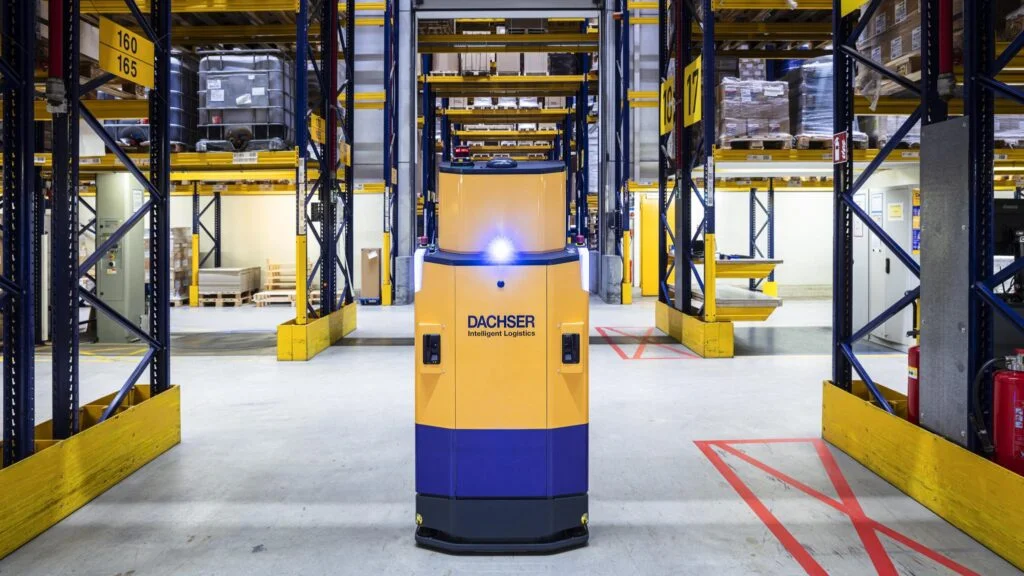
Since 2021, DACHSER has been using self-driving transport vehicles, known as AGVs (Autonomous Guided Vehicles), in its warehouses. Following a successful long-term test, these mobile robots—now also referred to as Autonomous Mobile Robots (AMR)—are now in operation at several German warehouses.
They map their surroundings with sensor systems like cameras, lidar, and radar and find their way around with the help of AI. DACHSER uses the AGVs in mixed operation. That means they share the driveways with human-driven vehicles.
In addition, other innovative technologies are in use at DACHSER warehouses, such as exoskeletons, which make physically demanding work easier. This modern technology assists with lifting and carrying heavy objects.
AGV / AMR: Autonomous vehicles in the warehouse
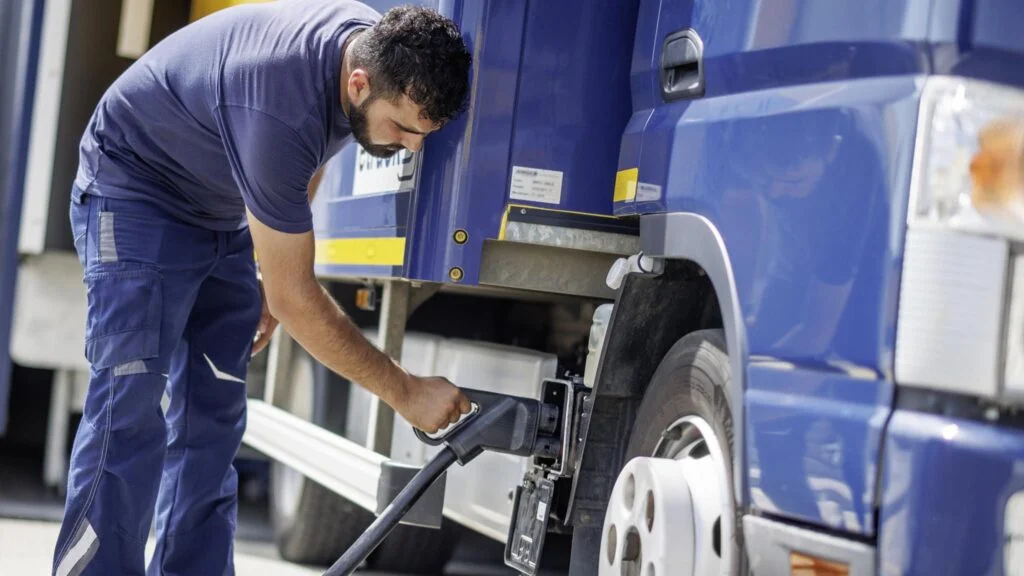
In 2022, DACHSER began developing its three branches in Freiburg, Hamburg, and Malsch into “E-Mobility Sites,” with a focus on researching low-emission technologies and processes as well as intelligent power and load management, and testing their practical feasibility.
Upon completion of the project, several key insights were gained, but many questions remain unanswered. Currently, the teams at the DACHSER E-Mobility Sites are compiling all the insights and experiences gained over the past three years to create a “blueprint” for the DACHSER network.
DACHSER E-Mobility Sites: large-scale testing and research
Innovation for the future
“Research and development at DACHSER pursues a clear goal: to gain insights that, through pilot projects, create added value for DACHSER’s entire logistics network. At the end of the day, innovations must offer concrete added value to customers and employees,” says Andre Kranke, who has been involved with the division from the very beginning and is now responsible for DACHSER’s R&D activities as Head of Corporate Research & Development. “The past ten years have shown how, as part of our strategic innovation program Idea2net, many individual ideas are developed into practical solutions—thus shaping the logistics of the future.”